Saturday, June 30, 2007

Moving the music business on
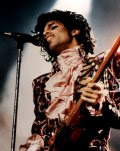
'The music industry has reacted angrily at a decision to give away the new album by US musician Prince (right) with a tabloid newspaper. Planet Earth will be given free with a future edition of the Mail on Sunday. The 10-track CD from Prince - whose hits include Purple Rain, Sign O' The Times and Cream - is not due to be released until 24 July. Paul Quirk, co-chairman of the Entertainment Retailers Association, said the decision "beggars belief".

The Mail on Sunday's recent CD giveaways include Peter Gabriel, Dolly Parton, Duran Duran, UB40 and Mike Oldfield's Tubular Bells. Stephen Miron, the newspaper's managing director, said: "No one has done this before. We have always given away CDs and DVDs, but this is just setting a new level." Mr Miron declined how much the newspaper had paid to secure the deal. He added that the newspaper was not out to put music retailers out of business. "They are living in the old days and haven't developed their businesses sufficiently. We can enhance their business. They are being incredibly insular and need to move their business on," he said' ~ reports BBC News


Eat your heart out Nicholas Kenyon
Any copyrighted material on these pages is included as "fair use", for the purpose of study, review or critical analysis only, and will be removed at the request of copyright owner(s). Report broken links, missing images and other errors to - overgrownpath at hotmail dot co dot uk

Is this a record?


Classical music blogging's poster boy Norman Lebrecht is back on BBC Radio 3 today (June 30, and for seven days via Radio Player) with a programme about classical recordings that he thinks should never have been made. Rumours that there is a sequel about radio programmes that should never have been made have been denied.

The photo is from my post about something that will be in short supply at 12.15h today on BBC Radio 3 - joy of music.

Any copyrighted material on these pages is included as "fair use", for the purpose of study, review or critical analysis only, and will be removed at the request of copyright owner(s). Report broken links, missing images and other errors to - overgrownpath at hotmail dot co dot uk

Flying the BBC Proms flag

Hesse Lecture 2007 - Sorry you felt the need to speculatively review this in advance….how odd. As you've written a great deal of interest about the Proms in recent seasons I thought you might like to see the real thing. A shorter version will be in The Guardian tomorrow I believe - Nicholas Kenyon

This was the email sent to me yesterday by Nicholas Kenyon about my post on his 2007 Hesse Lecture, which he gave at the 2007 Aldeburgh Festival. Sure enough, a shorter version appears in today's Guardian. But there is no mention at all that the lecture was commissioned by, and given at, the Aldeburgh Festival. Instead the full page article gets the following sign-off:

Nicholas Kenyon is director of the BBC Proms, and becomes managing director of the Barbican Centre in October. The Proms: A New History is published by Thames and Hudson. BBC Proms runs between July 13 and September 8. Information and tickets: bbc.co.uk/proms or 020-7589 8212

Not only is Nicholas Kenyon director of the BBC Proms. He is also consultant editor of the book The Proms: A New History. How odd...

Any copyrighted material on these pages is included as "fair use", for the purpose of study, review or critical analysis only, and will be removed at the request of copyright owner(s). Report broken links, missing images and other errors to - overgrownpath at hotmail dot co dot uk

Friday, June 29, 2007

Classical music and a wider audience

I've uploaded the full text of Nicholas Kenyon's 2007 Hesse Lecture today. It's a very long read, and there are some gems hidden in it, particularly for a download doomsayer like me. Here is the condensed read:

"The cosmopolitan world will challenge every idea of a musical canon as never before, but it has huge potential. What we have now is: 1.4 million downloads of Beethoven symphonies from the BBC website, a free offer taking the message of classical music to a wider audience some of whom had never encountered it before, stimulating the market and encouraging listeners to buy CDs. In fact Radio 3’s initiative was so successful, that the new BBC Trust, the successor to the BBC Governors, has prevented it happening again. In a recent ruling it has forbidden the BBC to include classical music in any of its free downloads, even short extracts of works, on the grounds that it is distorting the marketplace --thus at a stroke undermining the BBC’s historic commitment to use every enlightened means to make great music available to all. (As the Director General of the BBC has disagreed with that ruling publicly, I reckon I can do so too.)"

Pliable's note - just so everyone is enlightened this is what the BBC Trust actually said: "There is a potential negative market impact if the BBC allows listeners to build an extensive library of classical music that will serve as a close substitute for commercially available downloads or CDs."

Photo of a wider audience by Pliable at 2006 Proms. Any copyrighted material on these pages is included as "fair use", for the purpose of study, review or critical analysis only, and will be removed at the request of copyright owner(s). Report broken links, missing images and other errors to - overgrownpath at hotmail dot co dot uk

A ruthlessly market-driven broadcasting system


In today's Guardian Nicholas Kenyon speculatively reviews Saturday's Orchestra of the Age of Enlightenment concert at the Royal Festival Hall. A couple of weeks ago I wrote about BBC Proms Director Kenyons' Hesse Lecture at the Aldeburgh Festival, and today I received this email:

Hesse Lecture 2007 - Sorry you felt the need to speculatively review this in advance….how odd. As you've written a great deal of interest about the Proms in recent seasons I thought you might like to see the real thing. A shorter version will be in The Guardian tomorrow I believe - Nicholas Kenyon

I'd hate to be thought odd. So here, scooping the Guardian, is the attachment:

Metropolitan, micropolitan, cosmopolitan: the BBC Proms, the Aldeburgh Festival, and the future - given in the Jubilee Hall on Tuesday 19 June 2007 during the 60th Aldeburgh Festival by Nicholas Kenyon.

It’s not given to everyone to invent a word, but you’ll notice that one of the three words in my title is invented. It was Kenneth Clark, I believe, who coined the neat word ‘micropolitan’ in one of the many lectures he gave here this hall, at Aldeburgh in 1951. Clark’s lecture was described thus: ‘A consideration of how much is gained and lost at certain periods by avoiding or ignoring the main centres of art, or working outside the current metropolitan tradition’. He was talking about art, not music, but what he said is actually a very acute characterisation of what the Aldeburgh Festival itself did musically in its early years after the war. That was to create a highly characterised ‘micropolitan’ musical culture centred around Benjamin Britten, in direct opposition to --and surely in tacit criticism of-- the prevailing metropolitan musical culture, which was then most powerfully represented by the Proms, under the emerging populist influence of Malcolm Sargent.

The current Aldeburgh Festival is the 60th, and it is 80 years since the Proms of Sir Henry Wood were taken on by the BBC in 1927; that provides one reason to look at the contrasts between these two musical undertakings, even though they may seem at first sight totally dissimilar in size and scope. Another is to ask whether both are challenged by the huge changes that now face all of us in classical music as we move into a third age of musical consumption and dissemination in which everything about the future seems up for grabs, a vast potential and opportunity in a sea of uncertainty. So I offer this Point Counterpoint partly to get us thinking about the role of performance, the choice of repertory and the history of changing taste in the musical world. If I’d like to leave you wondering about one thing at the end of this lecture, it is simply ‘how was my musical taste formed? Why do I like what I like? How it will be different in ten years’ time?’

The subject of performance history has for far too long been neglected by serious music historians as totally secondary to the history of composition. To take a very relevant example, the story of music in Britain after the war can, and has, been written as the unfolding sequence of new works by Britten after Peter Grimes, the emergence of Michael Tippett after A Child of Our Time, the more ambiguous place of William Walton, as they moved towards their great operatic undertakings of the 50s, the arrival of new works by Rawsthorne, Rubbra, Lutyens, Alan Bush, George Lloyd, whoever. But what was the reaction to these works when they were performed? When and where and why were they performed? Equally important to the musical story of the late 1940s are birth of the Edinburgh Festival, the formation of the Philharmonia and the Royal Philharmonic orchestras, the first of William Glock’s summer schools, also 60 years ago, at Bryanston and now at Dartington, the creation of the Arts Council, the popular success of the Proms as they transferred to the Royal Albert Hall, and the thirst for a Festival of Britain that led to the building of the (just triumphantly reopened) Royal Festival Hall. We still live, culturally, in the shadow of that enormously creative period. Peter Diamand of the Edinburgh Festival once expressed the spirit of those times as ‘a healing process’ after the war. But I think we can now see it more as a direct continuation and development of the flourishing of the arts on a truly democratic basis that occurred during the war, as a bright gleam through the years of Austerity Britain that the arts really could be for everyone.

In this picture the new Aldeburgh Festival played a decisive and indeed a prophetic part. Britten more than once referred to it as his most important undertaking. Yet there’s all too little written in the welter of Britten studies about his programming of the Festival, and the light it shines on his creativity. Paul Kildea’s innovative book Selling Britten is an important exception, but whereas he talks about the impact of the festival on Britten’s own music, I want to spread the net a little wider. There are some very revealing sidelights in the recent posthumous collection of Philip Brett’s superb writings, Music and Sexuality in Britten, which includes his Proms lecture of 1997, the Britten Era. But this is the exception rather than the rule.

The origins of every great undertaking become enshrined in myth, and those of the Aldeburgh Festival, like those of the Proms back in 1895, are no exception. Compare these two oft-reported dialogues. Eric Crozier about Aldeburgh in 1948: ‘there was something absurd about travelling so far [in Europe] to win success with British operas that Manchester, Edinburgh, and London would not support. ‘Why not’, said Peter Pears, ‘make our own Festival? A modest festival with a few concerts given by friends? Why not have an Aldeburgh Festival?’ Robert Newman of the Proms in the 1890s: ‘I have decided to run those Promenade Concerts I told you about last year…I want you [Henry Wood] to be the conductor of a permanent Queen’s Hall orchestra…I’ll see what can be done…for I mean to run those concerts.’ And Henry Wood, later: ‘They said there wasn’t a public for great music... But Robert Newman said we’d make a public, and we did.’

However mythological the actual reported speech, it is striking how the constructs, the specific characters of the two undertakings are firmly fixed in those few lines: for Aldeburgh the local idea, with ‘a few friends’, for the Proms the educational impulse and the wish to ‘make a public’. Yet in both cases the motivation was much more complex than this: the aim of the first Proms impresario Robert Newman was more to try and find something to do with the new Queen’s Hall in the summer when the society audience for London concerts was out of town. Hence the masterstroke of clearing the floor area of the Hall for a standing audience paying low prices, which immediately established the egalitarian, socially mixed nature of the Proms that has endured for a century and more.

The motivation was surely equally mixed at Aldeburgh: they may have talked cheerfully of a few concerts for friends, but what Britten actually wanted was control (in the best sense) over how his works were performed by the musicians he chose, in the circumstances he wanted, and how they were received by a sympathetic audience. The experience of collaborating with Glyndebourne on Lucretia had not been a happy one, and the later experience of Covent Garden and the Coronation opera Gloriana, a watershed in Britten’s attitude to the wider world, was to be another. Aldeburgh gave Britten remarkable security in that respect. As the subsequent history shows, ‘a few friends’ were not beyond being sacrificed by Britten to the primary needs of the work in hand, and the localness of the festival is at least open to question.

What was happening back in London? The Queen’s Hall had been bombed and the Proms had transferred, perhaps unwillingly but with enormous success, to the much larger Royal Albert Hall. After the war, and the death of Sir Henry Wood, the BBC acquired a newly proprietorial attitude to the concerts. The emergence of Malcolm Sargent as the darling of the public, fostered by the rise of television during the 1950s, turned the Last Night of the Proms into a TV event for millions. Alison Garnham in the newly published history of the Proms (The Proms: A New History, Thames and Hudson, edited by Jenny Doctor and David Wright) writes tellingly of the BBC’s post-war desire to re-brand the Proms as ‘the Possession of the Whole Nation’. The great symphonies and concertos came together in the programmes to support that allegiance to traditional values (even though that repertory had played far less dominant a role in the adventurous days of Henry Wood). Malcolm Sargent, with his well-known distaste of avant-garde repertory, solidified the belief that the Proms should annually repeat a basically unvarying diet of accepted masterpieces. It was clear that this was a change from Wood’s day: when Sargent told author and promoter Thomas Russell that ‘he no longer regarded it as a responsibility of this series of concerts to present new works’, Russell objected ‘if Sir Malcolm will forgive me, I must say that this discloses a complete failure to understand the meaning of the Proms in relation to our music today’.

So what lies, consciously or unconsciously, behind our planning? For Aldeburgh and in the early days of the Proms, frustratingly little written evidence survives of the planning process. Aldeburgh didn’t even say it had artistic directors, it originally had three ‘founders’ including Eric Crozier, then in 1955 at a time of considerable reorganisation, it had two artistic directors, the next year it had three with Imogen Holst, whose centenary we celebrate this year, which lasted until the beginning of Snape in 1967, then unwisely it had more, and in the hiatus after Britten’s death it had far too many. As an example of Britten’s ingratiating style with his musical friends, I came across a letter to Yehudi Menuhin, I think so far unpublished, from January 1958, when Menuhin was to come and play the year after the tragic death of Dennis Brain. Britten planned a new piece for four horns and strings in his memory; it didn’t get written in time (we’re performing the fragment he did write in the Proms this year on the 50th anniversary of Brain’s death). Instead Menuhin played the slow movement from the Schumann Violin Concerto. But what else was to be in the programme? Britten wrote: ‘I must say you are angelic to agree to all our wild suggestions about the Festival, and I am going to test your angelicness by making even further impossible suggestions…..I have been hunting for a triple concerto not by Bach with conspicuous lack of success except that I have discovered a beautiful A major concerto by Telemann.’ The idea of Britten at that point in his life researching Telemann triple concertos has a slightly surreal air to it. Britten’s approaches to people to include his own music were always charming: to Leon Goossens in 1957: ‘My dear Leon. Would you be interested to come and play at our Aldeburgh Festival next year? What we were thinking of was a chamber concert with you playing the Mozart Quartet, and perhaps my old Phantasy if you like the idea…’

I am sure we can agree that the role of the artistic director is to sense the taste of the times and push it imaginatively forward, as Henry Wood and William Glock did, as Britten, Pears and Imogen Holst did, venturing further out to sea, as Glock once put it, that their own personal preferences might take them. Glock is often portrayed as a manic modernist, but what his Proms were remarkable for, quite apart from the wealth of contemporary music, was the number of first performances at the Proms of classic repertory, the Mozart Requiem, Haydn Masses, Handel, Bach, Machaut and Rameau; and he always considered the need to attract an audience to the adventurous music he programmed: he put Schoenberg alongside Beethoven (and was thus able to claim that the Schoenberg Violin Concerto drew one of the largest audiences of the Proms season) or Elliott Carter alongside Bach.

In this he was following the principle pursued with enormous energy by Henry Wood, which was to embed among works the public would recognize and love new challenges in every season. So in the early years of the 20th century music by Debussy, Sibelius, Mahler, Musorgsky, Rachmaninov, Cesar Franck and many, many lesser figures were introduced to the Proms audience –some faded without trace, among which one has to mention Bruckner’s Seventh Symphony, a Wood innovation that he never repeated. Some became repertory pieces, like Debussy’s L’apres-midi or Rachmaninov’s First Piano Concerto. Some achieved notoriety, like Schoenberg’s Five Orchestral Pieces in 1912: when Wood was rehearsing that work he said to his players ‘Stick to it., this is nothing like you will have to play in 25 years time!’, and how true that turned out to be.

The difference now is that, dealing with a huge range of international orchestras and conductors, we perhaps plan more collaboratively than in the past. In his chapter in the new history of the Proms, Tom Service writes of the last decade as seeing ‘the creation of a new set of priorities for the Proms, a continuous move from a top-down model of programming and decision-making to a vision that resembled a network of connections …a move towards post-modern diffusion’. He writes that with what I read as a hint of criticism, but it exactly reflects what we want to achieve, because we the planners do not know everything, those we connect with have brilliant ideas, and in my view there is absolutely no virtue in forcing works on artists that they are unwilling to perform. The suiting of work to artist is crucial because the greatest performances result from the right marriage of performer, work and audience. I think Britten too had an acute sense of what musicians were good at performing, and suited his choices to them.

There are countless contrasts between the Proms and Aldeburgh. One is that between the highly characterful micropolitan spaces of Aldeburgh and the comparative metropolitan anonymity of London --though I would argue strongly that the arena of the Albert Hall with its extraordinary sense of community is as strong a space as any in which symphonic music is heard. I’ve said before how much I envy the ability of Aldeburgh to be very experimental in its smaller venues; in our vast space we can equally experiment with formats –our 1000 Years of Music in Day, the Millennium Youth Day or our more recent concerts with improvisational elements and young performers, while maintaining a strong commitment both to established repertory and rare works.

But one other fundamental contrast between the pre-BBC Proms and Aldeburgh that I want to think about is that when people first went to the Proms in 1895 live performance was the only way they heard music; they might perform it for themselves at home around the piano, and they went to concerts. That was it. By the time Aldeburgh started in 1948, broadcasting had become central to our lives and recording was just about to. In this, as in so much else, Benjamin Britten was absolutely a child of his time, as we see from the letters and diaries of the 1930s, a passionate consumer of the extraordinary range of live music that the radio made available to him. I’ll mention one example in a moment, but the point is that Aldeburgh, in assembling its very distinctive repertory, could assume that the music in the festival was not all the music that audiences heard. It took its place against the background of a wealth of broadcasting and recordings. Broadcasting didn’t remove the need for festivals, quite the reverse, one didn’t replace the other, any more than TV has replaced radio: the two co-existed and changed each other. Aldeburgh, as you see from the countless record company ads in the programmes over the years, was affected by and contributed to the recording industry: they didn’t stand in opposition. And festivals became a key part of the broadcast year, as Paddy Scannell has eloquently put it, the BBC created in its calendar of annual events, ‘punctual moments in a shared national life’.

The contrast of repertory between Aldeburgh and the Proms is extreme: before Britten’s death the Aldeburgh Festival did not include a single performance of any symphony by Beethoven or Brahms or Tchaikovsky or Sibelius, which were then the staple diet of Proms programmes. Of course this was partly due to the size of the Festival venues like the Jubilee Hall, but not entirely. Britten did do Schubert symphonies, and Mozart symphonies, because he wanted to, and when wanted to perform Mahler’s Fourth Symphony with the LSO in 1961, still in the pre-Snape years, he did so in Orford Church, which had always been there as a possible festival venue and had been used for Noye’s Fludde in 1958. But where had Britten heard Mahler’s Fourth Symphony? At the Proms in 1930, only the second time it had been done there. (It had actually been introduced to this country by Henry Wood at the Proms in 1905, a couple of years after he did Mahler’s First.) The young Benjamin Britten wrote in his diary in 1930: ‘much too long, but beautiful in parts’ and a later article mentions the ‘slack, under-rehearsed and rather apologetic performance’. But he went on: ‘After that concert I made every effort to hear Mahler’s music and I began a great crusade among my friends on behalf of my new God, I admit with only average success.’ With only a couple of live performances across several decades, it is no wonder that taste changed so slowly.

What then happened was that in the late 1930s, several recordings, including two really fine performances by Bruno Walter, of Das Lied von der Erde in 1936 and the Ninth Symphony in 1939, began to circulate and gained a circle of admirers including Britten, Donald Mitchell, Deryck Cooke, and the process of interest and acceptance started. When the BBC Third Programme started in 1946, one of the early major projects it undertook was to broadcast from November 1947 to March 1948 a complete cycle of Mahler symphonies, some from European orchestras, some on disc, and some new performances by the BBC Symphony Orchestra. Adrian Boult had conducted Mahler 4 again in the 1947 Proms. But Mahler 2, with its choral forces, had to wait until 1963 for a first Proms performance, the incandescent one by Leopold Stokowski that’s been released on BBC Legends. [I didn’t realise when I mentioned this performance that the soprano soloist on that occasion, Rae Woodland, was in the hall, and is now President of the Aldeburgh Music Club!] The first Proms performance of Mahler 5? 1968, conducted by Pierre Boulez. Now you just can’t keep them down, there would be three every season if conductors were given half a chance.

Aldeburgh always had what E. M. Forster in his famous account of the first festival called ‘something which is distinctive’, not as he said a festival which is ‘an excuse of overcharging’ and ‘remain at the flower-show level, the amateur-theatrical level, and my old enemy, the Morris Dance, once more comes forth and foots it defeatedly on the tussocks of the village green.’ There’s no greater tribute to the strength of character in the Aldeburgh Festival’s planning that as early as 1951 in the Programme Book, George Harewood could report the remark ‘It felt very like an Aldeburgh programme’. Of course there were programmes which felt a little random in their enthusiasms, of which my favourite, which made me laugh out loud in the hallowed walls of the Britten-Pears Library, has to be the one that started with a Boyce Symphony, continued with Schoenberg’s First Chamber Symphony, then Chausson’s Concerto for piano, violin and string quartet, Wagner’s Siegfried Idyll and –anyone like to guess or recall? –Saint-Saens’ The Carnival of the Animals. (Actually, thanks to Rosamund Strode’s impeccable pencilled notes in the programme books at Aldeburgh, I see they changed the order so the Wagner came last.)

So how at its best did Aldeburgh characterise itself? It did so by building around Britten’s works a collection of music which both illuminated and contextualised his work. There was music that had an influence on Britten: Purcell, who opened the first festival and was there every single year, with songs which were central to the joint recitals by Britten and Pears; Dowland songs, which Pears performed with Julian Bream; Mozart piano concertos that Britten himself performed long before some of them were fashionable, Bach cantatas, which created the Long Melford spin-off of Bach weekends; and the Schubert lieder in which Britten and Pears excelled. Then a whole range of early music arrived for live audiences at Aldeburgh at the same time as the Third Programme was beginning to uncover it for radio listeners. The first ever complete Bach St Matthew Passion sung in German in this country came from Holland in 1950, thanks to Peter Pears having sung there. George Malcolm and then Britten directed Monteverdi’s Il Combattimento di Tancredi e Clorinda in 1951 –astonishing!-- in a double bill with Purcell’s Dido and Aeneas. Peter Pears sang the Evangelist in the Passion settings by Bach’s great predecessor Heinrich Schutz.

Following the arrival of Imogen Holst after working with Britten on Gloriana, and then as an artistic director in the mid-1950s, the revival of early music at Aldeburgh gathered momentum: in every annual festival there would be a series of five or six themed concerts (which the BBC Transcription Service promoted). There would be Venetian music 1500-1750, Flemish Music 1430-1630, English church music from the 15th to the 20th centuries, Magnificats every late night in the parish church, acres of amazing rediscovered repertory. These revivals, made possible by the first published editions of those works, now appear epoch-making in the emerging story of the early music movement in this country. (So I think Paul Griffiths is not quite right to say in his interesting survey of the festival in this year’s programme book that ‘early music was strongly represented, but not the early music movement’ –what Imogen Holst did, in those years, was the early music movement.)

This assertion of difference, as Philip Brett has shown both in his writings both on early music and on Britten, was crucial to the motivation of the whole early music movement. And it was critical to Britten as a composer, in his frequent rejection of conventional performing forces and formats in his own works. And I am sure it was critical to the programming of the festival. In Britten’s case I think it might be worth someone unpicking that there were three different repertories --a composing repertory, those who affected his music; a conducting and playing repertory, those he liked to perform; and a festival repertory, those he was broad minded enough to include in Aldeburgh programmes as long as he didn’t have to perform them or in some cases to listen to them either.

As I’ve said, there is too little evidence of the way of both the Aldeburgh Festival and the Proms were planned. But there is one revealing interview I thought we might listen to a little of. In a 1960 BBC programme, Britten talked about planning the Festival with Lord Harewood, just before the opening of A Midsummer Night’s Dream: HAREWOOD/BRITTEN Transcribed in Britten on Music, edited Paul Kildea pp. 176-7

Now there’s quite a lot that could be unpacked there, and that final reference to Stravinsky is extremely disingenuous: he really didn’t form part of the musical world-picture at all in Britten’s lifetime, and when The Rite of Spring was eventually allowed into the festival in 1974 (!) it was in a student performance in an afternoon concert at Snape, when the main evening concert was David Munr0w and the Early Music Consort! That balance has happily been strongly redressed in the Oliver Knussen and Thomas Ades years. But go back to the 17th-century composers Britten mentions, Schutz and Monteverdi. They were enthusiasms shared with Peter Pears, and there could surely be no greater proof of how Aldeburgh correctly sensed the temper of the times, how prescient they were, and how they affected changing taste, then that precisely those two composers became the flagships of the most significant new ensembles in the wider popular early music revival at the beginning of the 1960s. In 1962 Roger Norrington formed his Schutz Choir, with Peter Pears as it were validating that new undertaking by singing the Evangelist in all the Schutz Passions in London; then John Eliot Gardiner launched his Monteverdi Choir, with the historic Monteverdi Vespers performance in King’s College Cambridge in 1964. The rest is history…

As the work is performed in this year’s festival, it’s worth recalling that the Aldeburgh Festival was the place where you could hear movements from the Monteverdi Vespers in the early 1950s. The complete edition of Monteverdi’s works had not been completed by Malipiero until 1942, and there was no practical edition of the Vespers until 1949, and that wasn’t very practical. Walter Goehr mounted his pioneering performances and made his new edition, followed by Denis Stevens and others. The relation between available published editions and performance is another critical factor –in his very interesting article on the English madrigal, Peter Pears identifies the succession of published volumes by Edmund Fellowes as the markers along the road to reviving that repertory. Just because music is on library shelves it does not mean it will be performed, but it is a crucial factor in helping it to happen. And works slowly but surely become standard repertory: those Handel oratorios that Aldeburgh championed, Jepththa, Saul, L’Allegro --we can’t get enough of them today. So the micropolitan culture, highly characterised and distinctive, begins to affect the mainstream metropolitan undertakings, and even the Proms begin to include Schutz and Monteverdi alongside Carter and Boulez.

There are two issues around Aldeburgh’s programming which are a little trickier: one is localness. I think it’s fascinating how carefully Britten articulated this aspect in that Harewood interview. ‘There are enough people who like the things that we like’; he refers to the character and size of buildings and the specific nature of the locality and his personal friends, rather than anything much to do with the local audience. In his famous Aspen Award speech he said ‘I belong home, there, in Aldeburgh. I have tried to bring music to it in the shape of our local Festival, and all the music I write comes from it. I believe in roots, in associations, in backgrounds, in personal relationships… I write music now in Aldeburgh for people living there and further afield, indeed for anyone who cares to play it or listen to it.’ Again that’s very deftly put –the roots and associations are to do with his, Britten’s relationship to the place, which clearly does have such a critical influence on his work, and in the suiting of works to available buildings. But the tastes or needs of a genuinely local audience never really played a part in the founders’ very personal enthusiasms. Theirs I guess was more the contemporary philosophy: ‘build it and they will come’.

As indeed they did in their thousands once Snape was converted in 1967 and then rebuilt after the disastrous fire. But the sense of place was thereby transformed, and while writers like Paul Driver have written very eloquently of the exquisite special character of Snape, the fact remains that since 1967, for 40 out of the 60 years of festival history, you have if you so wished been able to attend events in the Aldeburgh Festival without coming into Aldeburgh at all. That makes a real difference, and I think it was a tacit recognition of that fact that the famous Ronald Blythe Aldeburgh Anthology of 1972, published to support the development of Snape, goes to enormous lengths to reassert the local connections of the Festival and make the links with the culture of the region stronger than ever, because there was a real danger that in the new world they might slip away and become less important.

That was a moment of great danger for the festival, I think, that in expanding it might lose touch with its roots –but somehow the Snape fire, which reasserted the make-the-best-of-it spirit on a truly heroic scale, causing the need to cram Idomeneo onto an improvised stage in Blythburgh, reminded the festival of its real roots, the challenge of cramming A Midsummer Night’s Dream into the Jubilee Hall in 1960, Ossian Ellis staying up all night before the premiere to write the two harp parts into one because there just wasn’t room for two harps. Indeed it was through the classic Aldeburgh formulation of ‘a few friends’, that the festival renewed itself, through Britten’s musical partnerships with Richter, Rostropovich and Shostakovich, and embracing Tchaikovsky, always perhaps surprisingly close to Britten’s heart. In fact the Festival flourished post-Snape. What it almost didn’t survive was the death of its founder.

The second tricky issue is the record with contemporary music, and this is also quite difficult to interpret --once you have accepted that the mainspring of the whole undertaking was the ideal performance of Britten’s own music, you have to question how far non-Britten contemporary music was central to the festival, until it became so quite a while after his death. In the early years there was innocuous new music by friends and colleagues like Arthur Oldham, Martin Shaw. Yes, there was the whole continuing tradition of the English Opera Group, then English Music Theatre: Lennox Berkeley, Malcolm Williamson, Nick Maw. Yes there were the visits by distinguished colleagues, Poulenc and Kodaly. The Society for the Promotion of New Music was allowed (albeit in a morning concert in the Jubilee Hall) to present small-scale music from the younger avant-garde generation, in 1957 Richard Rodney Bennett, Susan Bradshaw, Cornelius Cardew, and three years later Hugh Wood, Maxwell Davies and Harry Birtwistle before any of them had Proms commissions. But I’m not sure how central it was, and as we know Britten drew the line at Harrison Birtwistle’s Punch and Judy. (Whether he actually walked out of the premiere is debateable, but he clearly rejected the piece and criticised its lack of links to operatic tradition.) For all his generosity to younger composers, Britten felt increasingly uncomfortable with some of the directions music was taking.

Let’s not be over-critical here, for one thing that Aldeburgh and the Proms of the 1950s had in common with almost every other area of British musical life (William Glock’s Dartington Summer School the honourable exception) is that neither provided any platform for the continental avant-garde. There was nothing here in Aldeburgh, save the famous and not repeated 1954 concert of musique concrete, which actually seems to have arisen from a friendship with the French cultural attachĂ© of the time. This was not untypical: remember that when the BBC eventually and with enormous reluctance broadcast a concert of Henze, Berio and others in 1956, the music department memo said that it had been decided that ‘on reflection to broadcast a few of their better works would not undermine our reputation for acute critical assessment.’

Colin Matthews wrote in the preface to Rosamund Strode’s invaluable Music of Forty Festivals –time for an index of Sixty Festivals now!-- ‘The extraordinary diversity revealed speaks for itself, and as strongly in the music of the present century as elsewhere…The programmes were not restricted to those composers towards whom the artistic directors were themselves sympathetic’ Strictly speaking that’s true, there was of course smaller-scale music by Beethoven or Brahms, for instance, in many festival chamber music concerts. But I would say the programmes were the stronger and more characterful, and the festival the more coherent, the more they were restricted to the directors’ tastes. The really amazing thing you get from Rosamund’s list is that among the works listed under A the first named composer is Johannes Acourt flourished 1400, (who he? Ed), then Agricola, Richard Allwood of the Mulliner Book, Angelus ad virginem from the 14th century, English 15th century motets, Italian 15th-16th century music… It is strange how balanced and consistent in certain respects the central composers of the Aldeburgh Festival turn out to be: not allowing for repeat performances, in the first forty festivals there were about 132 works by Britten, 136 by Bach, and 136 by Mozart, 112 by Purcell, 138 by Schubert. I don’t know how those proportions have changed over recent years, but that sort of gives a fair feel of the festival’s priorities in the Britten years. That is a highly characterised musical cosmos.

As I’ve mentioned the major crisis for the Proms that came on the death of its founder Henry Wood, let us not avoid the crisis for Aldeburgh that came, entirely predictably but all the same dramatically, with the death of its founder. This provoked a crisis of identity that lasted far longer than it should have done. In June 1977 an uppish young critic in the Sunday Times wrote: ‘Britten smiles on the cover of the programme book, but how much of the first Aldeburgh Festival after his death would have given him pleasure?…the opening weekend was devoid of any sense of purpose or direction such as characterised the early pioneering years of the festival … pert wind music, lush Delius part-songs and over-ripe Respighi arrangements… music was reduced to little more than an aural accompaniment to the landscapes of Snape….it would be a tragedy if Aldeburgh became a mausoleum’. Well, I’d wisely left town by the time that review was published, but someone vividly described to me the puffs of outrage in the High Street as people came out of the newsagents that Sunday morning.

Of course as ever there were wonderful individual concerts, thanks to the involvement of Murray Perahia and others (who could forget the chance to encounter the pianist Horsowski at the end of his career?) but the lack of consistent character in the festival was almost painfully visible. After the hiatus of those over-extended years, new music led the way in reinventing the festival’s identity as a home for composers –actually more broadly based than it had ever been in Britten’s own time. Oliver Knussen invited Henze (who had already been welcomed by Britten and Pears), Takemitsu, Dutilleux, Lutoslawski, and the younger generation such as Magnus Lindberg, and that has led seamlessly to the remarkable flourishing of recent years. Once again composers have led the way, the early works of Britten have formed another focus as they have been edited and premiered, and Thomas Ades and John Woolrich have created their own new characterful versions of the repertory.

Compared with the emphases of Aldeburgh, what were the comparable centres of gravity of the Proms repertory? Who was by far the most frequently performed composer in the first half-century of the Proms by a very long way? The answer to that usually surprises people: it was Wagner, because of the predilection for bleeding chunks and operatic extracts. The First World War repertory was well characterised in a passage from that little book The Promenade Ticket of 1914: which said that Prommers ‘love the Brandenburg Concertos, and the Mozart symphonies [though only the handful that were then played], and heaps of Handel, and all the symphonies, concertos and overtures of Beethoven, and lots of Schubert, and some Schumann, and all the Wagner it can hear, and a good deal of Liszt, and two concertos and three symphonies of Tchaikovsky, and plenty more.’ Even that reflects a development from the earliest years of the Proms: over the years 1895-1914, the top ten composers at the Proms went Wagner, Beethoven, Tchaikovsky, Sullivan, Gounod, Mozart, Mendelssohn, Liszt, Saint-Saens, and Schubert. (I was surprised not to find Bach, a Henry Wood favourite, in that top ten.)

For 1950-1995, the second half-century of the Proms it is rather different, and based on far fewer works in a programme, a more diverse choral repertory (and no piano-accompanied arias!): Beethoven, Mozart, Bach, Tchaikovsky, Brahms, Elgar, Stravinsky, Haydn, Wagner and Berlioz. The changing Proms repertory is a subject worthy of a full-scale study, but I recently did a quick and basic study of the changing fortunes of the major symphonic composers in the Proms, prompted by Adrian Boult’s waspish complaint in 1946 that ‘the symphonic aspect of the programmes was rather overdone this year’.

CHARTS file attached Or reference The Proms: A New History pp.266-7

If you look at the first chart you can see what he meant: this shows the total number of symphonies by great composers performed at the Proms in every five-year period --and 1945-50 was its height. (Each following chart shows the total number of complete performances of symphonies by individual composers in each five-year period during the history of the Proms. So 1895 on the base line indicates 1895-9; 1900 indicates 1900-4, and so on.) What’s striking is how very little importance was given to symphonies in the opening few years, with then a rapid rise as the educative dimension of the festival becomes established. Then the symphony as a central part of the season tails off after around 1970 as the proportion of new music, early music, and one-work evenings of (for instance) choral music or opera increases steadily. Compare the totals chart with those for the individual symphonists:
Beethoven, overwhelmingly the most popular symphonist, with most symphonies done most years, until it tails off massively after 1960;
Brahms, the smaller numbers concealing that every year all four symphonies were done religiously from 1930 to 1960 or so; Tchaikovsky, a very early staple, chiming with Wood’s Russian enthusiasms, remaining strong until the 1970s;
Haydn, who became a Henry Wood enthusiasm in the 1920s, when he revived many unknown symphonies, and was a Glock favourite;
Mozart, a few symphonies consistently present, again with a peak in the late 1920s (and 2006 not reached in these charts!);
Schubert, the later symphonies consistently strong;
Sibelius, a contemporary runaway success during the Sargent years, then less fashionable under Glock but then reviving in our time
Dvorak became popular, at least his last three symphonies, contributing to the symphonic pile-up of the 40s and 50s.
So what then replaced these central classics?
Bruckner, eventually, after Wood’s early failed attempt on the 7th symphony, becoming a key Albert Hall composer from the 1970s;
Mahler, slowly but surely, reaching its zenith in John Drummond’s complete cycle of 1995; and in recent years the inexorable rise and rise, with audiences and orchestras and conductors alike, of Shostakovich.

I don’t mean to prove too much with these bald charts, except to make the point that taste changes, the canon changes, and the pressures on metropolitan and micropolitan undertakings are very different. A great deal depends on conductors: Pierre Boulez created his own characteristic repertory at the Proms, and what a contrast he and Britten make, as two great composer-conductors who never to my knowledge interacted but who both demonstrated in their programmes exactly where, musically, they came from. Go another generation on, and the repertory of a Esa-Pekka Salonen or a Simon Rattle is based around another centre of gravity, Mahler, Stravinsky, Szymanowski, Janacek, Shostakovich, John Adams–another quite coherent line. This is has helped to determine our taste, the influence that these key figures have had on concert and festival programmes.

But I believe the audience is also critical in the process of determining the musical canon; this is not just a recent invention. Of course one always pushes the audience on and surprises it: Aldeburgh was always creating and training an audience just as was Henry Wood in the early days of the Proms. But in the end the audience decides what will survive. The change in taste are formed by a complex interaction of what we want to programme, what conductors want to conduct (and believe me they usually want to conduct pieces that audiences will react to positively), and what audiences want to listen to –and what is going on in the rest of the musical world, what’s on the radio, on CD and now no doubt on iTunes ready to be downloaded onto your iPod. None of these things happens in isolation: gradually, inexorably taste shifts.

And this is where the third part of the story is critical. If you think of the first age of totally live performance, and then the second age where live performance was complemented and challenged and enhanced by recording and broadcasting, we’re now faced with an age beyond that where everything is going to be available to everyone in the most dizzying way, where not only iTunes but mySpace and YouTube and their yet to be invented successors are circulating music and the arts in a qualitatively and quantatively different way. Just as Google is digitising our libraries, quite soon literally the whole history of recorded music is likely to be available to us at a click of a mouse, except that we won’t use them any more: we’ll probably have a chip embedded in our forefinger. This puts choice, and tradition, and the creation of the musical canon, in a totally new situation. It is a truly cosmopolitan view, in that the whole cosmos of music will co-exist at a single moment.

Does it mean that festivals like Aldeburgh and the Proms won’t have a purpose any more? Surely the opposite: the more choice there is, the more we need trusted guides and discriminating alternatives offered to us. And what we will need to do when we look into cyberspace is to rediscover the human scale of the enterprise, and especially to engage with the new generation which understands that new world.

It’s no accident that the superb revival of Aldeburgh following the period after Britten’s death has been so linked to the creation and huge development of the Britten-Pears School, the year-round activities at Snape for (I guess) a much more local audience, the creation of Aldeburgh residencies. With the development now of Snape Maltings which uncannily echoes the plan that Britten and Pears had for the place, Aldeburgh is poised to create a micropolitan culture which really can once again affect the direct of metropolitan and national musical culture in the years to come. At the Proms we too have expanded into new areas for the new generation, very visibly with initiatives like Blue Peter Proms and Proms Out and About (which we did last week for a thousand kids in Brighton), but we’ve also added to the Proms repertory, we’ve brought into the Proms not just many new commissions and premieres but, I was amazed to find when we counted them up, over 1000 pieces new and old during the 12 seasons up to this year, from large oratorios by Elgar, Mendelssohn, and Franz Schmidt to medieval motets, Mozart arias and symphonies, Stravinsky and indeed Britten, non-Western repertory, wonderful riches that for one reason or another the Proms had previously overlooked.

The sort of intelligent, thought-provoking juxtapositions that Aldeburgh has thrived on and I hope, the Proms too have continued to explore, are even more vital in an age where there is so little guidance, so much to cope with, and so little to separate the dross from the gems. The cosmopolitan world will challenge every idea of a musical canon as never before, but it has huge potential. What we have now is: 1.4 million downloads of Beethoven symphonies from the BBC website, a free offer taking the message of classical music to a wider audience some of whom had never encountered it before, stimulating the market and encouraging listeners to buy CDs. In fact Radio 3’s initiative was so successful, that the new BBC Trust, the successor to the BBC Governors, has prevented it happening again. In a recent ruling it has forbidden the BBC to include classical music in any of its free downloads, even short extracts of works, on the grounds that it is distorting the marketplace --thus at a stroke undermining the BBC’s historic commitment to use every enlightened means to make great music available to all. (As the Director General of the BBC has disagreed with that ruling publicly, I reckon I can do so too.)

Fearful challenges to the imagined dangers of new technology will always be with us. Remember that Thomas Beecham and so many concert promoters criticised music broadcasting when it started on the grounds that it would take audiences away from live concerts. Exactly the opposite happened, and because the BBC was active in the new realm of broadcasting, countless more people came to hear the concerts and the BBC became a unique catalyst in our musical life. In the end both the micropolitan and the metropolitan can have a lot to teach us in the cosmopolitan age, because they will show us how to find our way around the vast musical cosmos. As more forces urge us towards a totally pay-per-use world and a ruthlessly market-driven broadcasting system, the free availability to all of great music, there to inspire a new generation, and the widest possible circulation of enterprises of great purpose and value like music festivals, is surely something really worth preserving.

C Nicholas Kenyon 2007. For permission for further use, corrections or comments please contact nicholas.kenyon at bbc.co.uk. Aldeburgh, The Britten-Pears Library
2007


Photos taken by Pliable at 2006 BBC Proms. Any copyrighted material on these pages is included as "fair use", for the purpose of study, review or critical analysis only, and will be removed at the request of copyright owner(s). Report broken links, missing images and other errors to - overgrownpath at hotmail dot co dot uk

Not posh enough for an opera house?


'While it seems to me right that the American musicals should come to be seen as a kind of operetta and therefore incorporated into the repertoires of opera houses, the present tendency seems to be to do this only with musicals of the more pretentious kind. This year, for example, English National Opera has put on Kismet and On the Town - the one with music by Borodin and the other with music by Leonard Bernstein, both of whom may be regarded as "serious" composers. The truth is that the best stage musicals (even in terms of their music) tend to be the more unashamedly popular ones, by people such as Cole Porter, Jerome Kern, Irving Berlin, and Richard Rodgers. Yet these are clearly not posh enough for an opera house' ~ writes Alexander Chancellor in today's Guardian, while elsewhere in the paper the ENO production suffers a fair amount of collateral damage from Tim Ashley.

Now read about the virtual disappearance of classical music across the Channel in Paris.
No apologies for using the LP cover of Percy Faith's recording of Kismet, credit to Percy Faith original recordings. Any copyrighted material on these pages is included as "fair use", for the purpose of study, review or critical analysis only, and will be removed at the request of copyright owner(s). Report broken links, missing images and other errors to - overgrownpath at hotmail dot co dot uk

Thursday, June 28, 2007

Bruno Maderna the composer


My recent post about the BBC Legends release of Bruno Maderna conducting Mahler's Ninth Symphony attracted a lot of readers. So it is good to see a new CD of Maderna's music on the Vienna based Col Legno label. The new release features Maderna's three oboe concertoes played by Fabian Menzel with Michael Stern conducting the SaarbrĂĽcken Radio Symphony Orchestra. In my post I wrote: 'I can...express the hope that we may see a revival of interest in Maderna the composer as well as Maderna the conductor'. Looks like it could be happening.

For more on Maderna on the path visit The Year is '72.
Photo shows Bruno Maderna (centre) in 1958 with two other important contemporary composers - Pierre Boulez (left) and Karlheinz Stockhausen (right), credit Drammaturgia.it. Any copyrighted material on these pages is included as "fair use", for the purpose of study, review or critical analysis only, and will be removed at the request of copyright owner(s). Report broken links, missing images and other errors to - overgrownpath at hotmail dot co dot uk

Here comes water cooler television


'The BBC yesterday unveiled its long-awaited iPlayer catch-up service, hailing it as the biggest change in the way we watch television since the introduction of colour 40 years ago. After more than three years in development, the corporation said the free catch-up service for all BBC programmes would launch on July 27.

After installing the iPlayer on a PC, viewers will be able to download almost any programme from the previous seven days at will and store it on the computer for up to 30 days, after which it will be automatically deleted. Viewers will be able to search for their favourite shows via a linear schedule, genre or channel. Links to the iPlayer will also be scattered liberally around the BBC website and flagged up after BBC shows.

BBC Vision director Jana Bennett predicted the iPlayer would revolutionise the way we watch television, allowing more people to participate in drama "water cooler" events while at the same time allowing them to discover lesser-watched shows. The BBC's director of future media and technology, Ashley Highfield, said it would become the default means of accessing its programmes on demand as technological advances allowed viewers to watch television "any time, any place, anyhow". He predicted the service would have 1 million users within a year' ~
reports today's Guardian.

But classical music isn't going to be on tap from the digital water cooler. As was revealed On An Overgrown Path in January classical music will be excluded from the BBC's download services because, according to the BBC Trust, "there is a potential negative market impact if the BBC allows listeners to build an extensive library of classical music that will serve as a close substitute for commercially available downloads or CDs." Which means the future of serious music broadcasting lies with the long-tail of radio made accessible by tools like the Radeo internet player.

Lots of interesting back links flow from my headline, including Martini music making and music like water
Any copyrighted material on these pages is included as "fair use", for the purpose of study, review or critical analysis only, and will be removed at the request of copyright owner(s). Report broken links, missing images and other errors to - overgrownpath at hotmail dot co dot uk

Wednesday, June 27, 2007

Leading violinist's novel spelling


The first novel by Emerson String Quartet violinist Eugene Drucker is published in July. The subject is a German violinist who is forced to play, against his will, for prisoners at a concentration camp. The title is The Savior, and that spelling will pose a few problems in England. Which reminds me of this early post on the path.

Eugene Drucker is on the left of the photo. Any copyrighted material on these pages is included as "fair use", for the purpose of study, review or critical analysis only, and will be removed at the request of copyright owner(s). Report broken links, missing images and other errors to - overgrownpath at hotmail dot co dot uk

Tuesday, June 26, 2007

The long tail of radio


Contributor Antoine Leboyer writes this piece in praise of the Radeo internet player which I featured here recently, and which can be downloaded here:

My last weeks have been hectic. Travels, airport delays, long days with evenings alone in anonymous hotel rooms away from my family. All more reasons to try Radeo. Here is a summary of my experience and basically why I am really starting to get hooked. There are several reasons for this:

Live Performances: Artists are always better in live performances than in the studio. My primary appeal in trying Radeo was to have access to a large variety of concert broadcasts around the world. A couple of days ago, I was able to compare on the same evening two very different performances of Brahms First Piano Concerto, one from Paris with Ax and Chung followed by one from Munich by Barenboim and Jansons. Fascinating comparisons in terms of tempis, orchestral colors and balance.

Quality: The sound is on most stations as acceptable as sound from my Ipod. I am using the same ear phones I use with my Ipod and the music stream has good sampling quality.

Listening when no Radio is available: Hotel rooms have radio in bad sound from a TV set and very little to no choice. As we speak, my plane is YAD (Frequent travellers acronym for Yet Again Delayed …). As I write, I am listening to a Tanglewood Festival reply of Shostakovich’s 10th Symphony with the Boston Symphony under Haitink. It may not be an ideal soothing music but what a performance …

Choice, Choice, Choice, … I was not aware before Radeo of the wide variety of radio stations available on the web. I could have tried here and there but Radeo’s search engine is so easy to use. Just look for Berlin stations or type in classical … I was not aware that there were so many offerings available. It will take me several months to explore the world.

Favorites: Too early to tell but I have preset BBC Radio 3, Bayern
4
, France Musique, Radio Classique (they should cover the Aix Festival …) and WGBH from Boston. Could readers tell what they have found ?

Simplicity of use: The Radeo designers have made a smart interface. Search capabilities, the ability to preset some stations (think of your car radio system …), a very cool feature to “visit” the radio site and hence be able to the day program … This is smart product marketing and design here.

Have you read The Long Tail ? This is a book by Wired editor Chris Anderson which does a revealing analysis of Amazon’s success and unique positioning. Anderson found that Amazon made its revenue and profit not thanks to the books blockbusters Ă  la Harry Potter but by selling a large amount of books read by a small number of people. Instead of being a mass-marketplace, Amazon is more a mass of tiny small markets. This is of course a big simplification of what is a fascinating book. Anderson explores after how other industries could exploit this concept. Radeo is doing it for the Radio world. Its system enables classical music lovers to easily find where to listen to Moscow broadcasts just as it could enable Korean Hard Rocks fans to discover and tune in to their favourite stations.

There is a need for Radeo. It works and it is of great value for us, classical music lovers.


Now read another contributor on These moments are rare in radio
Image credit Langaitis Zenotas' Old Radio Collection from Lithuania. Any copyrighted material on these pages is included as "fair use", for the purpose of study, review or critical analysis only, and will be removed at the request of copyright owner(s). Report broken links, missing images and other errors to - overgrownpath at hotmail dot co dot uk

Monday, June 25, 2007

I was revolted by Schoenberg

Largely positive reception for John Tavener's new work The Beautiful Names. So here is an interesting aspect of Tavener:

I have always been drawn more to the archetypal levels of human experience and human types, which is why I think I was drawn to Stravinsky and revolted by Schoenberg. Schoenberg (left) was for me the filthy, rotten 'dirt dump' of the twentieth century. I personally could not stand the angst-ridden sound of decay in his music, the vile post-Freudian world. Basically, I do not respond to the so-called 'Germanic Tradition', whose by now rotting corpse - the hideous sound world of its fabricated complexity - smothers archetypal experience that I have always sought. - John Tavener writes in The Music of Silence, A Composer's Testament (Faber ISBN 0571200885).

But Schoenberg could be just as bitchy. Read here what he said about Toscanini.
Any copyrighted material on these pages is included as "fair use", for the purpose of study, review or critical analysis only, and will be removed at the request of copyright owner(s). Report broken links, missing images and other errors to - overgrownpath at hotmail dot co dot uk

Sunday, June 24, 2007

The pigeonholes of old are dissolving

"Orchestral music is quite marginalised but I don't think that all pop music is evil or that pop equals cultural ignorance and orchestral doesn't. The pigeonholes of old are beginning to dissolve and musicians are working with other artists and barriers are breaking down. But it doesn't mean that everything has to be crossover; there's also a place for what you might call pure classical music."

Jonathan Reekie (photo above), Chief Executive of the Aldeburgh Festival tells it like it is in The Independent in 2005, and puts his money where his mouth is with a triumphant 2007 Festival that featured everything from William Byrd to the electronica of Faster Than Sound and Elephant and Castle, and ended this afternoon with some pure classical music in the form of a life-affirming B minor Mass with Masaaki Suzuki conducting the Britten-Pears Baroque Orchestra and singers from the Britten-Pears Young Artist Programme. Barriers are certainly being broken down in Aldeburgh.

Now read what Benjamin Britten had to say about music and pigeon holes.
Any copyrighted material on these pages is included as "fair use", for the purpose of study, review or critical analysis only, and will be removed at the request of copyright owner(s). Report broken links, missing images and other errors to - overgrownpath at hotmail dot co dot uk

Saturday, June 23, 2007

Music blogs and the only show in town


Good for music blogs to see the official Aldeburgh Festival website quoting reviews from the Times, Guardian, Independent, Daily Telegraph, Financial Times and On An Overgrown Path.

I wonder if a certain music journalist still thinks "until bloggers deliver hard facts … paid for newspapers will continue to set the standard as the only show in town"?
Photo by Pliable 21 June 2007. Any copyrighted material on these pages is included as "fair use", for the purpose of study, review or critical analysis only, and will be removed at the request of copyright owner(s). Report broken links, missing images and other errors to - overgrownpath at hotmail dot co dot uk

I hear those voices that will not be drowned - 2


Even a blogger needs a break. Downtime at Aldeburgh between Masaaki Suzuki's organ recital and the controversial new Elephant and Castle.
Photo credit Mrs Pliable. Any copyrighted material on these pages is included as "fair use", for the purpose of study, review or critical analysis only, and will be removed at the request of copyright owner(s). Report broken links, missing images and other errors to - overgrownpath at hotmail dot co dot uk

Friday, June 22, 2007

I hear those voices that will not be drowned


Put Guardian critic Andrew Clements in a plush upholstered seat in a concert hall to listen to Shostakovich or Mahler's parodies of popular tunes, and chances are he will wax lyrical in his review. Ask him to walk around outside Snape Maltings and experience a multi-media and amplified opera which includes, horror of horrors, a Beatles tribute band, and he will grumpily find it 'in a word, dreadful.' Fortunately I don't earn my living in London churning out reviews of unamplified Mahler and Shostakovich in twentieth-century concert halls, so here are my pictures, and impressions, of Aldeburgh Festival's new commission, Elephant and Castle.


Opera is the original multi-media art form, and it all started with Monteverdi's Orfeo in 1607. The proscenium arch single location format using natural acoustics has been the status quo for four-hundred years. Isn't it time to at least challenge that status quo?


Director Tim Hopkins sets out his position clearly: 'The arrival of digital technology proposes a new box of tools in this area, within the economic reach of arts projects. It's a bit like the early days of film: the grammar of how you use it and what you can do with it hasn't been decided yet.' Note the last sentence Mr Clements, that explains what Elephant and Castle is about.


The 100 minute opera is in seven scenes using six different locations seen in my pictures here. One scene is in the Maltings concert hall (pictures adjacent to this text), the rest are in the landscape around the hall. Two of the scenes are reflective interludes combining sounds and video. The second interlude samples words from Britten's Peter Grimes 'I hear those voices that will not be drowned'. The irony of that sample passed Andrew Clements by.


Music critics still live in the world of Mahler and Shostakovich, and see their role as answering the profound question - is it great art? Nobody is pretending Elephant and Castle is great art. As director Tim Hopkins explains it is art in progress, precisely as Orfeo was in 1607. To even start to understand Elephant and Castle you need to leave the concepts of great art and conventional performance practice behind in London. Otherwise the journey is wasted.


Now Andrew Clements is safely back in London he may well hear music by that great symphonist Carl Nielsen. As he settles into his seat in the luxuriously refurbished, revoiced and unamplified Royal Festival Hall Mr Clements should reflect on these words by that visionary musician:

'The right of life is stronger than the most sublime art, and even if we reached agreement on the fact that now the best and most beautiful has been achieved, mankind thirsting more for life and adventure than perception, would rise and shout in one voice: give us something else, give us something new, indeed for Heaven's sake give us rather the bad, and let us feel that we are still alive, instead of constantly going around in deedless admiration for the conventional.'

I came away from Snape last night feeling that I was very much alive. Thank you Jonathan Reekie, Tim Hopkins, Tansy Davies, Mira Calix and the Aldeburgh Festival.

All photos taken by Pliable on 21 June 2007, copyright On An Overgrown Path. Quotation from My Childhood by Carl Nielsen, Hutchinson 1973. Any copyrighted material on these pages is included as "fair use", for the purpose of study, review or critical analysis only, and will be removed at the request of copyright owner(s). Report broken links, missing images and other errors to - overgrownpath at hotmail dot co dot uk

Now try some delicious Thomas Ades

Thomas Adès' opera The Tempest is being broadcast by BBC Radio 3 from Covent Garden at 18.30 BST on Saturday 23rd June, follow this link for the webcast. Staying with Adès, if you find Elgar too romantic and pastoral try Adès' first string quartet Arcadiana. It was commissioned for the Cambridge Elgar Festival in 1994, and has a sublime tribute to Sir Edward in the form of seventeen bars in E flat, the key of 'Nimrod'. Not what you would expect from Adès, and quite delicious.

Thomas Adès' Arcadiana is on the EMI CD of his music Living Toys, available at budget price. Any copyrighted material on these pages is included as "fair use", for the purpose of study, review or critical analysis only, and will be removed at the request of copyright owner(s). Report broken links, missing images and other errors to - overgrownpath at hotmail dot co dot uk

BBC launches time travel technology


The photo above was taken at Masaaki Suzuki's wonderful Aldeburgh Festival recital in Framlingham Church yesterday morning. He played Jean Adam Guillaume Guilain, William Byrd, Henry Purcell and J.S. Bach on the Tamar organ seen here, which dates from 1674.

The BBC recorded the recital, and their microphone array, with four crossed transducers, can be seen to the right of the organ. I have written here about the much-hyped BBC iPlayer. This may not yet be launched, but it certainly promises some mind-boggling time shift possibilities. Masaaki Suzuki's recital took place on 21 June, here is the note from the Aldeburgh Festival programme booklet:

This performance is being recorded by BBC Radio 3 for broadcast on Lunchtime Concert on 11 June.

Now, for more time travel, follow a path which leads from Framlingham Church to Glenn Gould.
Any copyrighted material on these pages is included as "fair use", for the purpose of study, review or critical analysis only, and will be removed at the request of copyright owner(s). Report broken links, missing images and other errors to - overgrownpath at hotmail dot co dot uk

Thursday, June 21, 2007

Essential minimal piano collection


June 2007 is rather early to be talking of CDs of the year, but it is going to take a lot to trump the treasure I have for you today. The Minimal Piano Collection is a survey of minimalist works for the solo piano. The breadth of the survey is shown by the composers represented - Philip Glass, John Adams, Simeon ten Holt, Arvo Pärt, Erik Satie, John Borstlap, Yann Tiersen, Michael Nyman, Jeroen van Veen, Wim Mertens, Tom Johnson, Jacob ter Veldhuis, Klaas de Vries, Carlos Micháns, Terry Riley and Friedrich Nietzsche - yes, you read that last name right. The joys are too numerous to list, but include John Adams' China Gates, Arvo Pärt's Variatonen zur Gesundung von Arinuschka, and a complete In C from Terry Riley, here is the complete track listing.

The pianist for this extraordinary 9 CD survey is the Dutchman Jeroen van Veen, who also contributes his own Minimal Preludes Books 1 and 2. The record label is the Dutch independent Brilliant Classics which has featured here several times before, including their 2 CD survey of John Cage's complete music for prepared piano.

If all that isn't enough good news, I paid just £21.99 for the 9 CD box in London last week. The recordings were all made in Barbara Church, Culemborg, in the Netherlands in October 2006, and the sound is excellent. The project is a tour de force for Jeroen van Veen, as well as appearing as pianist and composer he also engineered and produced the recordings himself through his own production company.

Not only is the Minimal Piano Collection essential in any CD collection, it is also one of the bargains of the decade.

For more minimalism try a different take on Terry Riley's In C.
Image credit - Plaster Surrogates 1982/84 by Allan McCollum. In the past I have recommended buying Brilliant Classics from Amazon reseller. That recommendation is now withdrawn, my last orders with them have been plagued by problems, and the customer support is non-existent. Any copyrighted material on these pages is included as "fair use", for the purpose of study, review or critical analysis only, and will be removed at the request of copyright owner(s). Report broken links, missing images and other errors to - overgrownpath at hotmail dot co dot uk

Wednesday, June 20, 2007

From Britten's Children to BBC impartiality

A major new report has just been published by the BBC with the trendy, but torturous, title of From Seesaw to Wagon Wheel. The subject is the BBC's impartiality, or lack thereof, and fear not dear reader, I am not commenting on the report, but you can download it here. But the author of the report is worth a comment. John Bridcut is an independent film maker who will be known to readers for his excellent documentary Britten's Children, and the book of the same title which has featured On An Overgrown Path. The book has just been published in paperback. Silly me, I thought it was to coincide with the Aldeburgh Festival, but Faber obviously had bigger things in mind.

Any copyrighted material on these pages is included as "fair use", for the purpose of study, review or critical analysis only, and will be removed at the request of copyright owner(s). Report broken links, missing images and other errors to - overgrownpath at hotmail dot co dot uk

An amazing gesture of hope for the future?


"There was a Royal Academy exhibition in 1997 about the architect Denys Lasdun. As I recall, there was a photograph of him in wartime on the beach at Normandy wearing battledress, teaching architecture to the army education corps. I thought that was an amazing gesture of hope for the future. I began to think of buildings as hopes, as frail human endeavours, as children that need to be brought up, invested in and looked after. It's also an idea of the architect as hero, as distinct from architect as villain. Lots of things unravelled from that: where did it all go wrong, where did it all go right...

My endowment from the National Endowment for Science, Technology and the Arts (NESTA) concerned exploring connections between the historic ambition of opera to combine human expressive arts, and the possibility of contemporary technology. A starting point was to enhance a use of moving image within opera performance. The arrival of digital technology proposes a new box of tools in this area, within the economic reach of arts projects. It's a bit like the early days of film: the grammar of how you use it and what you can do with it hasn't been decided yet.

The question arose as to what kind of musical voice the work could have. The potential to echo the contrasting environment with two compositional styles emerged, and Jonathan Reekie, chief executive of Aldeburgh Music, suggested composers Mira Calix and Tansy Davies. Tansy uses acoustic classical instruments and is inspired by different cultural registers. Mira Calix uses an electronica approach but the source of her sound is often from the natural or found world - rendered into patterns. So both connect to qualities of contrast or duality in the piece within their own work, as well as in contrast to each other."


Tim Hopkins talks about the new Aldeburgh Festival commissioned opera Elephant and Castle which he devised and directs, with music by Mira Calix and Tansy Davies, and text by Blake Morrison. The opera incorporates film, digital sounds, installations and live performance. It is about architecture and aspiration, urban legends and primal myths, past and future, work and play, and children and parents.

The first two performances are today Wednesday (June 20) and Thursday (June 21), and the audience has been told 'dress for the weather' as the performance promenades through the landscape around the Snape Maltings - see picture below. The two images here are computer renderings of scenes from Elephant and Castle. The video artist Tal Rosner is the partner of Festival creative director Thomas Adès. Although Rosner is not connected with the new opera the Festival has a commitment to exploring video and other new media.

In his 1964 Aspen Award acceptance speech Aldeburgh Festival founder Benjamin Britten said "There are many dangers which hedge around the unfortunate composer: pressure groups which demand true proletarian music, snobs who demand the latest avant-garde tricks; critics who are already trying to document today for tomorrow, to be the first to find the correct pigeon-hole definition. These people are dangerous - not because they are necessarily of any importance in themselves, but because they make the composer, above all the young composer, self-conscious, and instead of writing his own music, music which springs naturally from his gifts and personality, he may be frightened into writing pretensious nonsense or deliberate obscurity. He may find himself writing more and more for machines, in conditions dictated by machines, and not for humanity: or of course he may end by creating grandiose clap-trap when his real talent is for dance tunes or children's piano pieces."

Is Elephant and Castle an amazing gesture of hope for the future, and a bridge to new audiences? Or is it just the latest avant-garde tricks? Follow this link for my review and production photos.


Now read about an amazing architectural and musical hope for the future that is not disputed.
Images and Tim Hopkins quote from interview with David Benedict in the excellent 2007 Aldeburgh Festival programme book. Image credits Tim Hopkins and Pippa Nissen. Any copyrighted material on these pages is included as "fair use", for the purpose of study, review or critical analysis only, and will be removed at the request of copyright owner(s). Report broken links, missing images and other errors to - overgrownpath at hotmail dot co dot uk

Tuesday, June 19, 2007

British pianist fights back against US critics


'Musicians often wonder what authority critics have to publish their opinions in the national press. This is not to say that there are no committed and knowledgeable critics out there - there are. But an arts critic needs no training. No qualifications have to be achieved before you can become one.

I often think about this when I play in the US. Months before the promoter is allowed to hire me, I have to submit extensive reviews, past programmes and CD reviews to show why I should be engaged, rather than a similarly qualified American artist. When the concert finally takes place, it is likely to be reviewed by someone who - to put it mildly - is unlikely to have been so thoroughly vetted. The critic may even be someone who wanted to be a musician but didn't succeed. Yet this one person's review of my concert may determine whether I get asked back.

There is a huge imbalance between the long training and private practice that goes into being a performer and the preparation that goes into being a critic. Performers know this, and it lies at the heart of their uneasy relationship with critics. In the music world it is generally thought that the most dignified response to a poor review is silence. But I wouldn't be surprised if some performers were now wondering whether it would be better to fight back.'


Fighting talk from pianist Susan Tomes (above) in today's Guardian, now follow more links to music critics, good and bad.
Image credit Richard Lewisohn via Hyperion. Any copyrighted material on these pages is included as "fair use", for the purpose of study, review or critical analysis only, and will be removed at the request of copyright owner(s). Report broken links, missing images and other errors to - overgrownpath at hotmail dot co dot uk

Music and the spirit of place


Nicholas Kenyon has been Director of the BBC Proms from 1996 to 2007, he takes over as managing director of the Barbican Centre arts complex in October, and today delivers the Hesse Lecture at the 2007 Aldeburgh Festival. His subject is 'changing tastes and changing programmes over 60 Aldeburgh Festivals and 80 years of BBC Proms, the story of the post-war Festival movement, and the unprecedented changes that now challenge all aspects of classical music.'

Although tastes and programmes have changed, Aldeburgh remains a great international music festival. It is still personal, distinctive and inclusive, and those are the very characteristics that defined the seasons of the great Proms directors such as William Glock and John Drummond. Aldeburgh eschews fads and composer anniversaries, and instead challenges with the best new music. Aldeburgh ignores the touring brand-name orchestras with their jet-set maestros and tired war-horse programmes, and instead commissions innovative work such as Yoshi Oida's acclaimed production of Death in Venice, and the multi-media Elephant and Castle. And in Thomas Adès, Aldeburgh has an artistic director who refuses to trade in spin, who is internationally recognised as an artistic visionary, composer and performer, and who is a man of culture.

By contrast, at the BBC Proms Nicholas Kenyon has presided over a festival that has become increasingly anonymous, bland, and exclusive. In a July 2006 Guardian interview Kenyon listed the following among his achievements as Proms director - big screen TVs in Hyde Park, text-message information service, digital television relays, avoiding positive discrimination in favour of women composers (think about it), lots of guest orchestras from Europe and the US, and 'taking people with us'.

In his 1960 essay Landscape and Character Lawrence Durrell wrote 'the determinant of any culture is after all - the spirit of place.' This spirit of place in hugely important in music, and we find it in Bach's Leipzig chorales, Haydn's London Symphonies, the works of the Second Viennese, Manchester and Darmstadt Schools, and elsewhere. Aldeburgh has a very powerful spirit of place, and it has nothing to do with Suffolk fishermen and windswept beaches. It is about passion for new music, passion for inclusiveness, and passion for the visual arts, architecture and new media.

The BBC Proms no longer have a spirit of place. You can experience them at home on the radio, around the world via the internet, or anywhere, anytime - in a park near you. The Proms no longer offer a personal vision, instead they present the 'cookie cutter' programmes of the touring orchestras. The Proms are no longer a music festival, they are a global entertainment brand that stands for audience friendly and risk averse programming.

When you stand in front of Snape Maltings you see the place shown in the photo above. But you also feel the spirit of music from the Renaissance to the contemporary, of the visual arts from Barbara Hepworth to the latest video installations, and of culture from Benjamin Britten and Peter Pears, through Mitslav Rostropovich to Thomas Adès, Mira Calix and Tansy Davies.

I hope Nicholas Kenyon feels that spirit today.

Image credit Arts Council. Any copyrighted material on these pages is included as "fair use", for the purpose of study, review or critical analysis only, and will be removed at the request of copyright owner(s). Report broken links, missing images and other errors to - overgrownpath at hotmail dot co dot uk

Monday, June 18, 2007

Whosoever rescues a single soul ...


Refugee Week is a UK-wide programme of arts, cultural and educational events that celebrate the contribution of refugees to the UK, and encourages a better understanding between communities; it starts on 18th June. The Kindertransport sculpture is by Flor Kent, and stands in front of Liverpool Street Station. This is the London station that the Jewish children arrived at after the ferry crossing from mainland Europe in 1938 and 1939. Now read more about Kindertransport.
Photographs by Pliable. Any copyrighted material on these pages is included as "fair use", for the purpose of study, review or critical analysis only, and will be removed at the request of copyright owner(s). Report broken links, missing images and other errors to - overgrownpath at hotmail dot co dot uk

Sunday, June 17, 2007

The audience of course loved it


Country house opera is one of the few areas of classical music where audiences are growing. It tends to attract those lovely people who broker private equity deals, and holds little attraction for me. A view that seems to be confirmed by Anthony Holden's review in today's Observer:

La donna del lago, Garsington, Oxfordshire, Thurs to 7 July - Like his twin brother Christopher and all too many other globally renowned opera directors, David Alden can be maddeningly inconsistent. For every award-winning Jenufa or Ariodante at ENO, there are two or three eccentric turkeys gobbling their way round provincial houses. Now he has elected to head into rural England and immediately, infuriatingly, disastrously caught the country-house bug.

Rossini may be best known for his comedies, but the mature composer also wrote ornate, high-romantic dramas. One such is La donna del lago, the first Italian opera to be based on a Walter Scott novel, inspiring 25 more in the two decades after its 1819 premiere, not least Donizetti's Lucia di Lammermoor. We might never have enjoyed such riches if Alden had directed La donna's premiere. At Garsington (above) he reduces this noble work to a shambolic panto. Perhaps it is because he's American that Alden signs up to the general belief that black-tied, champagne-quaffing English country-house audiences must be made to laugh, and have a jolly evening out, whatever the work on offer.

So the rebel Scottish army becomes a bunch of can-swilling lager louts, staggering around the stage in a parody of music-hall insobriety. The trouser-role romantic lead, Malcolm, is a punk in Sex Pistols T-shirt and Doc Martens. Mustachioed deer smoke cigars and read Country Life, pickpocketing their drunken hunters. The baddie, Rodrigo, does a Ricky Gervais stand-up routine in horns and leather jacket; when he gets angry he starts, guess what, overturning tables and chairs. Yes, just about every available stage cliche is on view.

Only the heroine, Elena, manages to maintain some semblance of dignity amid this puerile chaos, though the vocal range of Carmen Giannattasio is severely stretched by Rossini's coloratura demands. The same proves true of the tenors Colin Lee, Michael Colvin and all other principals. David Parry conducts with more enthusiasm than finesse, while Alden makes a Monty Python mockery of high Rossini. The audience, of course, loved it.


As Anthony Holden goes on to say, thank goodness for Aldeburgh
Garsington image credit Corydora. Review credit Observer. Any copyrighted material on these pages is included as "fair use", for the purpose of study, review or critical analysis only, and will be removed at the request of copyright owner(s). Report broken links, missing images and other errors to - overgrownpath at hotmail dot co dot uk

Stravinsky - the cricket wearing spats


'It was November, extremely cold with an east wind. I crossed the Channel and called on Stravinsky. He was living in the Fauborg St Honore, in a very elegant apartment. He was spruce and gnome-like, immaculately dressed, and looking more like a business executive than a composer. But this impression changed as we sat talking: he was precisely like a cricket wearing spats. Just as a cricket will stay immobile, then suddenly bound into the air with a spring of compressed energy, so I had the feeling that Stravinsky might bound through the ceiling at any moment. He looked alert, nervous though not neurotic, as though he had just emerged from one of those baths where you are rubbed with ice and beaten with birch-sticks.

... Suddenly...the cricket sprang, 'I want to show you something,' he said, and led me into his study. It was a small room, clinically tidy with an upright piano. Stravinsky went straight across the room to a shelf beside his piano and took down a portrait bust which he gave me to hold. I held the bust, which I did not recognise, and Stravinsky stood beside me as though he were observing a two minute's silence. 'Webern is the greatest composer of this century,' he said finally. He took the portrait from me and put it back on the shelf.

From that moment our relationship was less formal. He told me he always composed at the piano: he had to hear the note to be absolutely certain it was precisely the sound he wanted. Dozens of kinds of pencils, paper-clips, contraptions for punching papers and threading them together littered a side-table. The room was full of gadgets or desk-toys which he believed made him more efficient.

Stravinsky was pathetically pleased that I had called on him. He feared my generation 'had got lost in Sibelius and had never heard of his music'. I told him how much I admired the Symphony of Psalms and his Octet for Wind Instruments - especially. I said, the very last part of it. He picked up a score and went to the piano. 'You mean from here?' he asked. 'Precisely.' 'Yes,' he said., 'I joined that bit on. I wrote it originally as an epitaph for Debussy.'

I tried to interest him in Britten, but he was too self-absorbed to be aware of anybody else's work. He was interested only in Webern, somebody he could use. I mean nothing derogatory in that.'


Ronald Duncan describes a 1936 meeting with Stravinsky in his book Working With Britten (The Rebel Press ISBN 0900615303). Duncan was the librettist for The Rape of Lucretia and also worked on Peter Grimes.

Igor Stravinsky was born in Oranienbaum (now Lomonosov), Russia at noon, June 5th 1882 in the old Russian calendar. This birthdate is usually translated as June 17th in the new calendar, but sometimes as June 18th, and even June 19th by Naxos. Whichever day, happy birthday Igor!

Now read about Stravinsky's Tibetan connection. View Stravinsky videos on YouTube via this link, and here is a 3 minute copyright cleared sample from his 1944 Mass - .

The photo shows Stravinsky in his Paris studio in 1929. The audio sample is via Boosey & Hawkes and is performed by the Gregg Smith Singers and Columbia Symphony Winds & Brass from Sony SM2K 46301. Any copyrighted material on these pages is included as "fair use", for the purpose of study, review or critical analysis only, and will be removed at the request of copyright owner(s). Report broken links, missing images and other errors to - overgrownpath at hotmail dot co dot uk

Saturday, June 16, 2007

Professional matters and private lives


A very important, and brave, article by James Fenton on the Robert King conviction in today's Guardian - here are some extracts, the whole article is essential reading:

'When the early music conductor Robert King was jailed, at the beginning of this month, on charges of sexual abuse of minors, his agent, Harrison Parrott, dropped his name from its distinguished main website list (John Adams, Vladimir Ashkenazy, Oliver Knussen, Sakari Oramo, and so on). One might have thought that, whatever the rights and wrongs of the case, a separation could be made between professional or artistic matters and the conductor's personal life. And besides, an artist who has just been sent to Wormwood Scrubs (photo above) is going to need some professional assistance in sorting out his affairs. This is one thing that agents are for. Instead, Katie Cardell-Oliver, King's manager at Harrison Parrott, told me his future with the firm is still under discussion: "For obvious practical reasons, we can't represent him while he's unable to work."

The initial reaction from Hyperion, the company for which King made 95 recordings, was also uncertain: no decision had yet been made, it was reported, as to whether to delete his discs from the list. In a few days, however, the possibility that, for instance, the 10 much-praised volumes of Vivaldi's sacred music would be found to be infected with paedophilia, and would therefore have to be burned, had been discounted. Instead, there came from Hyperion's parent company, Harmonia Mundi, the following carefully worded statement.

"The recordings of the King's Consort will remain available, since they have involved the efforts of literally hundreds of first-rate musicians and it does not seem fair or appropriate to restrict their work from sale. Mr King does not receive income from the continuing sale of Hyperion CDs." Implicit behind the second sentence is the idea that one might otherwise wish to boycott, say, the Monteverdi series, or the Purcell anthems series, on grounds of disapproval of King's private life. But now we know he was not on a royalty.

It is, of course, very hard to extend sympathy to someone in King's position without seeming to overlook, or to condone, offences against minors. For my part, once the court has done its work, and the sentence of, in this case, three years nine months has been set in motion, I think that there is every reason for the individual to feel sympathy for the convicted. We are individuals. We are not the state. We are not obliged to agree with the sentence, and nobody can prevent us from keeping an open mind about the verdict.

As it is, the King's Consort and its choir are being conducted, in the immediate future, by their recently appointed associate, the harpsichordist Matthew Halls. The consort is managed by King's wife, who stood by her husband throughout the case. Presumably the future of the whole operation is in some question. It is a tragedy for all concerned. And I strongly believe that when our most distinguished artists are in such terrible situations - whether or not they brought it on themselves - we should offer them some kind of support, not because, as artists, they deserve a better treatment than anyone else, but simply because we have so much to thank them for.'
Full Guardian article here.

Another case where some help and understanding is needed?
James Fenton was librettist for Charles Wuorinen realisation of Salman Rushdie's Haroun and the Sea of Stories as a children’s opera, and by coincidence Rushdie has been awarded a knighthood today. Photo credit BBC. Any copyrighted material on these pages is included as "fair use", for the purpose of study, review or critical analysis only, and will be removed at the request of copyright owner(s). Report broken links, missing images and other errors to - overgrownpath at hotmail dot co dot uk

Friday, June 15, 2007

Music in Europe’s only majority Muslim nation


George Bush receives a hero's welcome in Albania, so here is a reflection on that fascinating country.

‘Albania was also for centuries an important centre for Suf’ism, Islamic mysticism, and when Kemal AtatĂĽrk closed the Sufi centres in Turkey, the headquarters of the Sufi Bektashi movement moved to Albania. The Bektashis, as part of Islam’s heterodox tradition, incorporated many of the traditions of pre-Islamic central Asia in their rituals. By their wanderings and easy-going emphasis on spirituality – in contrast to Arab formalism – they played an important role in the spread of Islam through the Ottoman Empire. They emphasised spiritual communion with God through prayer and meditation, rather than the importance of orthodox Islamic ritual. Women are admitted to the tekke (prayer house) without a veil and are recognised as having equal rights to men. A Bektashi meeting might include a meal where a sheep will be slaughtered, and washed down with wine – forbidden for Muslims – before the start of religious discussion.

Under (Marxist dictator) Enver Hoxha Albania’s Bektashi heritage was almost wiped out. Of fifty-three tekkes, only six were left standing. In the mid-1940s there were about 285 Bektashi Babas and dervishes, both grades of membership in the Bektashi hierarchy. By 1993 there were five Babas and one dervish left alive. The Bektashis met their deaths in prison, or at the hands of Hoxha’s executioners. Their beliefs though, live on. In March 1991 the Bektashi headquarters in Tirana, formerly converted into an old people’s home, reopened. Speakers from all of Albania’s four main religious traditions spoke at the opening – Bektash Sufis, Sunni Muslims, Catholic and Orthodox. Each led the crowd in prayer, and each paid homage to Albania’s multi-faith heritage.’


That extract is from A Heart Turned East – Among the Muslims of Europe and America by Adam LeBor (Warner Books ISBN 0751522910). LeBor travelled across Europe and America to discover what it means to be Muslim, living in the west but with a heart turned east. The book’s 1997 publication pre-dates 9/11, but this is a strength rather than a weakness as it allows important matters to emerge from the shadows of the 2001 tragedy - recommended. Adam LeBor's latest book is City of Oranges, an intimate history of Arabs and Jews in Jaffa, which has also received excellent reviews.

It is not well known that Albania is Europe’s only majority Muslim nation, and 70% of the population are followers of Islam. (Muslims account for 40% of the population in nearby Bosnia and Herzegovina). Albania was part of the Ottoman Empire for more than 500 years, and this resulted in an Eastern facing culture. There is a rich heritage of Balkan ethnic music, but little tradition of western classical music. The best known Albanian composer in the Western tradition is Çesk Zadeja (1927-1997) who worked under the dictatorship of Enver Hoxha as professor of composition at the Academy of Arts in Tirana. Zadeja helped found several of the country’s music institutions, and there are several CDs of his music available.

The author Ismail Kadare (born 1936) is another leading creative figure from Albania. His novels have been compared to those of Gabriel García Márquez and Gunter Grass, and his books are best sellers in mainland Europe, although little known in English translation. His style is enigmatic, as was his attitude towards Hoxha's dictatorship, with the author himself declining to be labelled a dissident. Chronicle in Stone, about the German occupation of Albania, is one of his best-selling books, and is an excellent introduction to his work.

Hoxha’s dictatorship lasted from 1944 until his death in 1985, and it is estimated that 6000 Albanians were executed under his rule. The communist regime collapsed in 1990, and the coming of democracy sparked a resurgence in contemporary music. Two new organisations have been active in promoting new music, and a new generation of contemporary composers has emerged including Aleksander Peçi (b. 1951), Sokol Shupo (b. 1954), Vasil Tole (b. 1963), and Endri Sina (b. 1968).

Albania is a small country, with only 4m population compared with 11m for neighbouring Greece, and a daunting 71m for Turkey, and also has poor natural resources and transportation. Although the transition from despotism to democracy has been a prolonged process, Albania has played a conciliatory role in managing ethnic tensions in south-eastern Europe, is working toward joining both NATO and the EU, and currently has troops in both Iraq and Afghanistan. The story of Albania’s emergence, politically and artistically, from one of most repressive political regimes in the world is a fascinating one.

As Europe’s only majority Muslim nation, and one with ambitions to join both the EU and NATO, Albania deserves more than a George Bush photo opportunity. More information from readers on contemporary music and arts in Albania would be very welcome.

Now read about songs of freedom in neighbouring Greece
Photo of mosque in Albabia's capital, Tirana, from Donika.com. Any copyrighted material on these pages is included for "fair use", for the purpose of study, review or critical analysis only, and will be removed at the request of copyright owner(s). Report broken links, missing images and other errors to - overgrownpath at hotmail dot co dot uk

Diminuendo in orchestra's gay rights case

The Virginian-Pilot reports ~ 'Grammy-nominated conductor JoAnn Falletta (left) of the Virginia Symphony Orchestra has avoided a hearing over workplace discrimination complaints filed by a musician at her other post in Buffalo, N.Y. The complaints against the Buffalo Philharmonic Orchestra, which focus on her handling of alleged sexual-orientation discrimination, have been settled. A hearing on the allegations had been set for Monday.

In 2004, Falletta fired openly gay second-string oboe player J. Bud Roach after he filed a complaint with the New York State Division of Human Rights saying he was discriminated against, according to a May statement released by the Gay and Lesbian Alliance Against Defamation. "The case settled," Thomas Shanahan, the division's deputy commissioner for external relations, said in an e-mail Wednesday. "The hearing will, therefore, not happen."

In a telephone interview Friday, Roach said, "All I can tell you is that the situation has been resolved." He declined to elaborate. Daniel Hart, the executive director of the Buffalo Philharmonic Orchestra, said in an e-mail Tuesday, "the matter with Bud Roach has been mutually resolved and we have no further statement to make."

Roach alleged that the principal oboe player, Pierre Roy, used an anti-homosexual slur in February 2003, saying "we wouldn't want any more" gays in the orchestra. That March, according to the alliance's statement, Roach says he brought his concerns to Falletta, the music director and conductor of the Buffalo Philharmonic. He said she told him "these things get messy," and advised him to drop the matter, reassuring him that she had no concerns with his musical ability.

"The conductor, JoAnn Falletta, did nothing to prevent or stop anti-gay prejudice among the musicians she oversaw," Roach was quoted as saying. "Over the course of the next six months, Roy's hostility toward Roach grew, and he publicly stated a desire to have Roach removed from the orchestra," the statement said. Roach hired an attorney and set up an October 2003 meeting with the Buffalo orchestra's management. "It was at that meeting - almost eight months after Roach's initial complaint and after more than 18 months of playing with the BPO - that JoAnn Falletta stated for the first time that there were 'musical issues' with Roach," the statement said.

In December 2003, Roach filed a complaint with the New York human rights division, and he was fired from the orchestra on Feb. 12, 2004. "At every juncture they have shown an unwillingness to treat me with the basic dignity that any employee deserves," Roach said in the statement.He filed a retaliation complaint against the orchestra on March 22, 2005, and the division ruled that there was probable cause to determine that Roach had been discriminated against and recommended a public hearing.

Falletta was traveling this week and could not be reached for comment. Her public relations representatives also declined to comment on the Roach case. Falletta's Web site indicated that was scheduled to work with the Shanghai Symphony in China on June 9 and was to appear at the OK Mozart Festival in Bartlesville, Okla., on Wednesday.

Among other music-related activities, Falletta essentially handles two major responsibilities. She conducts and directs the Virginia Symphony Orchestra and was paid $145,000 for that work in the 2004 fiscal year, according to the orchestra's most recent public tax filing. Her salary for conducting and directing the Buffalo Philharmonic Orchestra was not listed on similar tax documents, and Hart declined to discuss salary issues. The orchestra did pay $256,539 for "staff conductor fees" to a company owned by Falletta's husband, renowned clarinetist Robert Alemany, in 2005, the records show.'


Read here for the back story.
Story credit Virginian-Pilot. Any copyrighted material on these pages is included as "fair use", for the purpose of study, review or critical analysis only, and will be removed at the request of copyright owner(s). Report broken links, missing images and other errors to - overgrownpath at hotmail dot co dot uk

Thursday, June 14, 2007

The crazy world of music blogs...


The story behind this picture may amuse regular readers. It was taken this afternoon, and shows me being filmed in front of the Royal Albert Hall, where the BBC Proms start in a few weeks. I was being interviewed about my views on the future of radio. The interview was arranged by the BBC, and it is being used at a major radio conference in Cambridge in July. As part of my contribution I was asked to record the following extract from a recent post:

All this doomsaying about BBC Radio 3 gives me no pleasure at all. I once worked for the BBC, and Radio 3 and the Proms were a central part of my music education. Radio 3 can still do great radio, and I have praised here the work of Michael Berkeley and Iain Burnside and others, and this week there are live evening concerts from the Bath Festival including a recital by oud virtuoso Dhafer Youssef - albeit presented by the ubiquitous and egregious Petroc Trelawny.

But Radio 3 is now between a rock and a hard place. Classic FM is the rock against which ratings are judged, and new media is emerging as a hardplace on the other side of the network. The BBC bet the farm on new technology and lost. But the very new media which the BBC failed to leverage may well be the undoing of its classical music network. Webcasting, podcasting and the new third-tier of low power community stations in the UK will bring a new generation of boutique broadcasters that can ignore ratings and focus on being distinctive, inclusive and personal. Where does that then leave Radio 3?


Go figure ...

Any copyrighted material on these pages is included as "fair use", for the purpose of study, review or critical analysis only, and will be removed at the request of copyright owner(s). Report broken links, missing images and other errors to - overgrownpath at hotmail dot co dot uk

Wednesday, June 13, 2007

Aldeburgh sea interludes


* The photo above was taken before the very fine Aldeburgh Festival concert by Exaudi in Orford Church last weekend. It may be deepest rural Suffolk, but the concert received a glowing review in the New York Times, and is being broadcast on BBC Radio 3's Early Music Show on September 9th. As well as Gesualdo the concert includes a UK premiere by Salvatore Sciarrino, and works by Niccolo Castiglioni, Monteverdi, Giacinto Scelsi, and Luigi Nono. Don't miss it.

* Nuria Schoenberg Nono, widow of the composer Luigi Nono and daughter of Arnold Schoenberg, gave a moving introduction to a performance of her husband's 'Hay que caminar' soñando' for two solo violins yesterday in the Jubilee Hall. Madame Schoenberg Nono was also pretty impressive with her laptop. Her use of PowerPoint in her talk would have put most record industry chief executives to shame.

* The critical acclaim for Yoshi Oida's new production of Death in Venice at Snape is all the more remarkable when you remember that the Maltings has neither proscenium arch nor scenery flies. Britten insisted on the interior space of the hall being kept uncluttered to provide the best acoustics. He succeeded triumphantly, the reverberation time of the hall is two seconds when filled to its 800 seat capacity. This reverberation is the same as many modern concert halls with twice the audience capacity.

* Praise is due for the Aldeburgh Festival programme, or that should really read book. The 292 page full colour book, edited by Jane Bellingham, has articles from a range of authors including Paul Griffiths and Colin Matthews. The lavish £9 volume is worth getting hold of, even if you didn't attend the Festival. How many programme books can you say that about?

* The new Death in Venice was stunning, both musically (especially Alan Oke's Aschenbach and Paul Daniel's conducting) and visually. The crab and samphire salad in the Snape Maltings restaurant after the performance was also stunning. Samphire is a delicacy found here in East Anglia. The Maltings restaurant sums up the whole Aldeburgh Festival. It serves wonderful local fresh food at reasonable prices. It has the best view of any restaurant in the world across the marshes to Iken Church. And it employs a lot of local young people. The young lady who served us last night was a second-year archeology student from Southampton University. The restaurant also does a very nice Chardonnay.

* Yesterday was one of those days that can only happen at the Aldeburgh Festival. In the morning there was the amuse bouche of Nono's 'Hay que caminar' soñando', followed by a picnic lunch. Picnics at Aldeburgh have not yet become the ostentatious style statements seen at Glyndebourne, and my picture below shows the only meal I have ever eaten on a Cold War airbase. Following our picnic the afternoon brought a truly memorable double-header. At 2.00pm it was Luchino Visconti's film of Death in Venice in the sold-out Aldeburgh Cinema. It finished at 4.15pm, and there was then a fifteen minute drive to Snape for the 5.00pm start of the new production of Benjamin Britten's Death in Venice, which was also sold-out.

* You can't get more beautiful that two Deaths in Venice in one afternoon. But what happens when beauty grows old? Björn Andrésen became a gay poster boy when he was cast as Tadzio by Visconti in his 1971 film. After that role he lived in Japan, where he appeared in a number of television commercials and also recorded two pop songs. Andrésen now lives with his wife and daughter in Stockholm, and performs regularly with the Sven Erics dance band.


That's just the first few days of the 2007 Aldeburgh Festival, stay tuned for more Aldeburgh sea interludes.
Any copyrighted material on these pages is included as "fair use", for the purpose of study, review or critical analysis only, and will be removed at the request of copyright owner(s). Report broken links, missing images and other errors to - overgrownpath at hotmail dot co dot uk

Art born out of rebellion and dissatisfaction


Email received ~ 'Hi: I have a Xmas card from Toscanini to Ernst Krenek, sent Xmas 1946. I find this an odd connection & wonder if you know something I don't. Toscanini's handwriting is hard to read, but I am an autograph dealer & used to hard-to-write handwritings. It is in "broken" English however. The card also has a photo of Toscanini looking at a photo of Beethoven laid on. Underneath the photo there is a musical quotation from Beethoven's 9th Symphony with the words: "Seid umschlungen, Millionen! Diesen Kuss der ganzen Welt!" penned by Toscanini. There is also a note to Krenek from Toscanini thanking him for a wonderful gift & wishing him & Madame Krenek a happy New Year. So the plot thickens with the Beethoven association. Any ideas of how this connects?
Thanks,Joyce.'


Joyce, my solution is the following. Toscanini and Krenek were linked through the 1934 Salzburg declaration. In this, a young Viennese musician, Paul Csonka, started a movement which has some contemporary resonances ... "against conventional opera, conventionally produced and enslaved by the star system. Our hope was to introduce the arts of the theatre into opera from which they have been divorced, these many years, all over the world." Both Toscanini and Krenek signed the declaration, see the full story below reproduced from Time in November 1937.

The story of Paul Csonka
is an extraordinary one, and deserves an article to itself. He was rumored to be the illegitimate son of Kaiser Franz Joseph, and fled from Austria after the Anschluss. He settled in Cuba, where he built the Opera Nacional de Havana and composed. After the 1958 revolution he left Cuba for Miami where he became creative director of Palm Beach Opera. Csonka also taught, and the young composers he worked with included Richard Danielpour. He once won $11,000 on a TV quiz show, his subject was opera. Paul Csonka died in 1995 in Palm Beach aged ninety.

The quotation on the Christmas card is from Schiller's Ode to Joy , and translates as 'Be embraced, you millions! This kiss for the whole world!'. It seems to reflect the sentiments of the 1934 Salzburg declaration, and would have been sent to Krenek when he was living in Cuba - he became a citizen in 1947. That's my take, other solutions to the link between Toscanini and Krenek are very welcome. Here is the 1937 Time story:

''Our company was born out of rebellion and dissatisfaction, in the summer of 1934. Our rebellion was against conventional opera, conventionally produced and enslaved by the star system. Our hope was to introduce the arts of the theatre into opera from which they have been divorced, these many years, all over the world. Toscanini, Klemperer, Stefan Zweig and Ernst Krenek listened to our declarations. A proclamation of artistic independence was drawn up and subscribed to by these men. They all signed it. and Toscanini remarked: 'Nothing is ever being done for the real opera—only words, never action. But perhaps,' he added with a smile, 'this will be the real thing.' "

Thus does a young Viennese named Paul Csonka (photo above), who assembled a troupe of young singers in 1934, explain what he set out to do. For six months in a quiet Tyrolese village his troupe rehearsed one opera, Mozart's Cosi fan tutte. After a season in Vienna, Csonka moved it to Salzburg, though it had no connection with the summer music festivals, and adopted the name, Salzburg Opera Guild. Last summer, rehearsing twelve hours a day in a rented castle at Mondsee near Salzburg, the Guild increased its repertory of operas. Last week, under the management of astute S. (for Sol) Hurok, the Guild made its Manhattan debut, first stop in a tour of 100 U. S. cities.

With Cosi fan tutte ("They all do it") as its opener, the Guild showed that, though it could not do much for the vocal side of opera, it could, theatrically, provide as agreeable a romp as anything that had been sung on a Manhattan stage in years. Viennese Theo Otto's frivolous set and gay 18th-Century costumes—worn by opera singers who for once looked perfectly at home in them—made a completely plausible background for Mozart's tale of deception which proves that all women are fickle.

The starless cast of the Salzburg Guild included: pretty Soprano Margarethe Menzel, 24, who once played the piano in a Viennese ladies' orchestra; pretty Contralto Hertha Glatz, 27, who has sung with the San Francisco Symphony; pretty Coloratura Soprano Marisa Merlo. so flip on the stage that audiences might not guess that she once nearly got herself to a nunnery; roly-poly Basso Alfred Hollander, once of the able German Theatre in Brunn, Czechoslovakia; Baritone Leo Weith, who sang the title role in the world premiere of Schwanda der Dudelsackpfeifer; Tenor Franco Perulli, onetime protege of Tenor Tito Schipa.

The Guild's repertory for its tour is balanced between the gay and the sombre: La Cambiale di Matrimonio ("The Matrimonial Market"), Rossini's first operatic work, an opera-buffa composed when he was 18; Angelique, music by contemporary Frenchman Jacques Ibert, the story of a shopkeeper's efforts to sell his shrewish wife; Le Pauvre Matelot, a "lament in one act," music by Darius Milhaud. libretto by Jean Cocteau, in which a woman kills a sailor, unaware that he is her husband who has returned after 15 years' absence. This week the Guild gives the first professional performance in the U. S. of L'Incoronazione di Poppea, an antique forerunner of modern opera, composed by Claudio Monteverdi and given its debut in Venice in 1642. The work has been reconstructed from its fragmentary original score by Ernst Krenek, best known in the U. S. for his jazz opera Jonny Spielt Anf, and as conductor of the Monteverdi work making his first visit to the U. S.


Now read the full story of Jonny Spielt Anf
Photo credit LiricoCuba. Any copyrighted material on these pages is included as "fair use", for the purpose of study, review or critical analysis only, and will be removed at the request of copyright owner(s). Report broken links, missing images and other errors to - overgrownpath at hotmail dot co dot uk

Monday, June 11, 2007

Over the Moon

I was listening on the web to Amsterdam based Radio MonaLisa the other day, and was delighted to hear Patricia Werner Leanse using a Beata Moon (left) track as her signature tune. The music is from the CD Perigee & Apogee which was released in 2000 and has been a longtime favourite of mine. Now the great news is that Beata's music is going to reach a far wider audience with the release this month of a Naxos CD of her piano works. A fantastic opportunity to get to know the music of a contemporary composer who is really going places, and well done Naxos for yet again supporting new music.

Listen to Beata Moon's music here, and read about her peers here.
Any copyrighted material on these pages is included as "fair use", for the purpose of study, review or critical analysis only, and will be removed at the request of copyright owner(s). Report broken links, missing images and other errors to - overgrownpath at hotmail dot co dot uk

Zen and the art of Aldeburgh


Aldeburgh Festival's new production of Benjamin Britten's Death in Venice has been hailed as a 'triumph' by the critics. Director Yoshi Oida is singled out for particular praise, and this production is yet another example of Japanese influence on cosmopolitan Aldeburgh. Britten's homage to Noh Theatre, Curlew River, is the best known Eastern connection, but the Festival has some other interesting, and lesser known, Japanese links.

In 1984 Toru Takemitsu visited the Aldeburgh Festival for the first time, and fell in love with that most sublime of all performing spaces, Snape Maltings. The result of his visit was the Festival commission, Archipelago S., which was given its first performance at Snape in 1993. The work is an essay into surround-sound, and uses two mixed ensembles on either side of the main stage, a brass quintet along the back wall (there is no balcony at Snape), and two clarinets play behind the audience to either side of the auditorium.

Archipelago S was commissioned by Oliver Knussen when he was artistic director of the Aldeburgh Festival. Knussen has recorded it on a DG CD which also includes Takemitsu's Dream/Window from 1985. Archipelago S is for large orchestra with integral small ensemble, and the composer described it as follows: The title "Dream/Window" is taken from the Buddhist name of a Zen priest of the Muromachi Period. Muso (mu = dream, so = window) Soseki (1275-1351). Among the many famous gardens designed by Muso Soseki is that of the Saiho-ji Temple (popularly known as the "Moss Temple") in Kyoto. My music has been profoundly influenced by Japanese historic gardens. For example, "Arc" for piano and orchestra (1963-66/76) and "In an Autumn Garden" in the complete version for gagaku orchestra (1979) were based on relatively concrete images of gardens.

I was fortunate to visit Kyoto some years back and visit the famous temples, and this sparked a fascination for Japanese garden design. I bought a copy of Kiyoshi Seike's book on Japanese gardens when working in New York in the early 1980s, and created my first garden using it a few years later. My photo above is another example of Japan meets East Anglia - it is the view from my study here in Norfolk where I write On An Overgrown Path, and shows the small Japanese garden outside the patio doors.

No post tomorrow as we are at Aldeburgh for a full day of music, Nono in the morning followed by a picnic on the beach, and then Death in Venice at Snape in the evening. But continue the thread with going Buddhist with Lou Harrison.
Any copyrighted material on these pages is included as "fair use", for the purpose of study, review or critical analysis only, and will be removed at the request of copyright owner(s). Report broken links, missing images and other errors to - overgrownpath at hotmail dot co dot uk

Sunday, June 10, 2007

Cold War - Chilled Music


'Music demands more from a listener than simply the possession of a tape-machine or a transistor radio. It demands some prepararion, some effort, a journey to a special place, saving up for a ticket, some homework on the programme perhaps, some clarification of the ears and sharpening of the instincts. It demands as much effort on the listener's part as the other two corners of the triangle, this holy composer, performer and listener' ~ Benjamin Britten. Photos taken at Faster Than Sound, RAF Bentwaters Cold War base, part of the2007 Aldeburgh Festival. For the full story of that special place take this overgrown path.

Quote from Britten's On Receiving the First Aspen Award (Faber ISBN 0571100236). All photos copyright On An Overgrown Path, taken on 9th June 2007. Any copyrighted material on these pages is included as "fair use", for the purpose of study, review or critical analysis only, and will be removed at the request of copyright owner(s). Report broken links, missing images and other errors to - overgrownpath at hotmail dot co dot uk

Saturday, June 09, 2007

A tale of two Guardian headlines


Michael pays penalty for driving while unfit - Singer given 100 hours' community service - Judge's best wishes to star before Wembley concert ~Guardian June 9 (above).

Conductor jailed for groping youths - An orchestra conductor was jailed for nearly four years after using his "god-like" status to grope a string of gifted teenage musicians ~
Guardian Unlimited June 4 (below).


Robert King links here. Any copyrighted material on these pages is included as "fair use", for the purpose of study, review or critical analysis only, and will be removed at the request of copyright owner(s). Report broken links, missing images and other errors to - overgrownpath at hotmail dot co dot uk

A brand new sexy audience ...


Between January and June 2006, a series of ‘classical music club nights’ took place in London’s fashionable Shoreditch. This monthly ‘club’ night went by the unfortunate handle of TI4U, which when translated out of its yoof txt spk unravels as This Isn’t For You – a moniker that exemplifies classical music’s traditional warm welcome to we thicko neophytes. Presumably, like everything else in Shoreditch, the name was supposed to be ironic, but then who knows? Classical music being elitist? There’s always a first time for everything.

I went along to one of these evenings with my friend Paul, although I honestly now can’t remember why we went at all. The whole idea of a classical music nightclub seemed bizarre to us; we had no idea what to expect - would TI4U be down in some dark and dingy underground club space, with a huge speaker system, dry ice and coke-queuing in the lavs? Light show? Lasers? Comin’ on like an augmented G-minor seventh sense? Or was this whole ‘club night’ thing merely canny marketing spin – an attempt to attract those who wouldn’t be seen dead in a traditional concert hall but were now in their mid-to-late 30s and worried that perhaps they soon oughtn’t really to be seen in a normal club any more either? Was this a pointer towards the future, or another cynical sign of the times? Would the prospect of a bar that remains open during the live performances (oooh!) and an invitation to ‘dress down’ for the evening succeed in pulling in the relatively young punters? Of course not! But still. It was a brave idea anyway.

Paul and I arrived on the steps of Shoreditch Town Hall neither mashed to the gills on hallucinogens nor decked out in Paul’s usual clubbing garb of rubber bondage gear and nipple clamps; rather we had arrived dressed club-soberly, as if for, say, Aphex Twin’s funeral. And Shoreditch Town Hall turned out to be a rather elegant bona fide town hall and not a heaving, scabrous underground pit, so that was that one cleaned up too. So far: as ditchwater. We entered the town hall and went through to the main, erm, hall bit, which was a large, brightly-lit wooden-floored you know, hall-type thing, with a table up one end with wine and beer on, upon whose wares we began to intoxicate ourselves in order to be in an inspirational frame of mind for the music. Up at the other end of the hall was the DJ - a mousey young lady sitting on a chair by a pair of CD decks with mounted speakers on either side. This was, wonderfully, ‘DJ Eleanor’.

Drinks in hand, Paul and I went over to watch DJ Eleanor spin her blazing wheels of burnished pewter. She was wearing a nice Laura Ashley dress and selected classical CDs to play from out of a faux-leatherbound folder. There were no shout-outs or anything, just nervous-looking Eleanor putting on some Purcell, and then some Schubert, and then some Byrd, and then a risquĂ© soupcon of Webern. None of these were ‘mashed-up’ either. It was so sweet. A few people stood around the edge of the hall, looking awkward in suits with their ties self-consciously removed, like a hall full of perspiring, Becks-clasping David Camerons. There was also the occasional rakish chap in devil-may-care leather jacket. Less Brando, more Lovejoy.

Then the live music started, and it was like a ‘flash mob’, I think, ish, in that the chamber musicians just set up anywhere on the floor of the hall and started to play, willy-nilly. The punters self-consciously gathered around. It was pleasant enough. When they had finished, we dispersed back to the bar and the walls and DJ Eleanor went back to work, smiling shyly. It went on like this for a few hours, until a lone cellist came out and played some Bach and everything changed.

I find that Bach, especially his six solo cello suites, always manages to evoke a general fatalistic resignation to everything. Not just to one’s boring old lot – thought that does come into it – but everything else you can think of too: the sun the stars, the clouds, the Earth, air, trees, toy dogs, traffic wardens and so on, plus, most importantly, one’s own place in the Greater Context (utter and fundamental meaninglessness). This was like a kind of mass hypnosis; a shared consciousness-raising (or lowering, depending on how one’s dealing with the meaninglessness) experience for all within earshot.

You could just tell, by glancing around, that everybody was on the same trip. Was it just the algebra? Bach’s music is famously mathematically rigorous – are such collective ‘trances’ simply a subconscious reaction to the logic that’s underpinning the notes we can hear? Or are there deeper forces at work? Was Bach simply a genius who was able to thread into his music, even 250+ years down the line, specific and innate elements of profound transcendence? I suspect the answer is a little bit of both and a bottle of beer. Or however many we had. Fourteen or so. Plus the ketamine.

Would I go again? Yes, were we not now banned. And especially if they focused more on the ‘challenging’ 20th century stuff (Cage, Xenakis, Schoenberg, more Webern et al) rather than the same old Baroque (Bach excepted) and Romantic chamber music standards. But this is just personal preference. I’d also kind of prefer it if they raised DJ Eleanor’s volume at least double, turned the lights down by half, and actually banned people wearing suits from attending. I mean, if you’re serious about attracting a non-traditional audience, at least encourage the traditional audience who you can’t really stop from attending to pretend to be otherwise. If not, you’re just prolonging the status quo, Shoreditch or no Shoreditch.

It says on their website that TI4U will ‘have a new home’ from June 2007. If these dudes are truly looking to bring classical music to the attention of a brand new, sexy audience (without dumbing down to Katherine Jenkins levels of hatefulness), they need to take this underground somehow – make it weirder and darken its hues. And if that doesn’t work, there’s always Stringfellows. OK that’s the end now.


Seb Hunter writes in Issue 6 - Clubbing of his Bitterest Pill ezine, subscribe for free here.

For the back story read Rock me Amadeus
Any copyrighted material on these pages is included as "fair use", for the purpose of study, review or critical analysis only, and will be removed at the request of copyright owner(s). Report broken links, missing images and other errors to - overgrownpath at hotmail dot co dot uk

Friday, June 08, 2007

This is the future of radio - and new music


The BBC's iPlayer may have finally been given the go-ahead by the BBC Trust, but it has yet to launch and in the interim commercial radio has stolen a march. Under the guidance of the RadioCentre's energetic chief executive, Andrew Harrison, the trade body has launched its own version - the RadioCentre Player. Although it is initially being positioned as an internal tool to get exposure for all of the UK's 300 or so commercial stations, it has the potential to go way beyond a bit of in-house marketing.

So what does the player offer? At its heart is an existing piece of software developed by a US company, Ressen Design, which adapted it for the RadioCentre. This is how commercial radio has got the player out so fast; in contrast the BBC's iPlayer is being developed in-house.

The RadioCentre Player features 12 preset stations, including the national services, Classic, Virgin and TalkSport; other big stations such as Heart and Capital, and a few smaller regionals from Channel 103 FM to Lincs FM. The selection of the preset list is not based on audience or any other consumer measure but on who sits around the RadioCentre board table, hence the bizarre mix.

Putting such political nonsense to one side, the player gives access to every single station in the UK, either in an alphabetical format or by group ownership basis. This means that you can listen live, in real time, for free, to any station in Britain. Whether you are a record plugger wanting to assess a music format (or, more importantly, find out whether a station really is playing your artist's song), or a media buyer checking out the target audience, this is a brilliant tool. It is quick - almost every station buffers and streams live in less than 10 seconds - and there are fewer clicks than going on to the BBC website to "listen again".

But it goes further than that. The player also gives access to thousands of internet-only and licensed radio stations from around the world: 10,227 stations, in fact, including 3,794 from the US.

Now that the RadioCentre Player is launched, the genie is out of the bottle, and it will inevitably become a consumer tool because listeners will want it.


That report comes from the Media Guardian, and follow this link to use the RadioCentre Player in the UK, for other readers download the version from the US site. Software applications like RadioCentre Player are disruptive technology, and they are going to revolutionise radio in the same way that blogs have revolutionised journalism.

To see the real power of the RadioCentre Player click on the Search button above the presets window, then click on the + symbol on the tree that appears to expand a branch, Worldwide Radio > Stations by Format/Genre/Style > Classical gives a choice of 170 stations. If the station doesn't stream through the player (some connections seem to be flaky) connect to the stream direct from the station website which appears in the centre window in the player.

There are now more than ten-thousand radio stations available on your PC, or stream them to your stereo using Squeezebox. You can search by genre, and any station anywhere in the world is now just a couple of mouse clicks away.

This is a fantastic opportunities for classical and contemporary music to reach new audiences, and this blog will be part of the revolution. The photo below shows me working in the studio yesterday on the radio version of On An Overgrown Path. Watch this blog, or should that be radio station?


Now read more about the future of radio
Any copyrighted material on these pages is included as "fair use", for the purpose of study, review or critical analysis only, and will be removed at the request of copyright owner(s). Report broken links, missing images and other errors to - overgrownpath at hotmail dot co dot uk

Thursday, June 07, 2007

Is this new music's Woodstock?


In 1971 the pacifists Benjamin Britten and Peter Pears purchased the Chapel House in Horham, Suffolk because the noise from US fighters flying from the RAF Bentwaters base near Aldeburgh was disturbing Britten's composing. It was in Horham he wrote his late works, Death in Venice, Phaedra and the Third String Quartet. Britten died in 1976, and RAF Bentwaters closed in 1993 at the end of the Cold War, after 43 years with a US presence on the base.


Now, in an inspiring example of 'we have overcome', Britten's Aldeburgh Festival, under the direction of Thomas Adès, is reclaiming RAF Bentwater, and on Saturday the former Cold War base joins Snape Maltings, the Jubillee Hall, and Orford Church as a festival venue. On June 9th the disused military facility hosts 'Faster Than Sound', a six hour sound event which joins the dots between music genres and digital art forms. During the evening artists from a wide range of backgrounds are collaborating and exploring the worlds of electronic music, contemporary classical practice and interactive visual arts.

There will be a range of immersive installations, musical collaborations, a wireless walk in the woods, illuminated cold war military buildings and a large dome filled with contemporary music - all the photos here were taken before the 2006 event. Sonic Arts Network are performing works by Luigi Nono, Iannis Xenakis, and Luc Ferrari, and other performers include Mira Calix and Tansy Davies. More details on the Faster Than Sound website.


On Saturday afternoon we are at Orford Church, where Britten's Curlew River was first performed and recorded by the composer, for a concert by the adventurous Exaudi. Their programme is Gesualdo, a UK premiere by Salvatore Sciarrino, Niccolo Castiglioni, Monteverdi, Giacinto Scelsi, and Luigi Nono. Then, together with many others, we will travel the short distance from the historic church to the Cold War base of RAF Bentwaters for an evening of experimental music. Update - see the 2007 event via this link.

Faster Than Sound has all the excitement of those wonderful 1970s London Roundhouse concerts when Pierre Boulez and William Glock ruled at the BBC, and Classic FM was still two decades away. Could this be new music's Woodstock? Even if it isn't, the 2007 Aldeburgh Festival lays to rest all that nonsense about classical music being dead.


For a photo report on the 2007 Faster Than Sound follow this link, and get into the Woodstock spirit with Benjamin Britten - we shall overcome.
Photos of 2006 Faster Than Sound from FM Buckeymedia. Any copyrighted material on these pages is included as "fair use", for the purpose of study, review or critical analysis only, and will be removed at the request of copyright owner(s). Report broken links, missing images and other errors to - overgrownpath at hotmail dot co dot uk

We are all Mozart


'Dennis Báthory-Kitsz has campaigned for supporting music by local composers, and this is a fine way of finding common ground with local musicians. Musicians outside of major cultural centers may often appear to be conservative in their programming preferences, but I've often had the startling experience that their scenes are, in fact, less hardened by brand marking and preconception about what repertoire is "appropriate" or not. The result is that musicians in Jackson, Mississippi or Santa Cruz, California, or Hoefgen-Kadisch in rural Saxony can do things that would be impossible in New York or Vienna.The image above is Dennis's bumper sticker. You can order or download your own from his website' ~ Daniel Wolf writing on Renewable Music endorses my How green was your concert post.

Now read about the dangers of shuffle maestros.
Any copyrighted material on these pages is included as "fair use", for the purpose of study, review or critical analysis only, and will be removed at the request of copyright owner(s). Report broken links, missing images and other errors to - overgrownpath at hotmail dot co dot uk

Taking issue with blogs ...


'Teatro alla Scala's chief legal counsel ... has today asked Opera Chic in a terse but polite e-mail to change the Opera Chic website's logo because it supposedly creates confusion in the readers minds with La Scala's own official website, due to Opera Chic logo's similarity to La Scala's own logo (until a few minutes ago, now it has been replaced). La Scala also took issue with some other minor things: they don't want anybody to take pictures inside the theater before, during, or after the performances, and so they asked Opera Chic to take down from the site all and every photograph taken inside La Scala: we are working on removing those, too ...' ~ from Opera Chic blog June 6 2007.

'Want to start a blog in Iran? Then you'll have to register it with the government - which has recently begun to require that all bloggers register at samandehi.ir, a site established by the ministry of culture of President Mahmoud Ahmadinejad's government. All you need do is give your personal information, including your blog's username and password - otherwise it will be filtered and blocked so that nobody in Iran, and perhaps outside too, will be able to access it. This has led to an outcry among many Iranian bloggers who consider the net an independent and free forum for expression' ~ from the Guardian June 7 2007. You can read President Ahmadinejad's own blog in English via this link.

Now read about bloggers for Tibet
Any copyrighted material on these pages is included as "fair use", for the purpose of study, review or critical analysis only, and will be removed at the request of copyright owner(s). Report broken links, missing images and other errors to - overgrownpath at hotmail dot co dot uk

Wednesday, June 06, 2007

How green was my concert?


As the G8 leaders discuss a global target for reductions in greenhouse gases in Heiligendamm perhaps it's time to ask how green was my concert? This year's BBC Proms features the premiere of Rachel Portman's The Water Diviner's Tale. As her publisher says, Portman is "known for her incredibly lush movie scores", and for writing the score for the film that launched Hugh Grant's career. If we forgive her that, the The Water Diviner’s Tale is billed as "a fresh and innovative production exploring the hot issue of climate change." Great to see the BBC putting climate change on the classical music agenda. But shouldn't we be more concerned about the greenhouse gases that are produced by a season like the 2007 BBC Proms?

Here are the ensembles that will be flying, or bussing into London this summer for the eight week BBC Proms season, with their points of departure in bold. Chorus and Orchestra of the Academy of Santa Cecilia, Rome, Bach Collegium Japan, Bavarian Radio Symphony Orchestra and Chorus, BBC National Orchestra and Chorus of Wales, BBC Philharmonic (Manchester) and BBC Scottish Symphony Orchestra, Bergen Philharmonic Orchestra (Norway), Birmingham Contemporary Music Group, Black Dyke Mills Band (Bradford), Boston Symphony Orchestra, Bournemouth Symphony Orchestra, Britten Sinfonia (Cambridge), Buskaid Soweto String Ensemble (South Africa), City of Birmingham Symphony Orchestra and Chorus, Compagnie Roussat-Lubek (Paris), Ensemble Sequentia (Germany), European Union Youth Orchestra, Frankfurt Radio Symphony, Freiburg Baroque Orchestra (Germany), Grimethorpe Colliery Band (Yorkshire), HallĂ© Orchestra (Manchester), Handel and Haydn Society of Boston, Henschel Quartet (Germany), Lahti Symphony Orchestra (Finland), Leipzig Gewandhaus Orchestra, Les Musiciens du Louvre–Grenoble (France), Lucerne Festival Orchestra (Switzerland), Mahler Chamber Orchestra (Berlin), National Youth Choir of Wales, Orchestre National de France, Royal Concertgebouw Orchestra (Amsterdam), Royal Northern College of Music (Manchester), San Francisco Symphony, Scottish Ensemble, SimĂłn BolĂ­var National Youth Orchestra of Venezuela, Tanglewood Festival Chorus (Boston), Vienna Philharmonic Orchestra. Plus there is the roster of international soloists and conductors who will be flying in separately.

On An Overgrown Path has always stressed the importance of an international and inclusive approach to music making. But this orgy of travel is counterproductive, both in terms of environmental impact and music making. Of the six ensembles travelling to London from outside Europe, only two (Boston and San Francisco Symphony) are performing more than one concert. Of the eighteen European ensembles only two (Bavarian Radio Symphony and Vienna Philharmonic) are playing more than one concert.

Just who is this serving? I've already written here, and here, about the routine performances that result from "these London today, Germany tomorrow" tours by the 'brand name' orchestras. As an example, in just two weeks the Boston Symphony are crossing the Atlantic twice, and performing in seven cities in four European cities. That kind of frantic musical chairs isn't doing audiences, the musicians or the environment any favours. But it is great for the income of music agents who book these whirlwind itineraries, and its great for the BBC who are targetting an international audience in their strategy of global digital domination.

There are constructive answers. The BBC needs to re-establish its own BBC Symphony Orchestra as the core Proms ensemble. This year the BBCSO is playing in just twelve of the seventy-two concerts (that is only five more than the Manchester based BBC Philharmonic), and just four of the BBC Symphony dates are being conducted by its absentee chief conductor Jiří Bĕlohlávek. Of the four concerts Bĕlohlávek conducts, one is Beethoven 9 (astonishingly the first of two in the season), one is Mahler 1 (albeit with a Thea Musgrave premiere), and one is the Last Night. Where is the authority and diversity that Pierre Boulez and Colin Davis established when they headed the BBC Symphony? I suspect the BBC management no longer considers the BBC Symphony to be 'box office' for their global and digital markets.

We, of course, still need to welcome international ensembles to London. But let's welcome fewer, and let's establish longer term residencies where the musicians can really get the measure of the difficult Albert Hall acoustics and its idiosyncratic audience. And let's make the programmes enterprising, instead of yet another Brahms 1 (Boston Symphony Prom 71 - with a token nine minutes of Elliott Carter, and with misspelling of Elliott Carter on the composer index page), Shostakovich 5 (San Francisco Symphony Prom 64 with a token nineteen minutes of Ives), and Beethoven 9 (Bavarian Radio Symphony Prom 62 - with a decent thirty minutes of Honegger).

Global warming is forcing everyone to rethink the way they live. Why not the classical music community?

Now read how Mahler's music sent an important environmental message to the German parliament.
Image credit EOS Chaos. Any copyrighted material on these pages is included as "fair use", for the purpose of study, review or critical analysis only, and will be removed at the request of copyright owner(s). Report broken links, missing images and other errors to - overgrownpath at hotmail dot co dot uk

The choice of Hercules


A leading British orchestra conductor has been jailed for nearly four years for sexually abusing young boys. Imposing sentence totalling three years nine months, Judge Hezlett Colgan told Robert King: "Your victims were in their early or mid-teens at the time. "In the case of four of them you were a trusted mentor and friend and trusted completely by their families". Sarah Whitehouse, prosecuting, said...all were now adults and although some of their recollections might now be "hazy", the accounts they had given police contained "very similar features". - BBC News June 4th 2007

A woman was yesterday handed an eight-month suspended sentence for knocking down and killing a cyclist while test driving a sports car in high stiletto heels. Julie Hunter, 42, pleaded guilty to causing death by dangerous driving after the sports car she was driving spun out of control, killing 21-year-old Debbie Riches. The judge said Hunter had been devastated by the accident, but road safety campaigners said the sentence was not severe enough. Miss Hunter, of Colchester, Essex, was test driving the red £15,000 Alpha Romeo Spyder on a residential street when the car went into a spin. The vehicle hit 21-year old Miss Riches, sending her 20ft into the air and then trapping her under the vehicle. Hunter had been driving at 50mph in a 30mph zone
- Scotsman May 22nd 2007.

The Choice of Hercules by Handel with Robert King conducting the King's Consort and Choir is available on Hyperion.
Any copyrighted material on these pages is included as "fair use", for the purpose of study, review or critical analysis only, and will be removed at the request of copyright owner(s). Report broken links, missing images and other errors to - overgrownpath at hotmail dot co dot uk

Tuesday, June 05, 2007

The virtual disappearance of classical music


As France moves into Nicolas Sarkozy's new Presidency here is an exclusive report from Paris by Antoine Leboyer on the worrying changes at a historic music venue:

If we are to be offended by the appearance of West End star Michael Ball for one evening at the BBC Proms, what should we say about the virtual disappearance of classical music from Paris’ historic Le Châtelet? Built in the second half of the 19th century, Le Châtelet used to be a venue that presented all types of music, from operas, ballet, and operettas to classical music concerts. Mahler conducted there and the theatre hosted several seasons of the Diaghilev’s Ballet Russes.

Le Châtelet then focused on light music and operettas until the 1980s when the City of Paris administration ran it as a “competitor” to the Paris Opera. The theatre was run by StĂ©phane Lissner before he moved to the Aix Festival, the Wiener Festwochen and then La Scala, and by Jean-Pierre Brossman after his time at the Lyon Opera. Very quickly, thanks to these directors, Le Châtelet became internationally recognised as a place of excellence.


Long-lasting relations with ensembles, orchestras, conductors, directors and soloists were established. Le Châtelet was the place where John Eliot Gardiner came every year to perform Mozart, Gluck, Verdi, and he found ideal working conditions there for his complete Berlioz Troyens (header image). For this occasion, national TV even broadcast live a Sunday performance. Ensembles like the Philharmonia Orchestra held long residencies, and performed concerts while still having the time to rehearse operas. This allowed Christoph von Dohnányi to stage many ambitious Strauss works. The Peter SellarsKent Nagano team came to premiere works by John Adams (El Nino above) and Kaija Saariaho (L'Amour de loin below), and foreign opera houses including the Berlin Staatsoper under Barenboim and the Kirov under Gergiev stayed for long residencies.

More importantly for French audiences, Le Châtelet became a showcase for regional opera houses from Lyon, Toulouse and other cities to present their best works each year. The programmes had classical music at their core, but found space for other genres.

Everything from Baroque to wonderful Offenbach operettas was given equal prominence, and the team of Marc Minkowsi and Laurent Pelly did wonders for the "Mozart des Champs-Elysées" (which to the French means Offenbach - his La Grand-Duchesse de Gérolstein is below). Jazz and non-classical singers were also invited, and, between operas, the hall was used for recitals and orchestral concerts.

Many halls offer cheap seats but these are often are of poor quality. Le Châtelet offered a wide range of ticket prices, and although the affordable seats were high up they offered satisfactory sound and sight-lines. The theatre became the most egalitarian venue for classical music in Paris, attracting audiences of all ages and from all backgrounds that would not have came to the more elitist Salle Pleyel and Theatre des Champs-Elysées.

All of this has gone. Le Châtelet is now in the second year under a new director, Jean-Luc Choplin, who is repositioning the theatre as a venue for light entertainment. To everyone’s surprise, his main production last year was Francis Lopez’s musical the Singer of Mexico, an insipid outdated operetta. Core programmes (not counting the two seasons of “Sunday Morning concerts” and the “Piano 4 Ă©toiles” series which are hosted by, but not run by, Le Châtelet) included some classical music with RenĂ©e Fleming in Thais, a new work from French composer Pascal Dusapin and a staged Bach Passion with Emmanuelle HaĂŻm and Robert Wilson. Given the need to book artists long in advance, it is safe to assume that these performances were planned by Brossman before he left. Orchestral concerts and recitals were almost non-existent, and, for the first time, amplification was used for non-operatic productions.

Many regular patrons were surprised, and assumed that the programmes were due to the transition of management. Choplin however made some controversial statements which seemed to reflect his personal tastes, praising the patience of French audiences who had to contend with “Germanic-like directors, and productions overburdened with meaning”. (For the interview in French follow this link.)


The 2007-8 season leaves no doubt about the future. Le Châtelet will now major one musicals with West Side Story being performed no less than 50 times, and there will be a Zarzuela and popular works from China and Africa. It is no longer Beethoven, Brahms and Mahler being played at orchestral concerts, but film music from Lord of the Rings. A few singers such as Felicity Lott and Simon Keenlyside are listed next to crooners who made their careers in the 70s.

There are no real operas save, perhaps, a rarity by Roussel which looks more like a vehicle for Bollywood director Sanjay Bhansali. Maybe this reflects the new director’s vision for classical music, but, for Parisian audiences, Le Châtelet is becoming the temple of crossover and mass-market entertainment. For years, the theatre’s directors held an open conference to present the forthcoming season. In keeping with his management style Choplin has decided to stop this tradition.

There is nothing basically wrong with performing popular works, and there must be room for all tastes. Where Parisian concert-goers are taking issue however, is that the music Le Châtelet is focussing on is already being performed at many other venues in Paris, as well as on mainstream TV, whereas classical music is having to fight for its existence. Le Châtelet was the venue where audiences went to enjoy quality classical music like the production of Korngold's Die tote Stadt below. But sadly that is no longer the case.


Now read Antoine Leboyer on French orchestras
Production shots from Le Châtelet, most by M.N. Roberts who does such an excellent job of documenting the house's fine productions, in descending order are Berlioz Les Troyens, John Adams' El Nino, Kaija Saariaho's L'Amour de loin, Offenbach's La Grand-Duchesse de Gérolstein, Schoenberg's Erwartung , and Erich Korngold's Die tote Stadt . Any copyrighted material on these pages is included as "fair use", for the purpose of study, review or critical analysis only, and will be removed at the request of copyright owner(s). Report broken links, missing images and other errors to - overgrownpath at hotmail dot co dot uk

Monday, June 04, 2007

Conductor Robert King jailed

BBC News reports ~ A leading British orchestra conductor has been jailed for nearly four years for sexually abusing young boys. Robert King (left), 46, assaulted five youngsters, one when he was 12 years old, after plying them with alcohol, Isleworth Crown Court was told.

One of the boys said he was "sexually used" for years at King's home in Ealing, west London. Mr King, of Alpherton, Suffolk, was convicted of 14 counts of indecent assault between 1982 and 1995. The court was told he was very well-known in musical circles and was in a position to advance the careers of the boys.

The conductor has worked on film music for Ridley Scott's Kingdom Of Heaven, Shrek 2 and The Da Vinci Code. He had also presented programmes for the BBC and toured the world with several orchestras.

Imposing sentence totalling three years nine months, Judge Hezlett Colgan told King: "Your victims were in their early or mid-teens at the time. "In the case of four of them you were a trusted mentor and friend and trusted completely by their families."

Sarah Whitehouse, prosecuting, said three of his victims were under 16 and claimed some of the attacks occurred "under the guise of some sort of game, such as a mock wrestle". She told the court each of the five he allegedly targeted kept quiet about what had happened for many years. All were now adults and although some of their recollections might now be "hazy", the accounts they had given police contained "very similar features".

King, who was cleared of one count of indecent assault, told the court that all those levelling allegations against him were "absolute" liars.


Now read about the choice of Hercules
Story from BBC News. Any copyrighted material on these pages is included as "fair use", for the purpose of study, review or critical analysis only, and will be removed at the request of copyright owner(s). Report broken links, missing images and other errors to - overgrownpath at hotmail dot co dot uk

Boulez's last opera


Tim Ashley reviews Janacek's From the House of the Dead at Het Muziektheater, Amsterdam in today's Guardian - This new production of From the House of the Dead is a momentous achievement, although it also arouses conflicting feelings. It marks the resumption, after 28 years, of the collaboration between Pierre Boulez and Patrice Chéreau, whose work together in the 1970s changed the way we thought about music theatre.

This is the first Janacek opera Boulez has conducted - and also the last, since he has declared his intention of conducting no further operas in the theatre. The pair's choice of work is telling. Janacek's Dostoevsky-inspired examination of life in a Siberian labour camp is radical, politically and musically. It rages against human brutality, yet demands we acknowledge the presence of what Janacek calls "the spark of God" in every being. It also undermines every assumption about operatic structure. There is little plot, and no dominant protagonists. Janacek reveals the divine fire in man through the tales, real or imagined, that the prisoners tell one another in order to give their lives meaning in a world where hope has vanished.

Chéreau transposes the opera to a 20th-century gulag that is also a vision of hell. The vast concrete funnel of Richard Peduzzi's set resembles the pit of Dante's Inferno, where we first encounter the convicts circling and shuffling like the damned. Only gradually do the cast - faultless down to the last extra - reveal the existential integrity of each man, and by the end we are completely immersed in their lives, their dreams and their overwhelming despair.

With the Mahler Chamber Orchestra in the pit, Boulez unleashes rending dissonances that fill the air with pain and compassion. Harrowing, unforgettable and one of the great Janacek interpretations of our time.

· At the Aix-en-Provence festival, July 16-22. Details: http://www.festival-aix.com/.


Now read how Shostakovich's persecutor finally spoke out.
Any copyrighted material on these pages is included as "fair use", for the purpose of study, review or critical analysis only, and will be removed at the request of copyright owner(s). Report broken links, missing images and other errors to - overgrownpath at hotmail dot co dot uk

Sunday, June 03, 2007

Whitewashing the history of music


'The 150th anniversary celebrations give the impression that the whole of Elgar’s reputation is based on the Cello Concerto: the Classic FM view of Elgar' writes David Derrick over on The Toynbee convector.

That's a view I totally agree with. On Friday Radio 3 started its Elgar celebration with a concert of his overture In The South, the Cello Concerto and the First Symphony, a typically unimaginative piece of BBC programming that made no attempt to place the composer in a wider context. Elgar was composing on the cusp between late-Romanticism and the twentieth-century. The anniversary programmes would have done him far more justice by juxtaposing his music with contemporaneous works such as Stravinsky's Fireworks, Webern's Passacaglia, Bloch's Suite for Viola and Orchestra, and the rarely played Symphonic Fantasia from Richard Strauss' opera Die Frau ohne Schatten.

Elgar's wonderful String Quartet and Piano Quintet were another missed opportunity. They deserve to be programmed, and could have been framed by music from those strange years of transition after the First World War, Bloch's Violin Sonata No. 1, Shostakovich's Five Preludes for Piano, and Béla Bartók's String Quartet No. 2 . Sadly David Derrick's description 'The Classic FM view of Elgar' says it all.

Meanwhile another reader raises concerns about BBC Radio 4's new six week series The Making of Music which starts tomorrow with James Naughtie as presenter. The trailer for the first programme sets the Western, white and Christian agenda: 'It was in the churches and monasteries of the Christian world, from Constantinople in the East to Iona in Scotland, the building blocks of classical music were formed. These places were the crucibles of cultural and intellectual life - and, as we'll discover, classical music has always been bound up with the centres of power.'

The description of the next Making of Music programme then perpetuates another common error: 'As Notre Dame was being built, two men were writing the music that would fill it. They are the first named composers to come out of history, and their music still survives. Their names are Perotin and his pupil Leonin.' In fact Notre Dame was not consecrated until 1163, and Hildegard of Bingen, who lived in Germany from 1089-1179, is recognised as the first composer whose history and music are known.

Hardly acceptable at Classic FM, definitely not acceptable at the BBC. But, if you want the Western, Christian, white, male and inaccurate view listen to the first webcast of Radio 4's Making of Music at 3.45pm BST tomorrow June 3.

Meanwhile inclusiveness is also taking a hammering over at London's newly refurbished Royal Festival Hall. If you want to make a telephone booking for a concert you have to use a premium rate 0871 phone line, and you also get whacked for a £2 'transaction charge'. But that's not all. The top price for the Philharmonia's Mahler 3 on June 12 is £50, plus a £1.50 booking fee. And we wonder why audiences are down for classical music.

Now read more about music history rewritten.
Any copyrighted material on these pages is included as "fair use", for the purpose of study, review or critical analysis only, and will be removed at the request of copyright owner(s). Report broken links, missing images and other errors to - overgrownpath at hotmail dot co dot uk

Saturday, June 02, 2007

Elgar - carrying on Beethoven's business


Edward Elgar, the figurehead of music in England, is a composer whose rank it is neither prudent nor indeed possible to determine. Either it is one so high that only time and posterity can confer it, or else he is one of the Seven Humbugs of Christendom. Contemporary judgements are sound enough on Second Bests; but when it comes to Bests, they acclaim ephemerals as immortals, and simultaneously denounce immortals as pestilent charlatans.

Elgar has not left us any room to hedge. From the beginning, quite naturally and as a matter of course, he has played the great game and professed the Best. He has taken up the work of a great man so spontaneously that it is impossible to believe that he ever gave any consideration to the enormity of the assumption, or was even conscious of it. But there it is, unmistakeable. To the north countryman who, on hearing of Wordsworth's death, said 'I suppose his son will carry on the business' it would be plain today that Elgar is carrying on Beethoven's business. The names are up on the shop front for everyone to read. ELGAR late BEETHOVEN & CO, Classics and Italian Warehousemen. Symphonies, Overtures, Chamber Music, Oratorios, Bagatelles.

This. it will be seen, is a very different challenge from that of, say, Debussy and Stravinsky. You can rave about Stravinsky without the slightest risk of being classed as a lunatic by the next generation. Without really compromising yourself, you can declare the Aprés Midi d'un Faune the most delightful and enchanting orchestral piece ever written. But if you say that Elgar's Cockaigne overture combines every classic quality of the concert to Die Meistersinger you are either uttering a platitude as safe as a compliment to Handel on the majesty of the Hallelujah Chorus or else damning yourself to all critical posterity by a gaffe that will make your grandson blush for you.

Personally, I am prepared to take the risk. What do I care about my grandson? give me Cockaigne. But my recklessness cannot settle the question. It would be much easier if Cockaigne were genre music, with the Westminster chimes, snatches of Yip-i-addy, and a march of the costermongers to Covent Garden. Then we should know where we are: the case would be as simple as Gilbert and Sullivan. But there is nothing of the kind: the material of the overture is purely classical. You may hear all sorts of footsteps in it; and it may tell you all sorts of stories; but it is classical music as Beethoven's Les Adieux sonata is classical music: it tells you no story external to itself and yourself. Therefore who knows whether it appeals to the temporal or the eternal in us? in other words, whether it will be alive or dead in the twenty-first century?


George Bernard Shaw on Elgar in Music & Letters in 1920. Well the good news is that Sir Edward Elgar is very much alive in the twenty-first century, and we wish him a very happy one-hundred-and-fiftieth birthday today, June 2nd 2007.

Now read about Elgar - the first of the new
If the portrait of Elgar looks unfamiliar it is. It is by an unknown artist, the original hangs on my study wall and it has never been published before, copyright On An Overgrown Path. Any copyrighted material on these pages is included as "fair use", for the purpose of study, review or critical analysis only, and will be removed at the request of copyright owner(s). Report broken links, missing images and other errors to - overgrownpath at hotmail dot co dot uk

Friday, June 01, 2007

Opera looks at the bigger picture


Dutch video production houses are all the fashion. This week Endemol started a new series of Big Brother in the UK, while over in Holland it launched De Grote Donorshow (The Big Donor Show), which gives three dialysis patients the chance to win a dying woman's kidney, or not. And the Royal Opera House, a dedicated follower of fashion, got in on the act by buying Anglo-Dutch specialist DVD producer, Opus Arte, for £5.7m.

Covent Garden made much PR spin of the story that this is the first time an opera house has acquired a DVD production and distribution company, but in fact the convergence of opera and video goes back more than forty years. In 1966 Leo Kirch founded Unitel to produce video operas, and concerts using the tag-line "music to watch." The company now has a catalogue of more than 1,000 titles, and has pioneered the use of HDTV technology.

Unitel is best known for its catalogue of video recordings by two media aware musicians. Herbert von Karajan, seen in my header photo at a Unitel shoot, is represented by more than 50 hours of video footage, while Bernstein contributed 120 hours of Lenny 'airtime' including a complete Mahler cycle. In 1978 Unitel signed an exclusive agreement with the Bayreuth Festival, and the results of that include the video of the "Centennial Ring" of 1976-1980 produced by Pierre Boulez and Patrice Chéreau, which is estimated to have been seen by more than 60 million people.

Opera houses buying video producers is part of the remorseless vertical integration of classical music that sees orchestras starting their own record labels and the BBC running the world's biggest music festival. And, inevitably, the BBC are linked to today's story. In 2001 the BBC made a deal with Opus Arte to allow the video producer "to make a substantial investment over the next five years into new BBC classic music programmes, as well as licensing both recent and archive classic material from BBC Worldwide", which really brings a one party musical state closer.

Vertical integration may be an inevitable result of the collapse of traditional media intermediaries such as EMI, but it also threatens the spontaneity, risk-taking and individual flair that are essential to the creative process. The sterile corporate speak of the Covent Garden press release, which in just under 1000 words doesn't mention a single composer or opera, says it all - world-class - global market place - licensed brands - digital strategy - global broadcasters - big digital ambitions - creation of a revenue stream - a multiple win ...

The press release also says '£2 million borrowings already in the company have been refinanced through alternative lenders' and goes on to thank, among others, New Boathouse Capital. They are a London based corporate finance advisory business which works in the ruthless world of venture capital finance, and their other clients include the Cath Kidston fashion chain, Virgin mobile phones, and Bunker Secure IT Hosting.

Big business and grand opera may not be happy sharing the same stage. I described above how Unitel, which is still trading, was founded by Leo Kirch. In 2002 his company KirchMedia declared itself insolvent. The insolvency represented the largest insolvency of an enterprise in German postwar history. The next month Kirch sued Deutsche Bank for €100m, claiming that they had damaged confidence in the group and disclosed confidential business information in the process. I hope the Royal Opera House knows it has moved from a garden to a jungle.

Now read about three examples of spontaneity, risk-taking and individual flair that I don't think we will see in the Covent Garden video catalogue -
Image credit Unitel, showing Herbert von Karajan filming Carmen with Jon Vickers as Don José. Any copyrighted material on these pages is included as "fair use", for the purpose of study, review or critical analysis only, and will be removed at the request of copyright owner(s). Report broken links, missing images and other errors to - overgrownpath at hotmail dot co dot uk