Sunday, December 31, 2006

Overgrown Path's People of the Year for 2006
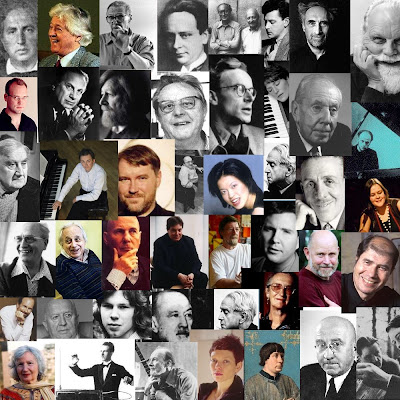

During 2006 Viktor Ullman, Pierre Villette, György Kurtág, Eric Whitacre, Rudolf Mauersberger, Antony Pitts, Morten Lauridsen, Dr Samuel Hoffman, Lou Harrison, Arvo Pärt, Antal Dorati, Bill Thompson, Herbert Howells, Michel Petrucciani, Nick Drake, Beata Moon, Frederic Rzewski, Ernst Hanfstaengl, Roger Mayor, Olivier Messiaen, Helen Ottoway, Charles Ives, Joby Talbot, Ivan Moody, Vanessa Lann, Ralph Vaughan Williams, Michael Berkeley, Thomas Crequillon, Jan Pieterszoon Sweelinck, György Ligeti, Brian Eno, Huw Watkins, Francis Poulenc, Hans Werner Henze, Thea Musgrave, Michael Tippett, Ruth Schonthal, Jan Johansson, Tansy Davies, Roland Dyens, John Coltrane, Darius Milhaud, many contemporary Finnish composers, Stuart MacRae, Julian Anderson, Malcolm Arnold, Heinrich Kaminsky, Gerald Finzi, Francis Pott, Michael Zev Gordon, numerous mid-20th century German composers, Joyce Koh, Nigel Osborne, several Icelandic composers, Moritz Eggert, composers who write for the theremin, George Ratzinger, Plastic People of the Universe, Robert Simpson, Iannis Xenakis, Peteris Vasks, Jacob Obrecht, Pete Seeger, Arnold Bax, Ali Ufki, George Lloyd, Huw Warren, Hugo Distler, Paolo Pandolfo, Viktor Kalabis, John Cage, and several little known 18th century Russian composers featured On An Overgrown Path, and are my People of the Year.

Dmitri Shostakovich, Wolfgang Amadeus Mozart, John Adams, Osvaldo Golijov, Tan Dun and Philip Glass also featured here in 2006.


Now decide how my choice compares with Time magazine's Person of the Year 2006.
Virtually all the composers in my first paragraph are in the montage - somewhere. Any copyrighted material on these pages is included as "fair use", for the purpose of study, review or critical analysis only, and will be removed at the request of copyright owner(s). Report broken links, missing images and other errors to - overgrownpath at hotmail dot co dot uk

Saturday, December 30, 2006

A New Year's Honour for classical music


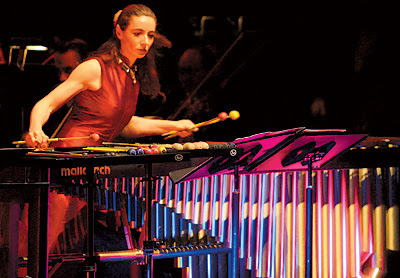
The 2007 UK New Year's Honours announced today are remarkable for the absence of political awards, which may have something to do with the current scandal over cash for honours. But classical music does appear in the awards, with Evelyn Glennie receiving a damehood for 'services to music'. Glennie (above) is a lady of many parts, and on her website describes herself as " solo percussionist, composer, teacher, motivational speaker and jewellery designer." She has strong views on the futute direction of music, and in June 2006 published an open letter to music professionals. Here is an edited version:

Dear Colleagues. My comments here demonstrate my huge concern over what our business is actually offering our customers today. As many of you know, I am naturally “stubborn” and do not just accept the dismissal of a need when there is an urgent requirement for its address in a healthy, open, honest and constructive way from ALL quarters of the business and beyond.

So who are our customers ? While my employer may be the many orchestras and other promoters that hire me to perform over 100 performances per year,
my customer is actually the paying public who come to these venues and events to be entertained and stimulated by our artistic endeavours and experience the passion which we bring to our specialities. An artist without passion is the same as any other employee who is just doing their job – our extra effort makes the difference.

I was rehearsing in the wonderful Disney Hall in Los Angeles – the new building designed by Frank Geary – and looked up and counted approximately 200 fixed lighting features and about 20 moving light fixtures -
I walked past far more backstage. There is also a fantastic sound system built into and especially for the space. I was banned from using all of it and was told that, “This is a concert Hall and not a theatre” and that the logistics of the event in which I was involved excluded even the modest audio reinforcement that I and the composer had requested. We have all the ingredients right in front of our faces to consistently put on great events but at this point I see this part of the music business and many of our performances like the ingredients of a cocktail sitting in a glass and needing to be shaken or stirred. Let's face it, we aren't going to repeat a bad cocktail experience by choice.

The elitism and refusal to accept that what orchestras are doing now is far less relevant to the general public is answered by the old mantra “they need to be educated”. I do not believe that entrenching ourselves in tried, trusted and accessible repertoire is the answer.
It cannot be denied that the composers of these pieces are great composers with many wonderful works available to us to experience - It is the only reason why these pieces continue to be performed. However, with the advent of the myriads of alternative entertainments available to the public why should they want to come to hear the same thing time and time again done in exactly the same way? We would not expect a contemporary artist to continue to play the same repertoire endlessly and continue to make a living yet this is exactly what we see the orchestras doing.

Despite the classical orchestras being perhaps the older of the Arts we have not learnt new tricks. The pop world, theatre, dance and the graphic and written arts have all reinvented themselves and where deserved, thrive. This is also known as evolution. Dame Evelyn Glennie OBE, June 2006

But for an opposing view read about The latest avant garde tricks.
Any copyrighted material on these pages is included as "fair use", for the purpose of study, review or critical analysis only, and will be removed at the request of copyright owner(s). Report broken links, missing images and other errors to - overgrownpath at hotmail dot co dot uk

Berlin parties as Europe expands

Berlin’s Brandenburg Gate is the place to be on New Year's Eve as a huge party gets underway to welcome Bulgaria and Romania to the EU. The headline act is the Scissor Sisters, with the two new member states supplying support in the form of Bulgarian rock singer Roberta and Romanian band Sistem, and more than one million visitors are expected to attend. The Brandenburg Gate has been the scene of a number of famous free concerts including Leonard Bernstein’s Beethoven Ninth in 1989, see the photo above. If you can’t be in Berlin tomorrow night the next best thing is to join in the fun online via this link.

* Now playing - Michael Tippett's suite from his opera New Year. Not exactly party music, the opera is set on New Year's Eve in Terror Town where the principal characters face up to life in a violent, blighted society with the help of friendly space voyagers. There is only one recording, Richard Hickox presides over the fun with the Bournemouth Symphony Orchestra.

For more on eastern European music read how Composers struggle under Shostakovich regime
Any copyrighted material on these pages is included for "fair use", for the purpose of study, review or critical analysis only, and will be removed at the request of copyright owner(s). Report broken links, missing images and other errors to - overgrownpath at hotmail dot co dot uk

Friday, December 29, 2006

The musical tastes of our politicians

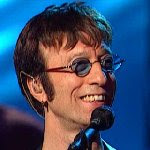
Downing Street last night insisted that Tony Blair had paid properly and in full for his winter break, after a day of confusion over the arrangements surrounding his stay in the Miami mansion of former Bee Gee Robin Gibb (left). As yet another political storm rages around Blair's holiday arrangements it is difficult to know what is more suspect, his financial judgement or his taste in music. But appalling musical taste is not limited to the prime minister, as Michael Church pointed out in an Independent article in July.

What it adds up to is the rampant anti-intellectualism that I found Sir Peter Maxwell Davies (below) raging against, when I visited him at the Royal Academy of Music. The Master of the Queen's Music has just been listening to David Cameron's Desert Island Discs choice on BBC Radio 4, and he's not amused. "In any other European country," he says, "a politician who chose that sort of garbage would be laughed out of court. The anti-artistic stance of our leaders gets up my nose. Their main aim is to turn us all into unquestioning passive consumers who put money into the bosses' pockets. That is now the purpose of education."

David Cameron is the leader of the Conservative Party, and here is the music which caused Max to rage.

1. Tangled Up In Blue, Bob Dylan, CBS 26334
2. Ernie, Benny Hill, EMI CDGO 2040
3. Wish You Were Here, Pink Floyd, EMI 536112
4. On Wings of Song, Mendelssohn, Kiri Te Kanawa and Utah Symphony Orchestra
Decca 475 6013
5. Fake Plastic Trees, Radiohead, Parlophone CDRS6411
6. This Charming Man, Smiths, WEA, YZ000ICD2
7. Perfect Circle, R.E.M, I.R.S.DMIRHI
8. All these Things that I've Done, The Killers, Lizard King,Lizard012

Book:The River Cottage Cookbook by Hugh Fearnley-Whittingstall
Luxury: A crate of Scottish whisky.

For more on the musical tastes of politicians visit Condoleezza's musical mystery tour revealed, and for more Maxwell Davies visit A musician with teeth,.
Image credit - MaxOpus. Any copyrighted material on these pages is included as "fair use", for the purpose of study, review or critical analysis only, and will be removed at the request of copyright owner(s). Report broken links, missing images and other errors to - overgrownpath at hotmail dot co dot uk

Thursday, December 28, 2006

Sibelius – his genius remains unrecognised

The history of the rise of Sibelius in the good opinion of the fashionable intelligence makes an interesting story. Thirty years ago he was known in the parks, around the bandstands, as the composer of ‘Finlandia’; at concerts he was occasionally represented on the less austere evenings by the ‘Valse Triste’. Outside Finland a few musicians had studied the scores of the First and the Second of the symphonies; and the one in E minor was confidently supposed to be written in the manner and idiom of Tchaikovsky. Not until after the war of 1914-1918 was Sibelius taken up by the best people of Great Britain and America; on the continent in general his genius remained (and remains) more or less unacknowledged or unrecognised.

The remarkable fact is that the more bald and taciturn Sibelius’s music became, the more and more his public grew in the places where it was played at all. The critics and the coteries of London were condescending about the First and Second symphonies, in which he exploits spacious tunes and strong and palpable and far-flung rhythms. It was only after he had pared his music down to the bone and adopted the aspect of aloof austerity that he interested the post-1918 leaders of what is what in the arts. Then the gramophone companies surprisingly ventured on his symphonies, all of them, even the grim and forbidding Fourth. Sibelius the swooning voluptuary of the ‘Valse Triste’; Sibelius the military-band rhetorician of ‘Finlandia’; and Sibelius the big-fisted and big-chested extravert of the E minor symphony lived to see himself drawn in as a heavy reinforcement to aid the reaction against romanticism.


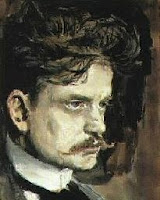
Neville Cardus, celebrated music critic of the then Manchester Guardian, writes in 1944, at a time when music critics were wordsmiths rather than HTML wizards. In 2007 we celebrate important anniversaries for both Jean Sibelius and Edvard Grieg. By a strange coincidence these two Scandinavians died almost exactly fifty years apart, Sibelius on September 20th 1957 and Grieg (right) on September 4th 1907. Sibelius’ lifespan was extraordinary. He was born in 1865, the year when the American Civil war ended. He did not compose at all for the last thirty years of his life, and when he died in 1957 the Korean War had been ended for four years, and Elvis Presley’s Heartbreak Hotel had sold more than a million copies.

Let me make my own position on Sibelius clear. I stood in the grounds of Sibelius' house in Järvenpää and heard the beating of the swans' wings, and I felt the force - give me one bar of Sibelius for one symphony of Shostakovich. And for those who think the music of Sibelius and Grieg is just Scandinavian bombast here are three thought provoking CDs for their anniversary year.

* Edvard Grieg – Lyric Pieces played by Emil Gilels. These pieces are often thought to be the province of children and music teachers, but these juvenile connotations are quite wrong. These exquisite piano miniatures combine lyricism with a deep maturity, and Gilels 1974 recording made in Berlin by legendary DG producer Gunther Breest is a classic of the gramophone.


* Jean Sibelius – Works for String Orchestra played by Ostrobothnian Chamber Orchestra conducted by Juha Kangas. A wonderful selection of little known Sibelius including incidental music for the stage and his little Suite in D Minor for violin and strings. The Suite lasts for less than eight minutes, but it is tremendously important. It was composed in 1929, five years after the Seventh Symphony. Soon after writing the Suite Sibelius the composer fell silent, although he continued to work on the Eighth Symphony in secret. The Eighth disappeared in the flames of the composer’s self-criticism, which at least spares us a BBC commissioned completion for the 2007 Proms.

* Joan Baez - Bowery Songs. This live album is a the product of the 2004 Presidential election. As conventioneering and electioneering fever grew more heated in the US Michael Moore's Fahrenheit 9/11 stirred the pot, and Baez joined Rage Against The Machine's Tom Morello for the West Coast leg of Moore's 'Slacker Uprising Tour.' For the opening track of the live album Baez sings an a cappella version of Finlandia to which she has added her own words which start with: "This is my song, a song of peace for lands afar and mine." Sibelius composed Finlandia to express his opposition to Russian influence over Finland, and his hymn to peace remains as relevant today as it was in 1899. Listen to Joan Baez's unique take on Finlandia here (1' 50") -

Now read an American critic’s opinion of Sibelius in Pliable’s Path
Neville Cardus quote from Ten Composers published by Jonathan Cape, 1945. Audio sample linked from Joan Baez.com. Any copyrighted material on these pages is included for "fair use", for the purpose of study, review or critical analysis only, and will be removed at the request of copyright owner(s). Report broken links, missing images and other errors to - overgrownpath at hotmail dot co dot uk

Wednesday, December 27, 2006

Free MP3 downloads as jazz station launches

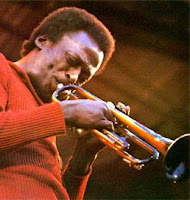
A new online and UK digital radio jazz station launched on Christmas Day. Playing bepop to contemporary, theJazz is coming from the same stable as Classic FM. With 6.3 million listeners Classic FM is the UK's most successful commercial station, and the audience grabbed by its its smooth classics format has been a major factor in the dumbing down of BBC Radio 3. If theJazz follows Classic FM's easy listening formula it isn't going to push the envelope too far. But let's give it the benefit of the doubt. You can listen via this link, and to be totally cool theJazz is offering some free downloads until January 2nd. They include Bill Evans, John Coltrane and Miles Davis, just follow this link.

Now push the envelope a little more with A jazz supreme.
Any copyrighted material on these pages is included as "fair use", for the purpose of study, review or critical analysis only, and will be removed at the request of copyright owner(s). Report broken links, missing images and other errors to - overgrownpath at hotmail dot co dot uk

I am a camera - Vincent Van Gogh


On 24th December 1888 Vincent Van Gogh threatened Paul Gauguin and cut off the lobe of his own left ear. Eighty local residents in Arles signed a petition demanding that he was confined, and in May 1889 Van Gogh commited himself to the insane asylum in Saint Rémy de Provence. When he arrived at the asylum he was met by Doctor Théophile Peyron, the director. The doctor welcomed his new guest who calmly undertook the admission formalities, and confirmed his request for voluntary confinement.

The house was vast and partly unoccupied, thirty rooms were empty and Van Gogh was able to use one of these as his studio. He stayed in Saint Paul de Mausole until his departure fifty three weeks later. His period of intense creative activity there changed the course of western art, and produced an astonishing output of 150 paintings and 100 drawings. Among them are many of his best know works including Starry Night and Cornfield and Cypress Trees. Two months after leaving Saint Remy Van Gogh shot himself in the chest, and died aged 37.


Van Gogh’s precarious mental state caused his extraordinary outburst of creativity in Provence, but the hospital of Saint Paul de Mausole was the catalyst. During his confinement this remarkable institution encouraged his painting and gave him the facilities and space to work, and most importantly allowed him to paint in the local countryside accompanied by an attendant. The far sighted Doctor Peyron was practicing an early form of art therapy, and Saint Paul de Mausole continues as a working psychiatric hospital today. It now cares for more than 100 patients and offers them workshops in art therapy, music and painting among architecture and landscape of staggering beauty.


We visited Saint Paul de Mausole in September 2006 when the photographs in this article were taken. The hospital is located in the monastery of Saint Paul which dates from the 10th century, and the beautiful buildings with their Romanesque cloister and church , which ares seen above, were taken over by the Fransciscans in the 17th century who started to use them as an insane asylum. Following the Revolution the monks were expelled, but the institution continued to work with psychiatric patients through to the present day, the only interruptions being World War 1 when prisoners from Alsace Lorraine were interned there, including Nobel Prize winner, organist and Bach scholar Albert Schweitzer, and World War II when it was requisitioned by the German Army.

The buildings were extensively restored in 2002, and are now run by the not-for-profit Association et Centre d'Art Valetudo. The monastery is open to visitors, and a permanent exhibition of paintings by patients is displayed in the cloister and renovated Romanesque staircase. At the top of this stair is a reconstruction of Van Gogh’s room; the view through the barred windows (below) of that so familiar landscape with its olive and cypress trees in intensely moving.


Saint Paul de Mausole is an inspirational establishment that pioneered the treatment of psychiatric illness, and it still continues today the therapies that fanned the flames of Vincent Van Gogh’s creativity. There is no better summary of its work than the manifesto for a painter’s co-operative that Van Gogh set out in a letter to his brother Leo: - “Artists won’t find anything better than living together, giving their paintings to their association, which in return would allow them to live and work. “

Now, for more on therapy and France take An Overgrown Path to Serendipity 2
All photos taken by Pliable in September 2006 and (c) On An Overgrown Path. Any copyrighted material on these pages is included for "fair use", for the purpose of study, review or critical analysis only, and will be removed at the request of copyright owner(s). Report broken links, missing images and other errors to - overgrownpath at hotmail dot co dot uk

Tuesday, December 26, 2006

Many musicians are just making a quick buck


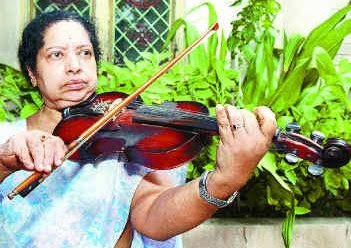
"At present," she says ruefully, "there is a growing trend towards commercialisation, with many musicians practically playing to the gallery just to make a quick buck rather than for the love of the Classics. This explains why many students stop attending classes after they have developed a certain level of proficiency." The perennial sellers are compositions of the Baroque and Romantic composers, and the Hooked On Classics series.

"Today, the keyboard has replaced many instruments. Though a number of piano teaching classes have mushroomed all over the city, the students prefer to learn the keyboard. As a result, there are fewer takers for piano classes these days. As for other instruments such as the violin and the flute, the numbers are dwindling."

Another doomsday report from the musical front line in the US or UK? Well actually no. Extracts from a very interesting article in The Hindu on the decline of Western classical music in India. Thanks to the excellent Traditional Catholic blog for the heads-up. Now sample the essence of India.

Header image from The Hindu. Any copyrighted material on these pages is included as "fair use", for the purpose of study, review or critical analysis only, and will be removed at the request of copyright owner(s). Report broken links, missing images and other errors to - overgrownpath at hotmail dot co dot uk

Europe's news secret weapon - culture

With industry in decline and high streets dominated by Far Eastern imports, Europe has discovered a secret economic weapon: culture. The arts and creative industries now earn more than double the cash produced by European car-makers and contribute more to the economy than the chemical industry, property or the food and drink business.

An independent study commissioned by the European Commission has underlined the changing way in which Europeans earn their living. Throughout the Continent people are now much more likely to work in sectors such as television, fashion or other "niche" jobs than in a car assembly plant.

The sector employs no fewer than 5.8 million people, more than the working population of Greece and Ireland together. While jobs disappeared overall in the EU between 2002-04, they actually rose by 1.85 per cent in the culture and creative sectors. And creative workers tend to be better educated and more flexible than others. Almost half have a university degree, as opposed to about one-quarter of the overall working population, and the sector has twice the standard rate of self-employed people.

Jan Figel, the
European commissioner for education, training, culture and multilingualism, said: "This study confirms that the arts and culture are far from being marginal in terms of their economic contribution. The culture sector is the engine of creativity, and creativity is the basis for social and economic innovation." The study draws on a broad definition of the cultural sector, beyond traditional areas such as cinema, music and publishing. The written press, radio and television, and creative sectors such as fashion and interior and product design, cultural tourism, the performing arts, visual arts, and heritage, were included - reports today's Independent.


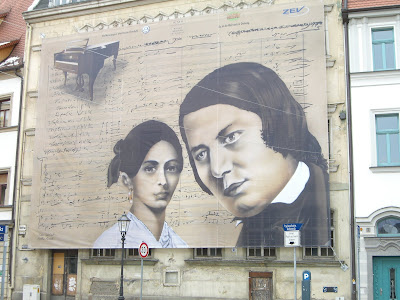
My header photo shows Zwickau's tribute to local boy Robert Schumann. For more on Europe's cultural secret weapon take An Overgrown Path to Leipzig and Dresden, and read how in Europe music history was rewritten.

Header image taken by Pliable March 2006 (c) On An Overgrown Path. Any copyrighted material on these pages is included as "fair use", for the purpose of study, review or critical analysis only, and will be removed at the request of copyright owner(s). Report broken links, missing images and other errors to - overgrownpath at hotmail dot co dot uk

Sunday, December 24, 2006

A Very Happy Christmas To All My Readers


Church attendance, baptisms and religous marriage vows may be on the decrease, but the Holy Spirit is at work, with a great spiritual awakening in Europe that goes beyond institutional structures. There is in general an increased awareness that we are spiritual beings with an invisible dimension that demands our exploration and understanding. The yearning for the sacred is universal, and love, the highest of all human and divine expressions, is the crown jewel of spiritual life - Stafford Whiteaker.

The image is of a copy of a 16th century portable icon from the Monastery of the Transfiguration at Meteora, Greece. Stafford Whiteaker has been a member of a Christian monastic community, and is author of the Good Retreat Guide.


For more on spiritual awakening take An Overgrown Christmas Path to There is a green hill faraway called Taizé
Any copyrighted material on these pages is included as "fair use", for the purpose of study, review or critical analysis only, and will be removed at the request of copyright owner(s). Report broken links, missing images and other errors to - overgrownpath at hotmail dot co dot uk

This Christmas I'll be a child again


I don't think there are any boys for whom the singing is a deep religious experience.

My mother says I was born three weeks late and that it was typical of me.

Talking one's way out of fights is a very useful skill. Once a mugger said, 'Give me your iPod' and I said, 'I'd rather not', and he said, 'Well, I'd rather not hit you', and I said, 'Oh come on', and he was a bit confused by that and then said, 'How much money have you got?', and I said 'Oh, only a couple of quid', so he thought a bit more and then walked off. Another time a chav on crutches tried to mug me.

I have a weird feeling when I look at myself or my reflection. 'How can that work?' That I exist and am conscious of myself and things move when I want them to move. It's pretty weird. My parents could have created countless different people. Yet they created me, Maud and Tolly.

The biggest cheque I've received from Westminster Abbey is £260, for the year which included various tours and the death of the Queen Mother. It's all in a high-interest account.

As you approach the end of a hymn it's like everyone in the congregation is holding their breath before they can begin coughing, sneezing, rustling or fidgeting.

Having milk or chocolate the night before a concert is not advised, because it coats the throat.

To be called a faker - faking off, faking a cold - is a big insult among chorists.

Ben the Westminster verger can always be relied upon to tell a couple of good, random, really, really bad jokes as you line up waiting in the cloisters. Like, 'How do you stop a rhino charging? Take away its credit card.'

There's a knack to carrying a candle. It basically involves a firm grip, not moving your hand around and keeping it on the exact level with the candle of the person adjacent to you.

You don't break down in tears when your voice finally breaks and you can't sing treble any more. You can stay on at school for the rest of the year and wear a different, stripy tie. And it feels cool and manly to sing down low. I'm not a bad baritone.

There's regular school choir service and local church choir this Christmas and I get to go back to Westminster Abbey, but I feel I may never be as 'famous' as I was until 14.

It's important to have a straight back, a straight neck, to look and sing up and out (never at the congregation) and to not shift your weight because the swaying is more noticeable than you think.

The best place to sing at home is in the living room, if my sister's not in there, or in my bedroom with the window open, so it has somewhere to go.

Historically the dean has all the choir schoolboys over to his house at Christmas, for murder in the dark, sardines, a treasure hunt and wrapping each other up in toilet paper as mummies. But this Christmas I'll get to be a child again at home and have a wonderful meal at Grandma's.

We had a nasty scare last year when the hospital phoned to say my grandfather was dead. But it turned out they'd made a mistake. Mother texted the message 'Grandpa not dead after all.'

I used to support QPR - but then I actually went and saw them play.
(That link, and the definition of chav, is for my many US readers - Pliable.)

I was named after a Jacobite ancestor [Dr Archie Cameron] who was hung, drawn and quartered - on my birthday.

For Christmas last year my parents gave me ... hmmm ... I've forgotten. I want nothing specific this year. But if it's an Xbox 360, I'm not complaining.


Lovely Christmas piece from today's Observer. Now, as we celebrate Peace on earth, read about the German choristers from the Kreuzchor who sung in the Dresden Requiem for eleven young victims. The boys of the Kreuzchor also supply the photographs for this article.

Picture credits: Header Berliner Morgenpost, footer Dresden Kreuzchor. Any copyrighted material on these pages is included as "fair use", for the purpose of study, review or critical analysis only, and will be removed at the request of copyright owner(s). Report broken links, missing images and other errors to - overgrownpath at hotmail dot co dot uk

Saturday, December 23, 2006

Simple gifts – a guilt-free Christmas CD


This is the perfect guilt-free Christmas CD. Don’t worry about dumbing down - it has shed-loads of scholarship and musicianship. But don’t worry about muesli and sandals – it delivers demonstration quality sound, has all the favourite Christmas tunes you will ever need, and finishes with one of the great moments of recorded music, the recessional carol In dulci jubilo complete with organ, instrumental ensemble and a very large choir in a 12th century cathedral.

A Mass for Christmas Morning presents a selection of Michael Praetorius’ music arranged as it might have been heard in one the large churches in central Germany in the early 17th century. Praetorius was born into a strict Lutheran family, and his compositions became the musical core of the liturgy of Protestant churches in northern Germany. The Lutheran Mass uses the basic structure of the Roman mass, but with more congregational participation – which gives a great opportunity to produce a sonic spectacular.

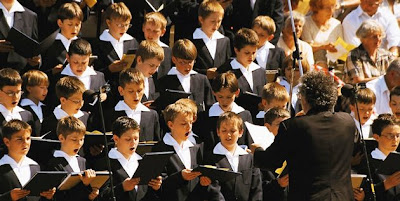
The versatile Paul McCreesh compiled the mass and conducts. His Gabrieli Consort & Players uses authentic instruments, and include well-known singers such as Sally Dunkley. The professional artists are supplemented by the excellent Boy’s Choir and Congregational Choir of Roskilde Cathedral (my header photo shows the boys), and these choirs are supplemented in turn by local amateur forces. The recording venue is Roskilde Cathedral in Denmark which provides suitably resonant acoustics, and a perfect organ in the form of a three manual instrument dating from 1554.

The final clincher for this guilt-free Christmas purchase is the price. The recording was made by Archiv in 1994. Which means that in today’s crazy music market where the new is valued above everything else, this CD is now available for mid-price or lower – I paid £7.85 ($15.50) for mine from Caiman in Florida delivered to the UK. Don’t worry about the date of the recording. Like a fine wine this Mass for Christmas Morning simply gets better with age, but unlike claret it gets cheaper at the same time.

Now spend more time in Denmark with a Danish thread
Any copyrighted material on these pages is included for "fair use", for the purpose of study, review or critical analysis only, and will be removed at the request of copyright owner(s). Report broken links, missing images and other errors to - overgrownpath at hotmail dot co dot uk

The BBC is performing badly

When a business performs badly its share price drops. Yesterday's news that the UK government has imposed a six-year below inflation cap on the BBC's annual license fee increase was the public sector equivalent to a plunge in share price, and it confirms what a lot of people have been saying for a long time - the BBC is performing badly. The license fee decision prompts a Guardian leader to say "a measure of economy is overdue in some parts of the organisation, as extravagant pay deals for Jonathan Ross and other celebrities have recently shown", but this does not stop predictable bleating from the BBC as today's main Guardian story reports:

'In an email to staff, the BBC's director-general, Mark Thompson, admitted the reported settlement was a "real disappointment" and warned it would mean "some very difficult choices" for the BBC. "Even with a settlement as tight as this one we would still remain totally committed ... to doing everything we can to maintain the quality and creativity of our services to the public," he said.

On An Overgrown Path says the BBC can still produce great programmes such as the radio documentary on Brother Roger of Taizé that I praised here this week. But quality content in the form of BBC Radio 3 is being remorselessly dumbed down to become Radio 2.5. In recent weeks we have had Aled Jones presenting a 'lad's guide' to Christmas choral music, and In Tune celebrating multi-culturalism with a dittie about Polish plumbers that would not have been out of place in a Murdoch tabloid newspaper. Meanwhile presenters are using their newspaper columns to defend the network's dodgy habit of claiming commercial recordings as the Corporation's own work, and elsewhere top BBC TV personality Jeremy Clarkson is being reprimanded for homophobic comments. It is clear that the quality and creativity of BBC services was in decline long before this license fee cap was announced.

* Every UK household has to pay the annual BBC license fee, including students living in private accomodation. The fee currently stands at £131.50 ($250)


* The £6 $5.5m) million annual salary to BBC presenter Jonathan Ross compares with an annual new music commissioning budget of around £350,000 ($650,000)

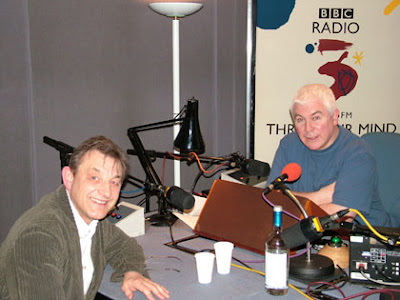
Now read how the BBC Annual Report gets its facts wrong - and On An Overgrown Path's Christmas Quiz is to identify the contents of the bottle in the foreground of my picture of the BBC In Tune studio with presenter Sean Rafferty and Trevor Pinnock. (Photo credit BBC).
Any copyrighted material on these pages is included as "fair use", for the purpose of study, review or critical analysis only, and will be removed at the request of copyright owner(s). Report broken links, missing images and other errors to - overgrownpath at hotmail dot co dot uk.

Friday, December 22, 2006

The Madonna of Stalingrad

"I spent Christmas evening with the other doctors and the sick. The Commanding Officer had presented the letter with his last bottle of champagne. We raised our mugs and drank to those we love, but before we had had a chance to taste the wine we had to throw ourselves flat on the ground as a stick of bombs fell outside. I seized my doctor's bag and ran to the scene of the explosions, where there were dead and wounded. My shelter with its lovely Christmas decorations became a dressing station. One of the dying men had been hit in the head and there was nothing more I could do for him. He had been with us at our celebration, and had only that moment left to go on duty, but before he went he had said: "I'll finish the carol first, O du Frohliche!" A few moments later he was dead. There was plenty of hard and sad work to do in our Christmas shelter. It is late now, but it is Christmas night still. And so much sadness everywhere."

The German army was trapped outside Stalingrad during the bitterly cold Christmas of 1942. Among the German troops was Kurt Reuber, a clergyman and doctor. Drawing on the back of map of Russian (the folds can be seen on the reproduction above) he used a stick of charcoal to portray Mary holding the baby Jesus in her arms, and shielding Him with her arms.
The opening words are taken from Kurt Reuber's last letter before he was captured by the Russians. He perished in a Soviet prisoner-of-war camp.

His family chose the Kaiser Wilhelm Memorial Church in Berlin to display the Madonna of Stalingrad, and to pass on the message of light, love, and a sense of protection contained in this moving drawing. A message particularly appropriate at this Christmas time.

Two copies of the Madonna have been sent from Berlin as symbols of hope and reconciliation. One is in Coventry Cathedral which was destroyed by German bombs in 1940, and reconsecrated in 1962 with the first performance of Britten's War Requiem. The other is in the Russian Orthodox Church in Volgograd (formerly Stalingrad).


For more on the Kaiser Wilhelm Memorial Church take An Overgrown Path to Music rises from the ruins in Berlin
The full story of Kurt Reuber and the Madonna, from which the quotation above was taken, can be read here. Image credit: Scanned from reproduction purchased in the Kaiser Wilhelm Memorial Church in Berlin. Any copyrighted material on these pages is included as "fair use", for the purpose of study, review or critical analysis only, and will be removed at the request of copyright owner(s). Report broken links, missing images and other errors to - overgrownpath at hotmail dot co dot uk

Celebrating with Saint Sarah


Conflict in Palestine and the persecution of minorities are topical themes today, But this Overgrown Path takes us back 2000 years when, following the crucifixion of Christ, Christians were persecuted in Palestine and sent into exile by the Jews. Boats containing religious refugees were regularly sent to far flung destinations in the Mediterranean, and one of these boats contained the biblical figures of Mary Magdalene, Mary Jacobe and Mary Salome and the resurrected Lazarus. At the last moment their black Egyptian servant, Sarah, was allowed to join the refugees, and their boat made landfall on the Camargue in the very far south of France. The exiles built an oratory at the point where they landed, and today this has grown into Les Saintes-Maries-de-la-Mer, one of Provence’s most holy places and famous as a centre of pilgrimage for Romas and many others.

We made the pilgrimage by car from East Anglia to the Rhone Delta, a distance of just over 1000 miles. Today Saintes-Maries is best known for the pilgrimage of Mary Jacobe in May, this attracts thousands of gypsies from all over the world as they have canonized her servant Sarah as their patron saint. The relics of Saint Sarah are in the 12th century church. The Camargue was a vulnerable frontier in medieval times, and subject to raids by the Saracens. As a result the church (right) is one of the most impressive fortified churches in Provence. Its crenallated exterior has loop-holes for windows, and inside there are wells in the nave to supply the church-fortress when it was under siege. My header photograph shows the crypt where the relics and statue of St Sarah in her seven robes are kept. The importance of Les Saintes-Maries-de-la-Mer as a pilgrimage destination means that the statue of Sarah has been kissed so many times that the black paint has been worn away in places.


Now playing - Song of Sara by Manitas de Plata. The Camargue is famous for its gypsy music, and Manitas de Plata (below) is regarded as one of the greatest exponents of flamenco. He was born in a Gitano Gypsy caravan in Sète on the western fringe of the Camargue. For a full biography and sound files follow this link. He is related to the Calé musicians, the Gypsy Kings, who took flamenco into the mainstream. Song for Sara is playing on the CD Guitarra Flamenca de la Camargue recorded by Los Gitanos, which also contains Gypsy King and traditional tracks. This Overgrown Path started with a pilgrimage from East Anglia to the Camargue, and this CD of gypsy music from the Camargue brings the journey full circle as it was recorded here in East Anglia in the south transept of Ely Cathedral by the enterprising Lantern Productions. The sound is excellent, and the music making is wonderful. You can only buy it from the Lantern website or Ely Cathedral shop, but it is well worth seeking out.

• Provence is a veritable bouillabaisse of races, religions and legends. My version above is the commonly accepted version of the legend of St Sarah. But there are several alternatives. One claims that Sarah was a native of Provence born into a noble race and queen of her tribe, who welcomed the Marys and was converted to Christianity by them. Another legend claims that Sarah was Egyptian and abbess of a large convent in Libya, while a third says that she was a Persian martyr.

Bill Clinton, Charlie Chaplin, Rita Hayworth and Shayne Ward all claim to be descended from gypsies, but the the Romas still remain the forgotten diaspora of Europe. At the time of the discovery of the relics of the Marys in the 1440s there was a convergence of Romas in Provence with groups coming from as far afield as North Africa, Spain, Greece and the Balkans. Now read about Roma - the forgotten Holocaust victims

Header photo by Pliable, September 2006. Any copyrighted material on these pages is included as "fair use", for the purpose of study, review or critical analysis only, and will be removed at the request of copyright owner(s). Report broken links, missing images and other errors to - overgrownpath at hotmail dot co dot uk

Thursday, December 21, 2006

Key ruling in organ court case

In a judgment that could have profound consequences for the music business, the organist on the 1967 Procol Harum record won the right for a share of the song's royalties. Gary Brooker, the band's singer and co-founder who had contested the action, said the decision represented a "darker shade of black" for the music industry.

Matthew Fisher, 60, who played the Hammond organ on the record that has since sold 6m copies, claimed that the distinctive opening bars of the song, which he had provided with some inspiration from JS Bach, should have entitled him to joint authorship, along with Brooker and the lyricist, Keith Reid. Mr Justice Blackburne, who heard six days of evidence from both sides last month, ruled that Mr Fisher's contribution entitled him to 40% of the composing half of the royalties, but back-dated only until May 2005, when he began his legal action.

From today's Guardian - now read how Culture is remix
Any copyrighted material on these pages is included as "fair use", for the purpose of study, review or critical analysis only, and will be removed at the request of copyright owner(s). Report broken links, missing images and other errors to - overgrownpath at hotmail dot co dot uk

Not much of a career - but free MP3s

"You don't have so much of a career now," I say, when I meet the Russian pianist Andrei Gavrilov. In 1974 Gavrilov (left) was the youngest ever winner of the prestigious Tchaikovsky piano competition, aged just 18. He was a protege of the great Russian pianist Sviatoslav Richter, and a superstar in the 1980s. In 1990 he had a recording deal with Deutsche Grammophon and the world at his feet - or, rather, his fingertips.

That was then. It's been all downhill since - a story of abandoned concerts, loss of confidence, the end of the DG deal, a broken marriage. It was a personal and artistic implosion, though which fed which is hard to say. I asked a friend, who knows his musical onions, what Gavrilov meant to him. Nothing. He was too young. Gavrilov hasn't made any recordings since the mid-90s, and he hasn't played many concerts either. He was history.


From today's Guardian interview with fallen superstar Andrei Gavrilov, and the article allows you to download new recordings by him of seven Chopin Nocturnes.

* If you don't know Gavrilov's recording of Handel's Keyboard Suites made with Sviatoslav Richter in 1982 when Gavrilov was an EMI superstar you are missing something seriously beautiful - two double CDs at mid-price here and here.

But now follow this link and read about The Real Piano Man
Any copyrighted material on these pages is included as "fair use", for the purpose of study, review or critical analysis only, and will be removed at the request of copyright owner(s). Report broken links, missing images and other errors to - overgrownpath at hotmail dot co dot uk