Posts

Showing posts with the label john cage

John Cage's crazy creativity

Image
Crazy wisdom, as exemplified by the celebrated but controversial  Chögyam Trungpa Rinpoche , is wisdom gone wild. It is wisdom expanded beyond conventional intelligence and beyond the concept of ordinary people. Similarly, crazy creativity is creativity gone wild, and the importance of the threatened art of crazy creativity is seriously underestimated in today's  algorithmically flattened culture .  Social psychologist and scholar Donald T. Campbell   has proposed that dependence on random mutation does not just apply to human evolution, but also to creative evolution. So no random mutation in the creative process means no development. All creativity depends on taking old ideas and combining them in new, unusual, and sometime wrong ways. Without this vital mutation there would be no variability, meaning all art would become nothing more than a replica of the preceding art.  John Cage's pioneering work is one outstanding example of crazy creativity combinin...

With or without AI we are facing a pandemic of slop

Image
In his new book  A Trick of the Mind   experimental psychologist and cognitive neuroscientist  Daniel Yon   provides a thought-provoking take on AI. He proposes that the borders between human creativity and AI are more porous than the dominant narrative suggests , explaining that  there is a close symmetry between what happens in AI's artificial neural networks, and what happens in the networks of our own minds.  Human evolution depends on random variability. Without genetic mutation there would be no variability and humans would never change, meaning every child would be an exact copy of their parents.  Daniel Yon expands the work of social psychologist and scholar  Donald T. Campbell   to propose that this dependence on random mutation does not just apply to human evolution but also to creative evolution. So no random mutation in the creative process means no development. All creativity depends on taking old ideas and combining...

Young Britten

Image
That photo was taken by me today on the seafront at Lowestoft . Here is the opening section of Young Britten  in Alex Ross' acclaimed book The Rest Is Nois e. Homosexual men, who make up approximately 3 to 5 per cent of the general population, have played a disproportionately large role in composition of the last hundred years. Somewhat around half of the major American composers of the twentieth century seem to have been homosexual or bisexual: Copland, Bernstein, Barber, Blitzstein, Cage, Harry Partsch, Henry Cowell, Lou Harrison, Gian Carlo Menotti, David Diamond, and Ned Rorem. In Britain, too, the art of composition skewed gay. The two young composers who seized the spotlight in the early postwar era were Britten and Michael Tippett, neither of whom made an effort to hide their homosexuality.   Alex's book provides a salutary reminder of what we have lost in the era of lowest common denominator music writing . As does his long-running The Rest Is Noise website ;...

I know nothing about music but I know what I like...

Image
'People say, sometimes, timidly: I know nothing about music but I know what I like. But the important questions are answered by not liking only but disliking and accepting equally what one likes and dislikes. Otherwise there is no access to the dark night of the soul... Silence; Lectures and Writings by John Cage Recent listening and reading: Edmund Rubbra: Symphonies Nos. 2 & 4 - BBCSO, Sir Adrian Boult & Edmund Rubbra Circling the Sacred Mountain , Robert Thurman & Tad Wise Oregon in Performance - Oregon Tales of Protection - Erik Fosnes Hansen That Which Colors the Mind - Ali Akbar Khan, Zakir Hussain, Indranil Bhattacharya No Place to Hide, Edward Snowden, the NSA & the Surveillance State - Glenn Greenwald Oriente Lux - Orpheus 21 , Hesperion XXI, Jordi Savall Zen Roots - Red Pine Malcolm Arnold, Complete Music for Solo Piano - Benjamin Frith 

When classical music was taken seriously

Image
In a transcribed interview archived in the Smithsonian Institute, John Cage describes the Seattle arts scene in the late 1930s:  What was important in Seattle was that so little was going on that anything that did go on was taken seriously. At that time, the gallery at the University of Washington would have a show that would last a month or six weeks and we would go and go and go and talk and talk and think about that one thing. Or if something came to the theater we would go to it and take it very seriously.  Is streamed classical music taken seriously by today's multi-tasking and shortened attention span listeners ? If listening to Apple Classical, Spotify and other streaming services is not a serious activity , does this explain why the earnest atmosphere of live concerts deters new classical audiences ? Was Benjamin Britten right when he told us "Music demands ... some preparation, some effort, a journey to a special place"?

Music is emptiness

Image
That CD above features the shakuhachi flute . It was originally used by the monks of the Fuke Zen Buddhist sect in the practice of suizen (blowing meditation), and for those wanting to learn more Blowing Zen by Ray Brooks is recommended. Below is an excerpt from the Heart Sutra in a translation used at Zen Mountain Monastery , Mount Tremper, New York. In the Buddhist context emptiness is not nihilistic: it does not refer to a conceptual ground zero.  Emptiness refers to transcendental impermanence - the absence of ego, and the absence of judgement and discrimination.  John Cage was heavily influenced by Zen , and there is so much the classical music industry could learn from Zen and other wisdom traditions, if it would simply  put egos aside  and listen,. As Aaron Copland explained , "When the audience changes, the music changes". Technology and lifestyle changes mean classical audiences are impermanent . Just as performance styles, concert conventions...

Contemporary music of changes

Image
The I Ching , famously used by John Cage in the composition of his Music of Changes , is identified as a book of divination. However there are fascinating parallels with the binary technology that drives our contemporary digital culture. The sixty-four abstract figures of the I Ching are each composed of six lines. These lines can have one of two forms - divided (negative = binary 0) and undivided (positive = binary 1).  In his The Way of Zen   John Cage's friend Alan Watts compares the I Ching to the Rorschach ink-blot test used in psychological testing. He explains that just as a patient applies his own projections upon the ink-blot, so the user can project their own interpretation on to the hexagrams of the I Ching . In this respect the I Ching's   freedom of interpretation differs fundamentally from our binary culture which discourages individual interpretation and encourages online groupthink.   Quite why Alan Watts' prescient wisdom is so...

Does classical want a new audience or a larger old audience?

Image
In a 1982 interview Merce Cunningam described how John Cage's satori came when he separated sound from meaning. Today in the classical world the assumption that sound must have meaning dominates. Programmatic symphonies are supplemented by film music and musicals with meaningful narratives, and socially meaningful - aka virtue signalling - programming in a futile attempt to attract a new audience . But the target for a new classical audience is, by definition, the non-classical audience. And that non-classical audience values sound far above meaning .  Do classical experts realise that electronic dance music (EDM) is the default soundtrack of a large chunk of the non-classical audience? Do these experts realise that the hegemony of ear-bud/headphone listening and bass-heavy Atmos mixes have permanently changed the expectations of non-classical listeners? Is this preoccupation with meaning why recorded sound is so rarely mentioned in classical reviews? Did Proms' atte...

What is the sound of no CD playing?

Image
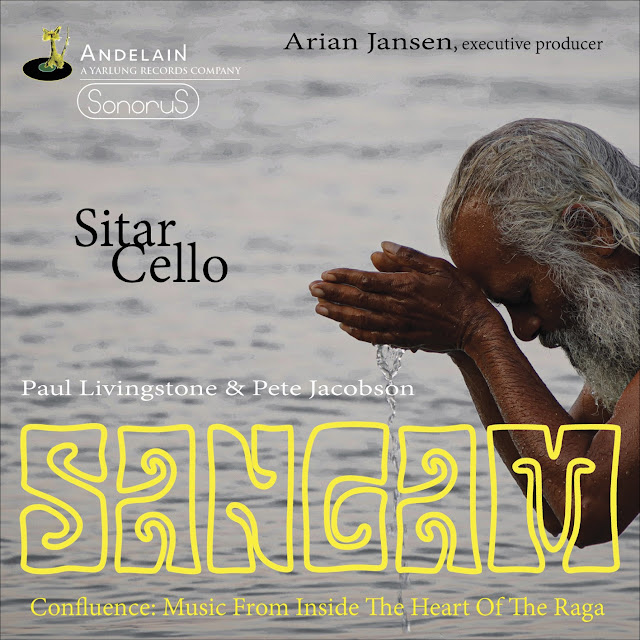
Is the sound of no CD playing the silence that Erling Kagge  explored , Ajahn Sumedho identified , and John Cage immortalised ? Or is it the sound of streamed music like water ? Maybe it is the same sound as no audience clapping  or perhaps the eerie silence of a hall emptied by lazy click bait programming . Or is it just the relentless white noise of social media ?  Whatever the answer - if indeed there is an answer - 'What is the sound of no CD playing' is an example of a translogical question known in the Rinzai school of Zen Buddhism - hat tip to John Cage  - as a koan. In his book Bring Me the Rhinoceros John Tarrant explains that koans highlight the importance of creative moves, encourage doubt and curiosity, and undermine reasons and explanations.  My undiminished curiosity and distrust of explanations led me to buy two recent CD releases -  Sangam from sitarist Paul Livingstone and cellist Pete Jacobson, and Wherever I Go... Arvo Pärt ...

When classical musicians fought against tuxedo fascism

Image
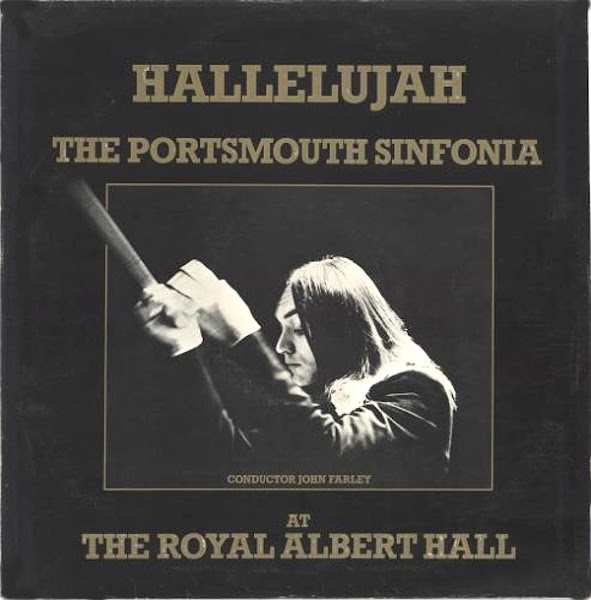
In the late 1960s artist Tom Philips was also known for his music activities. These included compositions performed by pianist John Tilbury , and he also played in the Portsmouth Sinfonia and Cornelius Cardew's Scratch Orchestra . The Portsmouth Sinfonia was inspired by Cardew's Scratch Orchestra. It was formed in 1970 by a mischievous  Gavin Bryars  from staff and students at Portsmouth College of Art as a one-off ensemble to participate in a talent competition. But the Sinfonia took on a life of its own as a reaction against what its members termed 'tuxedo fascism'.  Ability and experience were not a criteria for playing in the Portsmouth Sinfonia, however attendance at rehearsals was mandatory and intentionally bad playing was not allowed. Early repertoire comprised classical warhorses such as The Blue Danube and Also Sprach Zarathustra . The Sinfonia went on to play at the Purcell Room, Festival Hall, and Albert Hall, and was rewarded with a recording con...

What the composer found in his orgone box

Image
In his review of Leopold Stokowski and the Houston Symphony's 1955 premiere of Alan Hovhaness' Mysterious Mountain the critic Hubert Roussel remarked that "The real mystery of Mysterious Mountain is that it should be so simply, sweetly, innocently lovely in an age that has tried so terribly hard to avoid those impressions in music". To that I would add it is also a mystery that music which is so accessible yet avoids all stylistic platitudes remains so neglected in 2021 when a continuing anti-Boulez backlash mediates concert programmes. Fritz Reiner conducting  Mysterious Mountain  with his Chicago Symphony Orchestra is one of the glories of recorded sound. Reiner was notorious for using his baton to whip orchestras - if you haven't heard his 1960 Scherezade you haven't lived - yet in the sublime opening of Mysterious Mountain his interpretation is patiently majestic. On the CD reissue , which couples the work with Prokofiev's Lieutenant Kijé S...

'I dig Strauss and Wagner – those cats are good'

Image
That photo shows Jimi Hendrix headlining at the 1970 Isle of Wight Festival. In his memoir The Last Great Event about the Festival, its co-founder Ray Foulk reveals that during the planning for the event there was a meeting with Harold Lawrence  who was then General Manager of the London Symphony Orchestra. Harold Lawrence was responsible for the high profile appointment of André Previn as Principal Conductor of the LSO in 1968, and Ray Foulk's vision was for the LSO to appear at the Festival "not only to accompany some of the acts, but also to give their own performance of music from 2001: A Space Odyssey and other suitable works" . But the LSO's busy schedule combined with doubts about the final venue for the Festival meant that, sadly, the LSO did not join Hendrix, The Who, Emerson, Lake & Palmer, Joan Baez, the Moody Blues , and Leonard Cohen on the Isle of Wight. Ray Foulk's brave attempt to involve a symphony orchestra is a reminder of how in 1970 the...

Music is not a matter of notes, it's a matter of sounds

Image
In this age of supposed diversity the Egyptian composer, ethnomusicologist and electronic music pioneer Halim El-Dabh is overlooked. While still a student in the 1940s Halim El-Dabh experimented with composing using wire recorders. In 1944 he created one of the earliest known examples of electronic musique concrète . The Expression of Zaar manipulated field recordings of a traditional zaar exorcism ceremony, and predated Pierre Schaeffer's work by four years. In 1950 Halim El-Dabh received a Fulbright Scholarship and moved to the United States, becoming a US citizen in 1961. His composition teachers included Ernst Krenek , Aaron Copland and Luigi Dallapiccola . In New York his circle included Henry Cowell , John Cage , and Peggy Glanville-Hicks , and he composed four ballet scores for Martha Graham  and was an influential figure in the early days of the Columbia-Princeton Electronic Music Center .  Halim El-Dabh came from a Coptic-Christian family with ancestral roots in...

'John Cage had been one of my heroes since the age of seventeen'

Image
Recently I have found new books far more engrossing than new classical recordings. One of my most rewarding reads has been the first volume of Richard Thompson's autobiography Beeswing .  Richard Thompson is best known as co-founder of the legendary folk-rock group Fairport Convention . A few years ago I wrote about his exploration of the Sufi path , and I have also recounted the untold story of the counterculture's Islamic connection in an exclusive interview with Ian Whiteman - aka Abdallateef Whiteman - who with Richard Thompson was a member of the fabled Bristol Gardens Sufi commune in 1970s London. Beeswing is much more than a rock memoir. It name checks, among others, Delius, Bliss, Elgar, Vaughan Williams, Wagner, Satie, Granger and Stockhausen, and includes this John Cage anecdote:     "During that tour, our driver, Walter Gundy, needed to pick something up from his house in upstate New York, and I went with him. There were two units in his re...

Master musician who experienced the pain of genius

Image
On that sleeve for his 1985 recording of the Goldberg Variations , Scott Ross is seen standing in the grounds of Château d'Assas in Languedoc. It was here that many of the harpsichordist's great recordings were made. Then, as today, the château dwelt in the twilight zone between grandeur and dereliction, and thirty years ago the recording sessions were regularly interrupted by the sound of rats scurrying across the floor. Scott Ross was born in Pittsburgh in 1951, and moved to France with his mother following the death of his father in 1964. He studied at the conservatoires in Nice and Paris, and first came to Château d'Assas in 1969 to give music lessons to the grandson of its owner Mme. Simone Demangel . When an early music academy was established at the Château d'Assas, Scott Ross gave masterclasses and became a frequent visitor. At first he stayed in a room in one of the towers, but from 1983 he rented a small house across the road from the château. The photos b...