Friday, November 30, 2007

Making music accessible desirable and different


'Orchestral concerts must become like football games, accessible, desirable and different' suggests the principal of the Royal Academy of Music, Curtis Price. His advice comes in a Guardian Comment feature by Simon Jenkins who has caught the Gustavo Dudamel and Hugh Masekela bug. Jenkins goes on to explain that in the coming 'revolution in appeal' classical music must include 'added value in congregation'.

Simon Jenkins is better known as a writer on church architecture than classical music. So we can forgive him for not knowing that there has been 'added value in congregation' (which when translated from Gordon Brown speak means, I think, audience participation) in classical music for a long time. From the chorales in Bach's Passions, through the Radetzky March at the Vienna Philharmonic's New Year's Day concerts, to the congregation hymns in Britten's St. Nicholas.

But why does every performance today have to include audience participation? Why do the BBC Proms audience have to be part of the action by contributing meaningless dribbles of applause between movements? Why do our future performers need to be selected on TV reality shows? Why do we need to condense Benjamin Britten's holy triangle of composer, performer and listener down to a single point where the listener is king? Why do we need, to quote Simon Jenkins, to make concerts 'a shared experience of laughing and dancing'?

Why don't we study that football analogy more closely? In football the laughing and dancing often ruins the performance. The major teams are controlled by power brokers with connections to the oil industry. Our much-hyped national team failed even to qualify at an international level. Ever younger stars are heaped with cash and adulation, and fail to deliver. And the media's darling, who was proclaimed as the saviour of the sport, has fled to Los Angeles with a lucrative contract in his pocket.

The revolution isn't about making concerts like football matches. The revolution is about finding shared musical languages and shared media that together reinforce, not undermine, Britten's holy triangle. The revolution is already happening, with many of the new composers and performing groups featured on this, and many other blogs, creating desirable and different music. The revolution is already happening by making their music more accessible through MP3 downloads, internet radio, a few old-fashioned CDs, and innovative live performances.

I don't pretend to have any influence over the future of classical music. But I was in the Future Radio studios the other day checking levels on Alvin Curran's Inner Cities for our forthcoming 'all-night vigil' webcast. A young DJ came off-air after presenting her hip hop show, and caught a few measures of Inner Cities. 'Wow, she exclaimed 'what is that? It is really cool.' That is the future of classical music, not conga lines.

Now playing - Techno Parade by Guillaume Connesson shown in my header image. Music from a leading French contemporary composer that is accessible, desirable and different, and not a football game in sight. Take your choice from the tracks, Disco-toccata, Jurassic Trip, and more. It even uses shared media; the eye-catching double disc pack (priced as a single) contains an audio CD and video DVD. That is the future of classical music.
Any copyrighted material on these pages is included as "fair use", for the purpose of study, review or critical analysis only, and will be removed at the request of copyright owner(s). Report broken links, missing images and errors to - overgrownpath at hotmail dot co dot uk

Thursday, November 29, 2007

The Buddhist way on internet radio


'Meaningful dialogues between religions is no doubt one of the most pressing challenges of the modern world. Developments over the past few years clearly confirm what a significant role this aspect of human communication represents. Despite breathtaking technological breakthroughs and the related trend of rational scepticism, man still remains a religous creature. Ignoring this sphere of human personality not only leads to an impoverishment of the spiritual culture of a nation, but also to mutual estrangement of nations. And so what a wonderfully enriching experience it is when two cultures meet in mutual dialogue rather than confrontation.'

These words introduce the inspiring new CD Close Voices from Far-away released by Sony in the Czech Republic. The mutual dialogue is provided by the Buddhist monks of Gyosan-ryu Tendai Shomyo from Japan and the Schola Gregoriana Pragensis from Prague, who are seen together in my footer image. The CD was recorded in a former Augustian monastery in České Lípě in November 2006, and was the brainchild of the Schola's founder David Eben.

Close Voices from Far-away is both a moving musical experience and a remarkable work of scholarship. Sources and editions are listed, and the comprehensive documentation includes short essays on the Shomyo Chants, the Buddhist Liturgy, the Tendai school of chant (Gyosan-ry Tendai Shomyo) as well as Gregorian Chant.

Hearing the two vocal groups individually is a privilege. But hearing the two ensembles singing together and layering Buddhist and Greorian Chant on two of the tracks takes us into a unique sound-world that is more contemporary than medieval. Read a fuller appreciation of this remarkable release here. Close Voices from Far-away is not easily found outside the Czech Republic. I bought my copy online from cdMusic.cz who provided a very fast and problem free service. Here is a link to the CD on their site.

I will be playing music from Close Voices from Far-away on my Future Radio programme this Sunday December 2 at 5.00pm UK time. The Buddhist and Gregorian Chants will be interleaved with music from Philip Glass' score for Kundun. This film by Martin Scorsese depicts the exile of the 14th Dalai Lama from Tibet. Both Close Voices from Far-away and Kundun are vivid reminders of the Buddhist culture that is under continued threat from the Chinese occupation of Tibet.


Now follow the Buddhist way with Lou Harrison. And remember that at 12.01am UK time Wednesday December 5 Future Radio is giving the world broadcast premiere of Alvin Curran's complete Inner Cities, with an introduction from pianist Daan Vandewalle. Full details of this webcast here.
Listen by launching the Radeo internet player from the right side-bar, or via the audio stream. Convert broadcast times to your local time zone using this link. Windows Media Player doesn't like the audio stream very much and takes ages to buffer. WinAmp or iTunes handle it best. Unfortunately the royalty license doesn't permit on-demand replay, so you have to listen in real time. If you are in the Norwich, UK area tune to 96.9FM. Any copyrighted material on these pages is included as "fair use", for the purpose of study, review or critical analysis only, and will be removed at the request of copyright owner(s). Report broken links, missing images and errors to - overgrownpath at hotmail dot co dot uk

Wednesday, November 28, 2007

LPs were like the force of gravity


'Folksingers, jazz artists and classical musicians made LPs, long-playing records with heaps of songs in the grooves - they forged identities and tipped the scales, gave more of the big picture. LPs were like the force of gravity. They had covers front and back, that you could stare at for hours.' - Bob Dylan writes in his Chronicles Volume One.

'Hi, I wanted to let you know some exciting news today from Deutsche Grammophon (DG), a division of Universal Music Group, who will become the first major classical record label to make the majority of its huge catalogue available online for download with the launch of its new DG Web Shop. (http://www.dgwebshop.com/

As the world’s leading classical music recording company, Deutsche Grammophon will launch its DG Web Shop on Wednesday, November 28th, enabling consumers in 42 countries to download music at the highest technical and artistic standards. This global penetration includes markets where the major e-business retailers, such as iTunes, are not yet available: Southeast Asia including China, India, Latin America, South Africa, and Central and Eastern Europe including Russia. Almost 2,400 DG albums will be available for download in maximum MP3 quality.

Best, Kristina Weise at Cohn & Wolfe'
- who are "a strategic marketing public relations firm dedicated to creating, building and protecting the world's most prolific brands."

Call me old fashioned. I like the tangible. You could certainly stare at the LP sleeve above. or the record label here, for hours. Which is more than can be said for the new DG Web Shop logo. The photographer of the Hanson LP sleeve is Christian Steiner, who has photographed many of the world's great musicians. Steiner is an accomplished performer himself as his biography recounts:

'Steiner, after graduating from the Berlin Hochschule fur Musik, won several national competitions in Germany and it was one of these awards which first brought him to New York to further his piano studies. He comes from a long line of musicians. His father was a member of the Deutsche Oper Berlin, and his brothers were members of the Berlin Philharmonic.

Steiner made piano recording with RCA-Reader’s Digest, and was a guest soloist with orchestras in Berlin and New York; more recent engagements at the keyboard include performances with the Berkeley Symphony under Kent Nagano, and with the National Symphony or Mexico. He also performed chamber music with members of the Berlin Philharmonic Octet and recitals with his late brother Peter in Europe and the USA.

Among the singers he has collaborated in recital are Jessye Norman and Carol Vaness. In addition, Steiner is the artistic director of The Tannery Pond Concerts, a summer chamber music festival in the Berkshires.'


Less happy images here, from another celebrated photographer.
Again thanks to our son for the 'joiner' on the record sleeve. Any copyrighted material on these pages is included as "fair use", for the purpose of study, review or critical analysis only, and will be removed at the request of copyright owner(s). Report broken links, missing images and errors to - overgrownpath at hotmail dot co dot uk

Catholic music for the mass market


Coverage elsewhere of Pope Benedict's musical tastes prompts a couple of back links. This one is about the Pope's visits to the wartime Salzburg Festival. While this one suggests the Holy Father could learn something from a green hill in France.
Any copyrighted material on these pages is included as "fair use", for the purpose of study, review or critical analysis only, and will be removed at the request of copyright owner(s). Report broken links, missing images and errors to - overgrownpath at hotmail dot co dot uk

Jokes that women can't play ...


"Stereotypes persist though - a lot of the women I spoke to are still very aware that they're considered a novelty, and most have heard jokes that women can't play ..." - another piece on gender discrimination in classical music? Actually, no. It's a Guardian report on the growth of women DJs.

Anyone for a classical music club night?
Any copyrighted material on these pages is included as "fair use", for the purpose of study, review or critical analysis only, and will be removed at the request of copyright owner(s). Report broken links, missing images and errors to - overgrownpath at hotmail dot co dot uk

Tuesday, November 27, 2007

Norfolk Rhapsody by Ralph Vaughan Williams


Winter sky over North Norfolk this afternoon.

Now playing - Norfolk Rhapsody No. 1 by Ralph Vaughan Williams, Sir Adrian Boult conducts the London Philharmonic Orchestra on EMI LP ASD 2847. The Norfolk Rhapsody No. 1 was based on tunes collected from King's Lynn fisherfolk. The town is about 20 miles from where I took this photograph today. In the sleeve notes for the LP Michael Kennedy writes that the Rhapsody "begins and ends with a musical description of the Fens landscape, misty and mysterious ..."

Now read about November woods from a brazen romantic.
Photograph (c) On An Overgrown Path 2007. Report broken links, missing images and errors to - overgrownpath at hotmail dot co dot uk

Songs of freedom

Alex Ross turns to the Venezuela problem, and quotes Canadian composer R. Murray Schafer: "Art within the constraints of a system is political action in favor of that system, regardless of content." I can only agree and re-run this post:


The role of the artist in a society where human rights are denied is a recurring theme On An Overgrown Path. As I write Maria Farandouri sings To Yelasto Pedi from Mikis Theodorakis’ sound track for the 1969 film Z (poster above). This legendary film was a barely fictionalised account of the assassination in 1963 of the Greek socialist politician Gregoris Lambrakis MP, and the film and its soundtrack, became an international symbol of opposition to the Greek military junta. This dictatorship savagely suppressed human rights until its overthrow in 1974, and brought tanks onto the streets of Athens, as is shown below.


The junta was established in April 1967 when right wing army colonels led by George Papadopoulos seized power under the pretence of preventing a communist takeover. The dictatorship received the initial support of King Constantine II, although the King went into exile in December 1967 following the failure of a counter-coup. The King had failed to win support from the US who regarded the military junta as an ally against the nearby Eastern European Soviet bloc. With the Colonels firmly in power human rights were denied, political parties were outlawed, and opponents imprisoned, with Amnesty International estimating that more than 2000 prisoners were tortured. Symbols of western youth culture were banned including rock music, long-hair and atheism.

Mikis Theodorakis was no stranger to opposition and the political left. He had worked in the resistance against the occupying Italian and German forces in World War 2, and was exiled in the subsequent Greek Civil War. After these conflicts he studied music at the Athens Conservatoire, and in Paris with Olivier Messiaen. Following the military junta in 1967 Theodorakis (below) went underground, and his music was banned by military decree. He was imprisoned for five months until an international pressure group including Dmitri Shostakovich, Leonard Bernstein, Arthur Miller, and Harry Belafonte achieved his release, and he went into exile in April 1970. Theodorakis continued his opposition in exile through concerts and by enlisting the support of international leaders, and his sound-track for Z became a rallying call for opponents of the military regime. The film, which was directed by Constantin Costa-Gravas, was hugely important in drawing attention to the junta’s denial of human rights, and I remember it as one of the cult films of my post-university years.

Following the suppression by tanks of a student uprising at Athens Polytechnic in November 1973 (seen in the photo above) popular opposition to the junta gathered momentum. Papadopoulos was overthrown by General Dimitrios Ioannides, who then unsuccessfully attempted to depose the President of Cyprus. This debacle triggered the collapse of the Greek military junta, and democracy was restored with elections in November 1974.

Greece lies on the edge of the Middle Eastern political fault line, and the cataclysmic upheavals in the region since 1974 mean that the dark days of the Colonel’s rule are now largely forgotten. The CBS LP of Theodorakis’ music played by John Williams and sung by Maria Farandouri, and including the Theme from Z, was part of the soundtrack of my life in the 1970s. Seven of the songs are settings of Greek translations of poems by Federico Garcia Lorca, while the Theme from Z sets words from the verse-drama 'The Hostage' by the Irish writer Brendan Behan. Maria Farandouri left Greece in 1967 when the junta banned Theodorakis' music, and she sung in more than 300 protest concerts around the world.


The recording was made by legendary CBS staff producer Paul Myers, and my vinyl copy still sounds quite wonderful today. But by the time the LP catalogues were being transferred to CD in the late 1980s communism was collapsing and the Greek junta was ancient history, so Songs of Freedom didn’t make it onto CD in the major territories. But Theodorakis remains a folk hero in Greece. He was nominated for a Nobel Peace Prize in 2000, and opposed NATO’s involvement in Kosovo and the invasion of Iraq, and has been very critical of George W. Bush. More controversially he was also been critical of Israeli Government policies under Ariel Sharon, and this led to accusations of anti-Semitism.

Mikis Theodorakis’ continuing high profile in Greece thankfully means that Songs of Freedom remains in the Sony catalogue in that country, albeit sadly without the original beautiful sleeve art which is reproduced above. But in a chilling timewarp the original English sleeve notes are retained for the CD version, so they read as though the Colonels are still in power! It is available online from the splendid Studio52 in Thessalonika; my copy arrived speedily and cost €12.50 plus shipping.


Songs of Freedom is a classic of the gramophone. It contains very moving performances by two very fine musicians. But more importantly, it is living proof that creative artists have an important role to play when human rights are denied.

Now read about Mikis Theodorakis' Requiem.

Image credits; That wonderful poster for Z from Filmpostersdownunder.com, tank on Athens street from Wikipedia. Any copyrighted material on these pages is included for "fair use", for the purpose of study, review or critical analysis only, and will be removed at the request of copyright owner(s). Report broken links, missing images and other errors to - overgrownpath at hotmail dot co dot uk

Monday, November 26, 2007

New music premiere for internet radio

Inner Cities are where you go to get debriefed, to watch Trisha Brown levitate on Bach in San Francisco; to help Cage squeeze lemons into his fresh taboule on 18th Street and watch David Tudor mix chili peppers and lasers at the Grand Hotel des Palmes; to play the Sydney Harbour like a bandoneon; to teach advanced-orchestration in the Greek Theater at Mills College with Pauline Oliveros and the ghost of Harry Partch; to shake Stravinsky's hand in the American Sector-Berlin and Varese’s in New Haven; to watch Kosugi dance his electric violin around Marcus Aurelius; to get thrown off stage in London as a warmup act for the Pink Floyd; to meet Stockhausen at a strobe-light show in Düsseldorf; to open windows on Cage’s cue for adding real cold air to his Winter Music; to camp out with Teitelbaum and Rzewski for Antonioni’s Zabriskie Point; to hear Terry and LaMonte’s landmark concerts at the Attico in Rome ...

Inner Cities is a twelve part cycle for solo piano that lasts for four hours twenty-four minutes and twenty-two seconds. Its composer Alvin Curran studied with Elliott Carter, and founded Musica Elettronica Viva with Frederic Rzewski and Richard Teitelbaum. The notes above and below are by Alvin Curran.

Inner Cities 10 is dedicated to the Belgian pianist Daan Vandewalle. His repertoire includes Ives, Ligeti, Lutoslawski, Cage and Clarence Barlow, and he has had works written for him by Fred Frith, Chris Newman, and Frederic Rzewski as well as Alvin Curran. Daan has played Inner Cities complete in concert, and has recorded it on the Long Distance label.

Inner Cities has never been broadcast complete to our knowledge. But on December 5th Future Radio is letting me go where others fear to tread. The four and a half hour cycle will be broadcast complete on that day without any announcements or advertisements, and Daan Vanderwalle will be introducing the performance with me. The programme starts at 12.01am on Wednesday December 5th, which is afternoon or evening the previous day in North and South America. Convert to your local time zone here.

Inner Cities described by Daan Vandewalle can be heard as a podcast from iTunes. If you do not have iTunes installed click here to download it. With iTunes you can subscribe to future On An Overgrown Path podcasts.

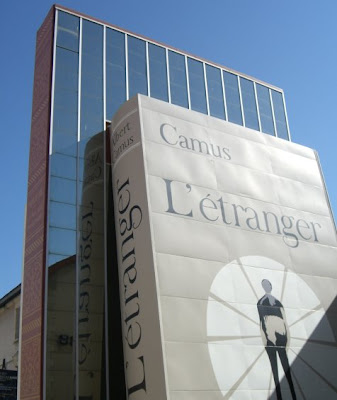
Inner Cities photographs are by me, and show the Cité du Livre and the Pavillon Noir in the Avenue Mozart in that most musical of cities, Aix en Provence. Alvin Curran has the last words ...

Inner Cities contain no "drive-by" anything; there’s merely back alleys, empty lots full of stubborn weeds and clear sky, trails of memory which may or may not lead anywhere or even have relevance to the music at hand. The bottom line: these pieces are a set of contradictory etudes - studies in liberation and attachment, cryptic itineraries to the old fountain on the town square whence flows all artistic divination and groping for meaning in the dark.

Inner Cities complete continues the proud tradition established by WHRB's classical music 0rgies. Yet more confirmation of the importance of the long tail of radio
Photos (c) On An Overgrown Path 2007. Listen by launching the Radeo internet player from the right side-bar, or via the audio stream, on Wednesday December 5 at 12.01am UK time. Convert time to your local time zone using this link. Windows Media Player doesn't like the audio stream very much and takes ages to buffer. WinAmp or iTunes handle it best. Unfortunately the royalty license doesn't permit on-demand replay, so you have to listen in real time. If you are in the Norwich, UK area tune to 96.9FM. Report broken links, missing images and errors to - overgrownpath at hotmail dot co dot uk

Sunday, November 25, 2007

Henri Pousseur serial continues


Dear Pliable. Just to put things right: The reader who told you that Henri Pousseur's birthplace Malmédy was German speaking, is not quite correct. While Malmédy is part of the so-called East Cantons (which were originally German, but became Belgian after the First World War), and which are now part of Wallonia, it is officially a French speaking town with language facilities for the German speaking minority there.

I promise this will be the last time I bother you with the Belgian situation. ;-) Great blog, by the way.

Cordially, Ivo Swinnen, As, Belgium

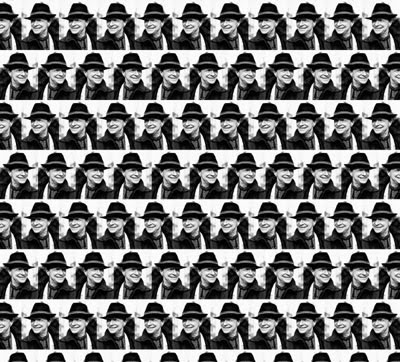
Ivo, please don't apologise. All this helps explain why Belgium hasn't been able to form a government for nearly six months. And this path took me to some wonderful graphics connected to Henri Pousseur. That's where my header image comes from, it's part of a portrait of Henri Pousseur by Maxime Godard. Thank you for helping us explore the labyrinth of serial music.
Any copyrighted material on these pages is included as "fair use", for the purpose of study, review or critical analysis only, and will be removed at the request of copyright owner(s). Report broken links, missing images and errors to - overgrownpath at hotmail dot co dot uk

File between Boulez and Boyce

Keith has left a new comment on your post "Music and chance":

Another B composer, York Bowen. On Sunday 18th Nov, I got up early and went to the newly re-furbished Birmingham Town Hall complete with lighting gantry with perspex sound diffusers and a restored organ for a Sunday Morning Coffee Concert.

I heard the Trio Chausson, a French trio, performing Haydn, Brahms and a trio by York Bowen (left). The piano player in the trio, Boris De Larochelambert, had seen some of Bowen's music, and had researched and found the manuscript of the Piano Trio in E minor, Op118 in an archive in London. He has produced a performing score, and we heard it played during this morning concert.

I'm not musically trained, and what I heard that morning left a strong feeling of expressive music with a wide dynamic range, with the piano leading and the violin and cello floating above and often playing against each other. There were plenty of rhythmic changes, light and shade, but I can't recall any strong tunes as such - it was music about feeling, dark skies with streaks of sun, and not for whistling. I think it sounded 20th century - certainly not classical - but there was no trace of 12 tone or atonal sound, which chimes with the biography below.

Lyndon Jenkins did express surprise that such music remained unpublished and unrecorded - perhaps one for Naxos?

The concert formed part of the ECHO rising stars series, and I could get used to an hour and a quarter or so of music at 11 am on a Sunday. The main floor of the hall was about 60 to 70% full, so I am not alone. Alas, most of us were on the mature side of 40.

"Following his death in 1961, Bowen's music is now largely out of print, very few works appear in concert programmes and his chamber music is hardly played. However, there is a revival underway and thanks to recent recordings and Monica Watson's book "York Bowen - A Centenary Tribute" (1984), (Thames Publishing), listeners and performers are becoming aware of a wonderful musician and some truly extraordinary music."


Thanks Keith. There is a fine recording of York Bowens' Viola Concerto on Hyperion. The soloist is Lawrence Power, and the BBC Scottish Symphony Orchestra is conducted by Martyn Brabbins, who featured here recently in Snape Skyscape. It is also worth noting that York Bowen makes it into the Gramophone Good Classical CD Guide, whereas Karlheinz Stockhausen doesn't!
Any copyrighted material on these pages is included as "fair use", for the purpose of study, review or critical analysis only, and will be removed at the request of copyright owner(s). Report broken links, missing images and errors to - overgrownpath at hotmail dot co dot uk

Saturday, November 24, 2007

Vexations repeated


I think this is what is known as a 'heads down' for my story.
Any copyrighted material on these pages is included as "fair use", for the purpose of study, review or critical analysis only, and will be removed at the request of copyright owner(s). Report broken links, missing images and errors to - overgrownpath at hotmail dot co dot uk

Friday, November 23, 2007

Simple Gifts on internet radio


My Future Radio programme at 5.00pm UK time on Sunday November 25 has an all American theme for the Thanksgiving Holiday, but with an East Anglian twist. Aaron Copland’s first set of Old American Songs was commissioned by Benjamin Britten and Peter Pears for the 1951 Aldeburgh Festival here in East Anglia. There are five songs in the set, and the fourth is the traditional Shaker tune Simple Gifts, and that melody appears in different guises in all the works in the programme. I am playing Susan Chilcott's performance of the Old American Songs accompanied pianist Iain Burnside. Tragically Susan Chilcott died of cancer at the age of 40 just a year after this recording was made.

Simple Gifts has appeared in many different versions over the years, including one by Wilson Picket. But for the central sequence of the programme I'm going back to the song in its original version. It is sung by the Shakers of Sabbathday Lake in Maine augmented by the Schola Cantorum, Boston in a sequence of five Shaker chants and spirituals. The recording I am playing is a real find, read about it here.

For the final music in the programme I turn to one of the most celebrated re-imaginings of Simple Gifts. Aaron Copland's ballet Appalachian Spring was commissioned by the Martha Graham Dance Company, and uses the Shaker melody in the scene where the newly-weds are blessed. The ballet was first performed in Washington DC in 1944, and my header photo is from the original production.

Listen by launching the Radeo internet player from the right side-bar, or direct from the audio stream at 5.00pm on Sunday November 25. Convert to local time zones here. My programme of Simple Gifts is dedicated to Maurice Béjart who died on November 22, 2007, aged 80.

Now read how Aaron Copland found 'tis the gift to be free.

No photo credit, just who owns Martha Graham? Windows Media Player doesn't like the audio stream very much and takes ages to buffer. WinAmp or iTunes handle it best. Unfortunately the royalty license doesn't permit on-demand replay, so you have to listen in real time. If you are in the Norwich, UK area tune to 96.9FM. Any copyrighted material on these pages is included as "fair use", for the purpose of study, review or critical analysis only, and will be removed at the request of copyright owner(s). Report broken links, missing images and errors to - overgrownpath at hotmail dot co dot uk

A new serialist from the old world


Kyle has left a new comment on your post "New music from the old world":

I see that Belgian serialist Henri Pousseur is not mentioned. Or, perhaps, he has already been forgotten.

Not forgotten Kyle. Just wating for someone to fill in the details. Henri Pousseur was born in Malmédy in French speaking Wallonia in 1929. In the 1950s he was active in the international avant-garde music scene (dodecaphonic, serial, electronic, aleatoric music), together with Boulez, Stockhausen, Berio, and others, and like Boulez he was heavily influenced by Webern. The image above is a page from Pousseur's score for Electre (credit Universal Editions, Vienna).

After 1960 Pousseur rejected the narrow viewpoint of the avant-garde, and, in collabaration with the French writer Michel Butor, he adopted an inclusive approach which embraced a range of styles and viewpoints. Their 1962 opera Votre Faust forged a connection between contemporary music and history by casting the audience as performers. The influential Centre de recherches et de formation musicales de Wallonie (CRFMW) in Liège was founded by Pousseur in the 1970s. He also established the Institut de Pédagogie musicale de Paris in the 1980s, which is now integrated into Paris' Cité de la Musique.

Among Henri Pousseur's prolific output are the electro-acoustic music sequences for the 1961 production of Offenbach's Les Contes d'Hoffmann at the Théâtre Royal de la Monnaie in Brussels. The choreography for this opera was created by the great Maurice Béjart, who died yesterday (Nov 22, 2007) aged 80.

The English website of Henri Pousseur's publisher is here, his own French website is here. And read about yet another serialist from the old world here.
Any copyrighted material on these pages is included as "fair use", for the purpose of study, review or critical analysis only, and will be removed at the request of copyright owner(s). Report broken links, missing images and errors to - overgrownpath at hotmail dot co dot uk

Thursday, November 22, 2007

A big day for Britten and America

Today is the big one. America is celebrating Thanksgiving, and we are all remembering the assassination of President John F. Kennedy on November 22, 1963. And in the musical world not only is today the nameday of St. Cecilia, the patron saint of musicians. It is also the day when Jacob Obrecht was born in 1450, Wilhelm Friedmann Bach in 1710, Joaquin Rodrigo in 1901, and Benjamin Britten in 1913. Follow the links for related articles.

Now playing - Gerald Finzi's For St. Cecilia on the 1979 Argo LP ZRG 896 seen above. Finzi's Ode for tenor, chorus and orchestra also has a birthday today. It was first performed exactly sixty years ago, on November 22, 1947, by René Soames, the Luton Choral Society and BBC Symphony Orchestra conducted by Sir Adrian Boult. Another fine choral work that deserves to be heard more often.

Do you mind if I leave you now with these birthday links? You see, I'm off to celebrate my own birthday.
Header image (c) On An Overgrown Path 2007. Report broken links, missing images and errors to - overgrownpath at hotmail dot co dot uk

Wednesday, November 21, 2007

The music blogs go round and round


Nice to see On An Overgrown Path, and several other fine music blogs, mentioned in the Gramophone's November e-newsletter. This is written by the magazine's editor James Jolly, who is also a BBC Radio 3 presenter. A warm welcome to new readers arriving at this "provocative and informed" blog from the Gramophone. You can check today's top stories in the right side-bar.

See the rest of my header photo here, and take a look at the Chinese equivalent of the Gramophone here.
Photo (c) On An Overgrown Path 2007. Report broken links, missing images and errors to - overgrownpath at hotmail dot co dot uk

Music and chance

Mention music and chance and John Cage comes to mind. But there are some other interesting examples of music and chance. If, like me, you arrange your CDs (or LPs even) in alphabetical order you will have experienced another example of music and chance. Why do so many composers' surnames begin with the letter B? Only last week my heart sunk when I ordered a CD by another composer involved with music and chance, Gavin Bryars' Oi Me Lasso. How would I find space on the shelf for the CD when it arrived?

This week brings yet another example of music and chance. Why do so many composer anniversaries fall within a few days? Tomorrow, November 22, is the big one. But yesterday I marked the death of Wilhelm Stenhammar, and today, among other anniversaries, we note the deaths of Henry Purcell (1695), Frank Martin (1974) and Robert Simpson ( 1997).

Henry Purcell should need no introduction; although the anniversary of his death falling the day before Benjamin Britten's birthday is another fascinating example of music and chance. Perhaps chance also dictated that Robert Simpson was born at the wrong time? The last of his eleven symphonies was composed in 1990, and takes the soundworld of his beloved Nielsen and Bruckner into the late-twentieth century. His music found little favour with BBC programmers of the time. Some may have judged his music to be written too late, but time has shown his thinking was well ahead of its time. Robert Simpson resigned from the BBC in 1980 because, and I quote, he could 'no longer work for an institution whose views he no longer respected'. More on an under-rated composer and thinker here.

Chance dictated that Frank Martin was born in Switzerland in 1890. Frank Martin's musical language, like the culture of Switzerland, steers a middle course. He assimilated elements of serialism into his own unique musical language, but retained firm links with tonality. Martin is remembered today mainly as a choral composer, and his magnificent Mass for double choir is probably his most enduring work. But there is also fine orchestral music, including a Violin Concerto and Passacaglia for String Orchestra. A recommended budget priced Decca double CD contains five of his orchestral works plus the oratorio In terra pax.

For some reason chance has meant that a late masterpiece by Frank Martin remains unknown. His Requiem for choir, soloists, organ, harpsichord and oboe d'amore was completed in 1972. It sets the Latin Mass using a finely honed and mature version of his unique musical language. Although concert performances are rarer than the proverbial hen's teeth there is a CD available. It is on the Musikszene Schwieitz label, and is difficult to get hold of. But if you find a copy you will realise that chance is a fine thing.

More chance when the audience composes the music.
Image credit CindyKroth. Any copyrighted material on these pages is included as "fair use", for the purpose of study, review or critical analysis only, and will be removed at the request of copyright owner(s). Report broken links, missing images and errors to - overgrownpath at hotmail dot co dot uk

Mass hysteria in four parts

Serendipitous reporting in today's Guardian. The story is about mass hysteria. It happened at the William Byrd high school in the Blue Ridge Mountains of Virginia.

Mass of hysteria?
Any copyrighted material on these pages is included as "fair use", for the purpose of study, review or critical analysis only, and will be removed at the request of copyright owner(s). Report broken links, missing images and errors to - overgrownpath at hotmail dot co dot uk

Another new conductor is taken for a spin


The 32-year-old French-Canadian Yannick Nézet-Séguin (above) has been appointed principal guest conductor of the London Philharmonic Orchestra. In a press release Timothy Walker, chief executive of the LPO, says - 'Taking outstanding musicality, knowledge and technique as a given Yannick's brilliance lies in his ability to move players to exceptional performance and to communicate a strength and vitality of vision to the listener that is totally engrossing'.

Reports elsewhere suggest Yannick Nézet-Séguin is a promising young conductor.

Health warning - test spins can end in tears.
Photo of Yannick Nézet-Séguin and Bryn Terfel from NewsConcordia . Any copyrighted material on these pages is included as "fair use", for the purpose of study, review or critical analysis only, and will be removed at the request of copyright owner(s). Report broken links, missing images and errors to - overgrownpath at hotmail dot co dot uk

Tuesday, November 20, 2007

Erik Satie - twenty hours of Vexations

Portrait of Erik Satie by Santiago Rusiñol

'There is also one curiosity on this CD: a short quotation from Vexations - its "motif", made up of a theme and two variations - which Satie required to be played 840 times in a row; depending on the tempo chosen, this would take between twelve and twenty-four hours.

Without entirely playing the composer's game, for obvious reasons, Jean-Yves Thibaudet here simply reveals the different elements of the task, by playing the theme alternately with the two variations, as requested by the composer, then the theme again, this time followed by the two variations, one after the other.'


That is how Jean-Yves Thibaudet avoids the Vexations issue on his 5 CD set Satie - The Complete Solo Piano Music, and his performance of the work lasts for just 3 minutes 38 seconds. But at Cambridge University the pianists of Sidney Sussex College Musical Society are made of tougher stuff. On Saturday November 24th at 7.00pm UK time they are performing Vexations the way Satie intended, and the performance (poster below), in the College's Mong Hall, should last around 20 hours - non-stop.


This rare performance of Vexations is much more than an interesting curiosity. Today Satie is remembered for his Gymnopedies and Gnossiennes, and little more. But his piano music was a major influence on minimalist composers such as Philip Glass. Glass' early Piece in the Shape of a Square for two flutes is a homage to Satie, while Alvin Curran followed Satie in the adoption of epic time scales. Curran's Inner Cities for solo piano lasts for four and a half hours, and it is a work you will, literally, being hearing a lot more of On An Overgrown Path in the next few weeks.

Erik Satie's Vexations has an important place in the history of twentieth-century music. You can experience it in full via a live stream of the performance over the internet starting at 7.00pm on Saturday November 24th UK time - time zone convertor here.

Congratulations to Sidney Sussex College Musical Society for going where others dare not tread, and for putting Vexations on the web. The pianists deserve a credit. They are Kim Ashton, Thomas Athorne, Will Buchanan, Jesper Carlson, James Freeman, Paul Kilbey, Sarah Latto, Joe Scott, Lydia Slobodian, Emily Smith, Jamal Sutton, and Matthew Tait. The photo below shows the quadrangle in Sidney Sussex College, Cambridge. There are worse places to experience twenty hours of Vexations.


Back story on music in Cambridge here.
Header image is part of one of the portraits of Eric Satie by Santiago Rusiñol. Any copyrighted material on these pages is included as "fair use", for the purpose of study, review or critical analysis only, and will be removed at the request of copyright owner(s). Report broken links, missing images and errors to - overgrownpath at hotmail dot co dot uk