There are additional dimensions
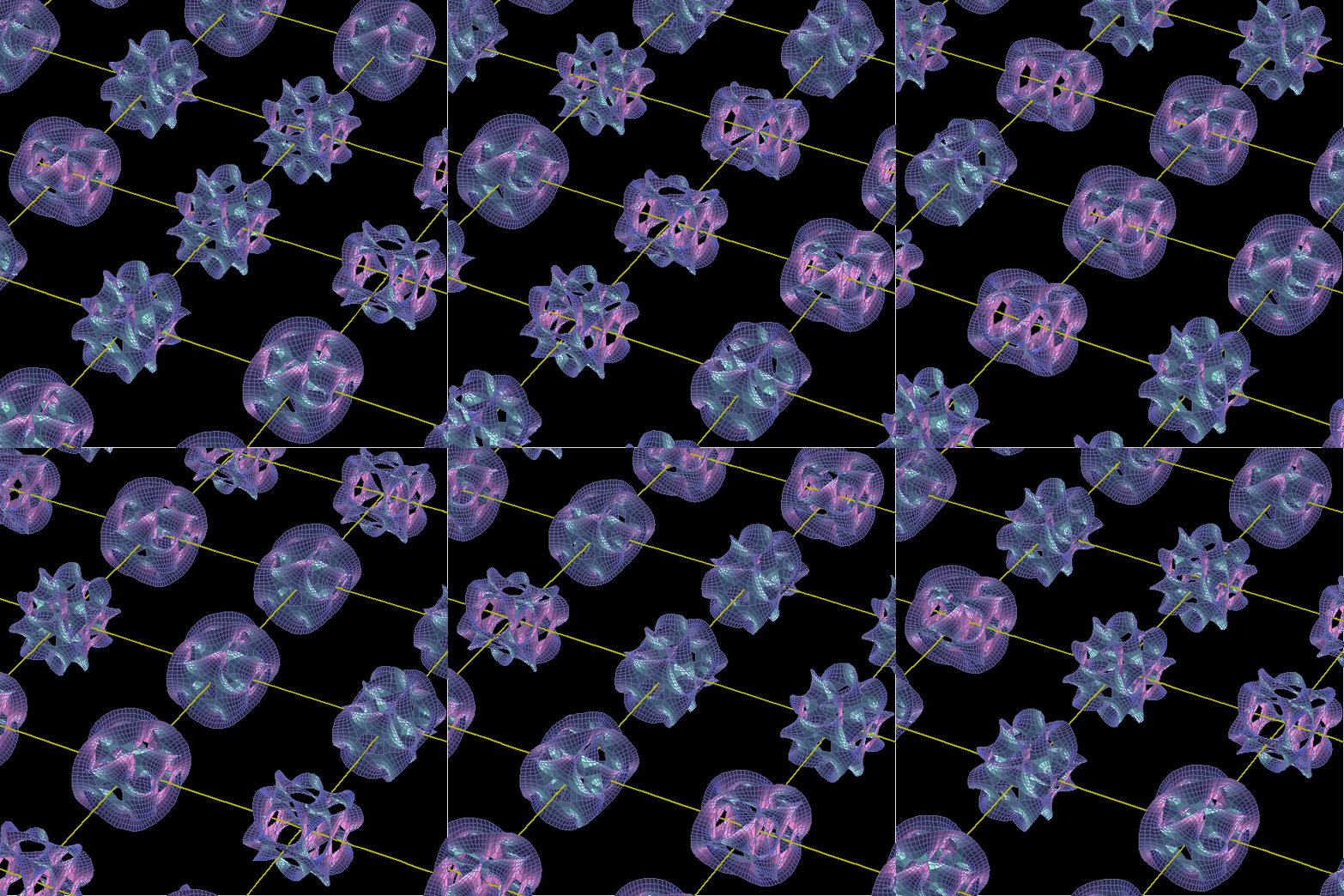 'String theory predicts the existence of more than the three space dimensions and one time dimension we are all familiar with. According to string theory, there are additional dimensions that we are unfamiliar with because they are curled up into complicated shapes that can only be seen on tiny scales' - caption for computer generated images of grid of Calabi-Yau shapes of higher dimensions from string theory. The images by computer illustrator Jeff Bryant , one of which is seen above, are part of the Beyond Measure - Conversations Across Art and Science at Kettle's Yard in Cambridge until June 1. The exhibits also include a score by the composer Guillermo Gregorio. Get there if you can.
There's eye-music here.
Image credit Jeff Bryant. Any copyrighted material on these pages is included as "fair use", for the purpose of study, review or critical analysis only, and will be removed at the request of copyright owner(s). Report broken links, missing images and errors to - overgrownpath at hotmail dot co dot uk


Comments
http://www.kettlesyard.co.uk/publications/catalogues/index.html
It would be just dandy if string theory merely predicted those extra dimensions. The problem is that string theory depends on those extra dimensions (a total of 11 at last count) for its very existence. Absent those extra dimensions, string theory collapses as a viable theory of anything, much less everything.
ACD
Hi, I enjoy your blog. Your post on string theory made me wonder whether you've bumped into the connection between higher dimensional geometry and music, but there are some interesting connections.
http://cosmiclog.msnbc.msn.com/archive/2006/07/07/950.aspx
http://www.time.com/time/magazine/article/0,9171,1582330,00.html
Am actually writing about one of the "On an Overgrown Path" pieces, which makes a very interesting use of scales ...
Dmitri Tymoczko
Assistant Professor of Music
Princeton
http://music.princeton.edu/~dmitri